

UPI MDR Charges: Why IIT Bombay Wants Lower Fees
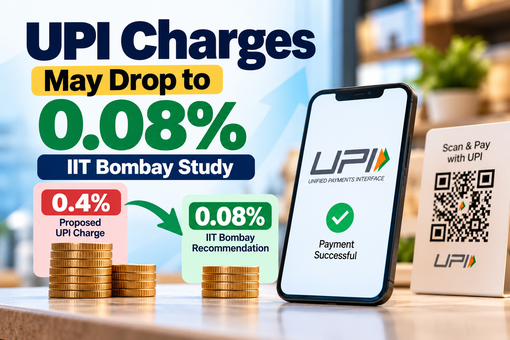
A group of researchers at IIT Bombay have suggested lowering the Merchant Discount Rate (MDR) proposed by the UPI from 0.4% to 0.08% for India's digital payment platform, as high fees may negatively impact the system.
The study, which was reported on 11 October, also suggests that some merchant charges should only be levied on big businesses and that repayments of loan EMIs and debt collections should not be covered by the proposed fee framework.
The key take-away for those consumers who rely on UPI for purchasing goods and services, paying bills and repaying loans is that the study does not impose a new expense or alter current UPI payment requirements. It suggests amendments to a framework which is still being discussed.
Before You Read This News
To understand the proposed UPI MDR changes and who may have to pay, read our earlier article: UPI Charges Above ₹2,000: Will Customers Pay MDR?.
What happened?
A report titled UPI at a Crossroads: Reintroducing the MDR, prepared by IIT Bombay professor Ashish Das and former Reserve Bank of India official Pragya Das, has called for a lower and more targeted UPI merchant-fee structure. The researchers propose reducing the overall MDR from 0.4% to 0.08% while protecting smaller merchants and loan repayments from additional costs.
Why Has IIT Bombay Recommended Lower UPI MDR Charges?
The researchers believe UPI should remain affordable for merchants and convenient for customers.
The Unified Payments Interface (UPI) has become a common way to make everyday payments in India. Merchants use it to accept money without handling cash, while customers can transfer funds directly through their bank accounts.
Merchant Discount Rate, or MDR, is the fee a merchant pays for accepting certain digital payments. It helps compensate participants in the payment system, including banks and payment-service providers.
The study questions whether the fee structure commonly used for credit cards is suitable for UPI.
It also argues that banks already benefit financially from current and savings account deposits, and that some of those benefits could help fund the UPI system rather than relying heavily on merchant transaction charges.
UPI MDR 0.4% vs 0.08%: What Could Change?
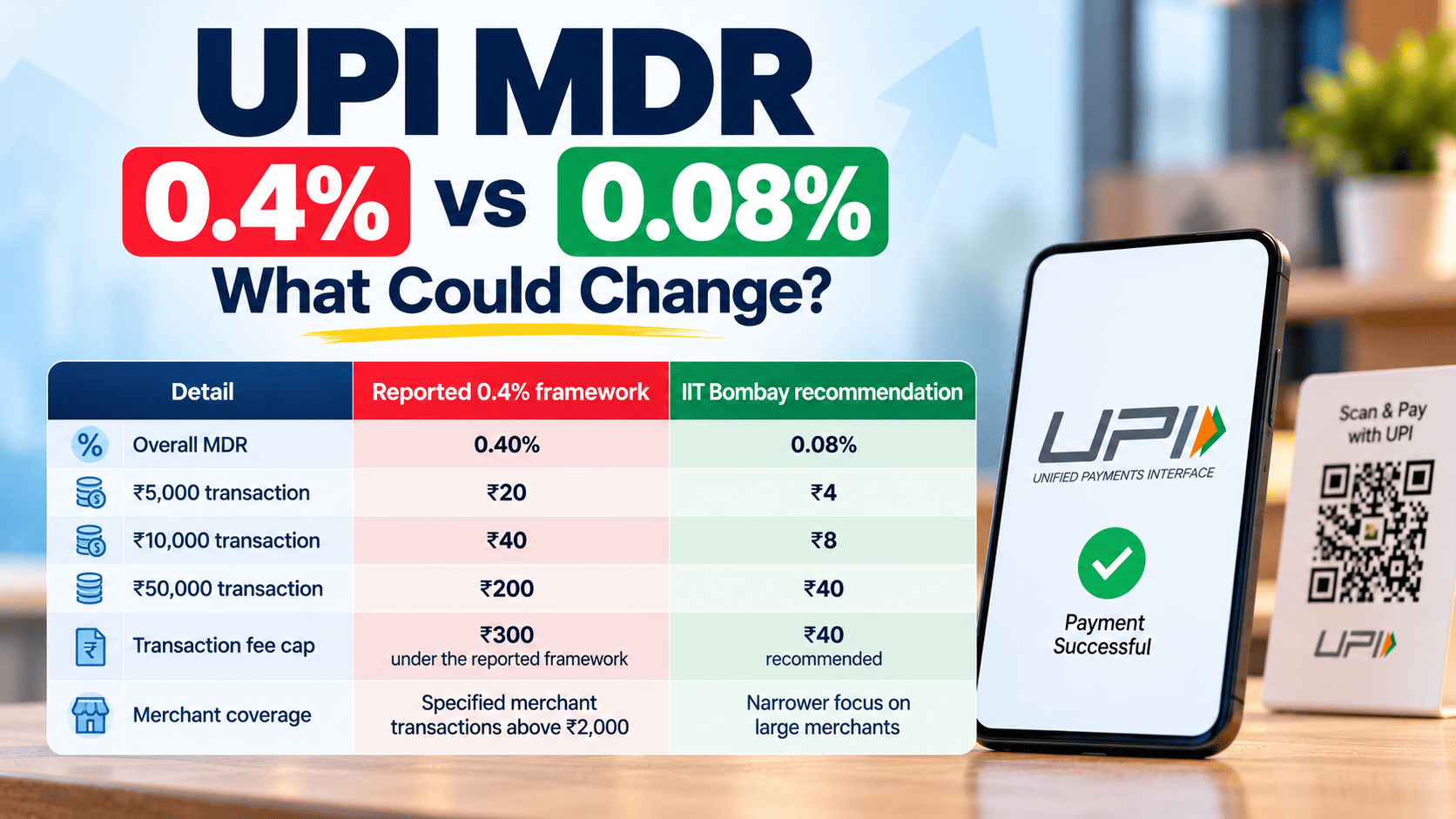
The difference between the two rates may look small, but it becomes more noticeable when a business accepts thousands of payments every day.
|
Detail |
Reported 0.4% framework |
IIT Bombay recommendation |
|
Overall MDR |
0.40% |
0.08% |
|
₹5,000 transaction |
₹20 |
₹4 |
|
₹10,000 transaction |
₹40 |
₹8 |
|
₹50,000 transaction |
₹200 |
₹40 |
|
Transaction fee cap |
₹300 under the reported framework |
₹40 recommended |
|
Merchant coverage |
Specified merchant transactions above ₹2,000 |
Narrower focus on large merchants |
Calculations are illustrative, assuming each percentage applies to the full transaction value. They are not fees currently charged to individual customers. The proposed cap and merchant eligibility conditions would affect actual application.
For example, a business accepting a ₹10,000 payment would face an illustrative fee of ₹40 at 0.4%, compared with ₹8 at 0.08%.
That is a difference of ₹32 on one payment.
The study's approach is intended to reduce the cost of accepting UPI payments while still providing funding for payment infrastructure.
Who Would Pay the Proposed UPI Merchant Charges?
The study recommends concentrating offline UPI merchant charges on businesses with annual turnover of more than ₹50 crore.
This would mean many smaller businesses could remain outside the proposed fee structure.
The researchers also recommend that large merchants continue accepting UPI and that the government consider a separate, reasonable payment-facilitation charge for certain online merchant transactions.
Will UPI Charges Apply to Payments Above ₹2,000?
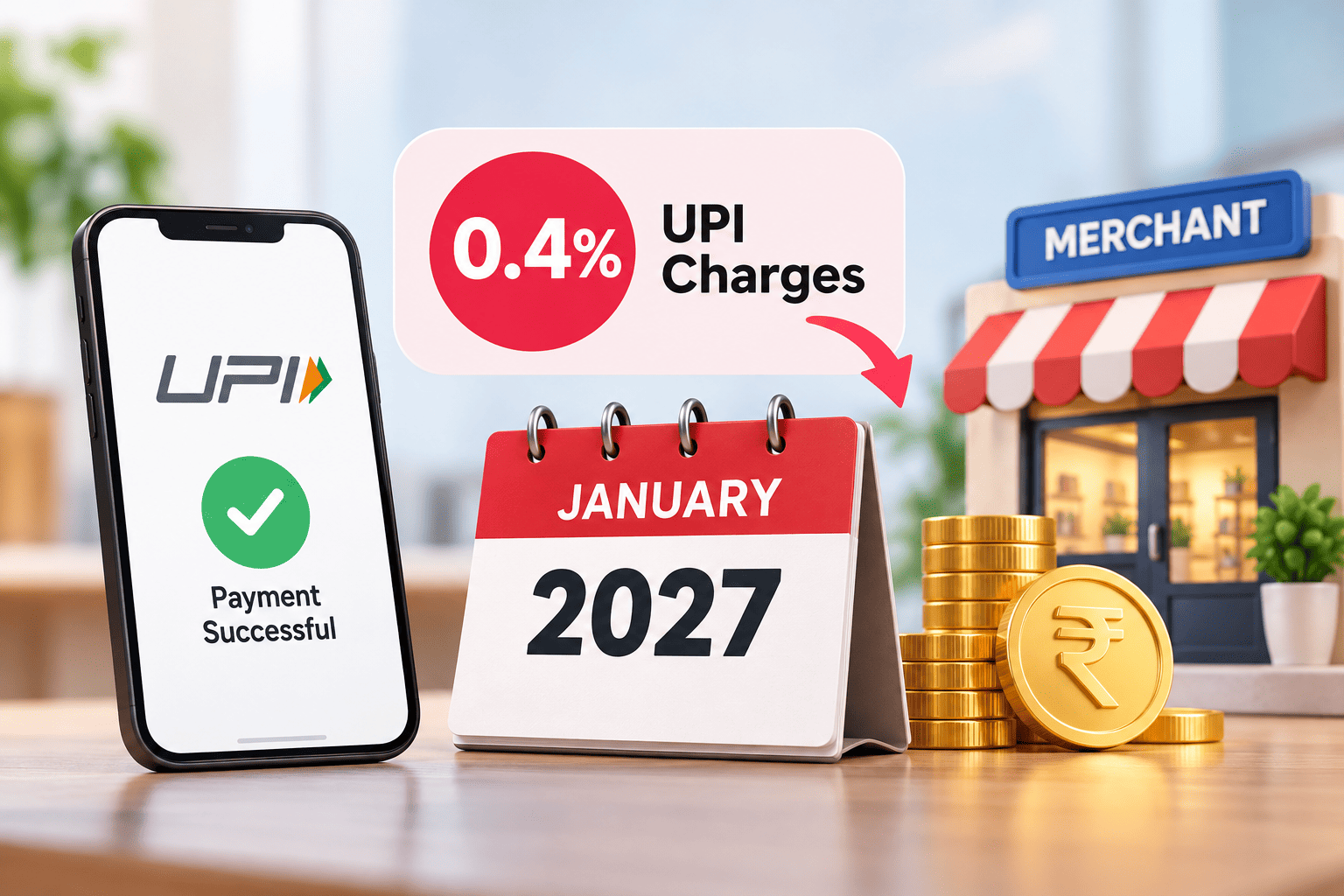
The proposed MDR framework has been reported as applying a 0.4% merchant fee to certain person-to-merchant UPI payments exceeding ₹2,000.
However, reports published on October 8 and 9 indicate that authorities were considering postponing the planned October 15 implementation, potentially until January 2027. A final postponement decision had not been confirmed in those reports.
Customers should not confuse a merchant processing fee with a charge automatically deducted from their own bank account.
The MDR is generally charged to the merchant. Whether businesses might indirectly recover payment costs through product pricing is a separate concern.
Will UPI Loan EMI Repayments Attract MDR Charges?
The IIT Bombay study recommends keeping loan EMI repayments and debt collections outside the proposed MDR framework.
This matters because many borrowers use UPI to make repayments to banks, non-banking financial companies (NBFCs) and other lenders.
The researchers argue that repayment transactions should not face additional merchant fees under the proposed structure.
There is no basis to conclude from this study alone that borrowers will be charged an extra 0.4% on every loan EMI.
What This Means for Borrowers
For personal loan borrowers, the study is mainly relevant to digital repayments.
If its recommendations are adopted, qualifying loan repayments could remain outside the proposed MDR framework.
However, the study does not directly change:
-
Personal loan interest rates or existing EMIs
-
Credit scores or loan eligibility
-
Loan processing fees
-
Repayment schedules or outstanding balances
-
Lending approval requirements
Borrowers should continue checking their loan agreement and repayment instructions for applicable charges.
What Should Borrowers Check Before Taking a Personal Loan?
UPI merchant fees and personal loan charges are different.
Before accepting a personal loan offer, review the interest rate, processing fee, repayment tenure, total repayment amount, late-payment charges and the lender's Key Facts Statement (KFS), where applicable.
Pocketly allows eligible users to explore personal loan options through its digital platform. Applicants should review the lender's terms and applicable charges before proceeding. Approval and disbursal depend on eligibility and verification.
What Happens Next to the UPI MDR Proposal?
The next development to watch is an official decision on the proposed merchant-fee framework and its implementation date.
Industry concerns have already prompted discussions about delaying the planned October 15 rollout.
The IIT Bombay study adds another recommendation: reduce the proposed overall MDR, reconsider how payment providers are compensated, protect smaller merchants and exclude loan repayments from the fee structure.
Until the relevant authorities issue a final decision, the 0.08% rate should be described as a recommendation, not an approved UPI fee.
Key Takeaways
-
IIT Bombay researchers have recommended reducing the proposed overall UPI MDR from 0.4% to 0.08%.
-
The study proposes concentrating offline merchant charges on businesses with annual turnover above ₹50 crore.
-
Loan EMI repayments and debt collections should remain outside the proposed MDR framework, according to the researchers.
-
The report recommends a maximum transaction fee of ₹40 if a percentage-based model is adopted.
-
No official decision implementing the study's recommendations has been verified.
Need a Personal Loan? Check Your Options With Pocketly
Pocketly makes it easy for eligible users to explore personal loan online options. Check the available loan amount, interest rate, repayment tenure and applicable charges before applying.
Explore Personal Loans on Pocketly
Loan approval and disbursal are subject to lender eligibility checks, verification and applicable terms.
Frequently Asked Questions
1. What are UPI MDR charges?
UPI MDR is a merchant processing fee associated with accepting certain UPI payments. It is generally paid by the merchant, not automatically deducted from the customer's account. The proposed fee structure and its implementation remain subject to official decisions.
2. Has UPI MDR been reduced to 0.08%?
No. IIT Bombay researchers have recommended a 0.08% overall MDR structure. This is a research recommendation, not a confirmed regulatory change.
3. Will customers pay UPI charges above ₹2,000?
The reported 0.4% proposal concerns eligible merchant transactions above ₹2,000. It does not mean every customer making a payment above that amount must pay an additional 0.4%.
4. Will UPI MDR charges change in 2027?
A possible postponement of the proposed framework until January 2027 has been reported. However, neither the postponement nor the study's recommended 0.08% rate should be presented as final without an official announcement.
5. Will loan EMI payments through UPI attract MDR?
The IIT Bombay study recommends excluding loan EMI repayments and debt collections. Borrowers should continue following their lender's repayment terms and checking applicable fees.
6. What is the difference between 0.4% and 0.08% UPI MDR?
At 0.4%, the illustrative processing fee on ₹10,000 would be ₹40. At 0.08%, it would be ₹8. Actual charges would depend on the final framework, transaction eligibility and applicable caps.
Sources
The following sources support the article. I verified the study's recommendations through contemporaneous reporting, but could not locate a publicly accessible original research paper to cite directly.
-
The Economic Times / PTI — IIT Bombay Study Recommends Lower MDR — October 11, 2026.
-
Business Today — UPI MDR Should Be Cut From 0.4% to 0.08% — October 11, 2026.
-
NDTV Profit — UPI MDR Framework Needs Rationalisation — October 11, 2026.
-
Reuters — India Considers Delaying UPI Payment Fee Rollout — October 8, 2026.