

Why First-Time Borrowers Are Choosing NBFCs in India
Getting your first loan can be difficult when you don't have a credit history. You might have a steady income and enough money to repay the loan, but some lenders still want to see how you've handled credit in the past.
This is one area where non-banking financial companies (NBFCs) have become an important option.
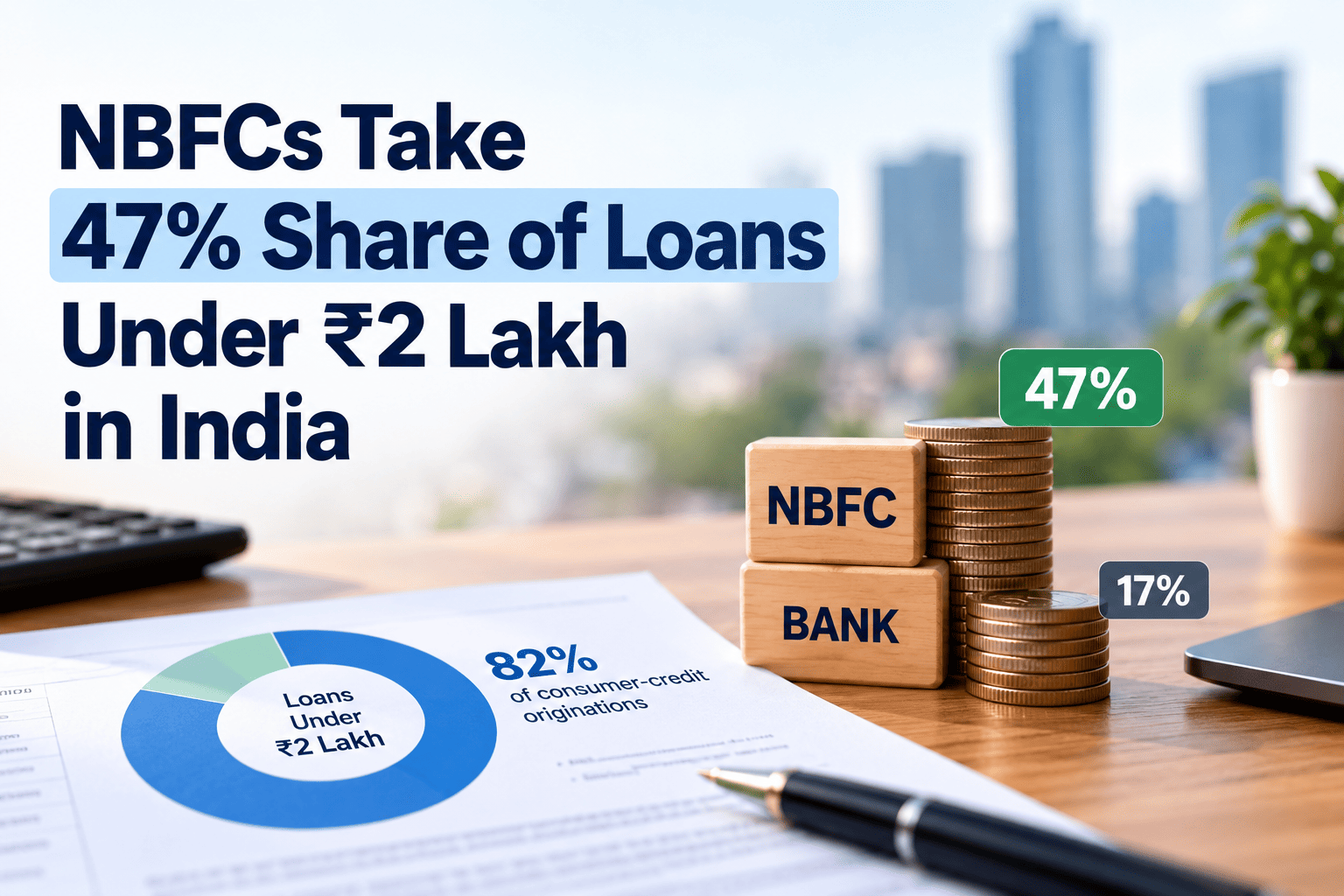
A report by TransUnion CIBIL and the Finance Industry Development Council (FIDC) found that NBFCs accounted for 47% of new-to-credit consumer loan originations as of June 2026.
The findings show how NBFCs are helping people enter the formal credit system, particularly those looking for smaller loans or living outside major cities.
What Does the Latest NBFC Report Say?
The report, Bharat Nirman: NBFC Forming the Foundation of Credit Dispersion, examines how NBFC lending has changed over the past decade.
Here are its main findings.
|
Key indicator |
Report findings |
|
Share of new-to-credit loan originations |
47% |
|
Share of retail loan originations by volume |
43% |
|
Share of retail loan originations by value |
30% |
|
Share of loan originations up to ₹2 lakh |
47% |
|
NBFC loans by volume from semi-urban and rural markets |
More than 58% |
|
Growth in credit-active NBFC customers over 10 years |
Nearly 7 times |
NBFCs are not replacing banks. Instead, they are giving borrowers another way to access formal loans.
Why Are More First-Time Borrowers Turning to NBFCs?
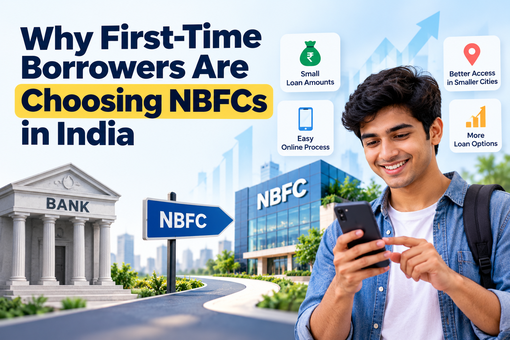
The reasons vary. Some people need only a small amount. Others want an online application or live in places with fewer lending options.
1. Many People Need Smaller Loans
A first-time borrower may need ₹10,000 for a laptop repair rather than ₹5 lakh for a major purchase.
Smaller loans are often used for:
-
Medical expenses
-
Education-related costs
-
Mobile phones and laptops
-
Household appliances
-
Unexpected bills
According to the report, loans of up to ₹2 lakh accounted for 82% of consumer credit originations by volume across the industry.
NBFCs contributed 47% of originations in this segment.
This gives them a strong presence in smaller-ticket lending.
2. Applying Online Can Be More Convenient
Many NBFCs now allow borrowers to complete much of the application process digitally.
Depending on the lender, the process may involve:
-
Entering personal and income details.
-
Completing the required KYC checks.
-
Submitting any additional documents.
-
Waiting for the eligibility assessment.
-
Reviewing the loan offer.
-
Accepting the terms before disbursal.
Digital applications can reduce branch visits and paperwork.
But applying online doesn't mean a loan will be approved. Lenders still assess the applicant's ability to repay.
3. NBFCs Are Reaching Smaller Towns
Access to credit can be different in a large city and a small town.
The report found that more than 58% of NBFC loans by volume came from semi-urban and rural markets.
The share of semi-urban and rural customers in the NBFC credit-active consumer base has also grown.
|
Year |
Share of NBFC credit-active consumers from semi-urban and rural areas |
|
June 2016 |
31% |
|
June 2026 |
59% |
This expansion has made NBFCs an important part of lending outside major cities.
4. A First Loan Isn't Always a Personal Loan
Many people enter the credit system by financing a product.
Someone might buy a refrigerator on instalments. Another person might take a two-wheeler loan to travel to work.
The report's findings for January to June 2026 show the share of different loan categories in industry-wide new-to-credit originations.
|
Loan category |
Share |
|
Consumer durable loans |
30% |
|
Personal loans |
12% |
|
Gold loans |
11% |
|
Two-wheeler loans |
10% |
A loan that is reported to credit bureaus can help establish a credit history. The borrower's repayment record then becomes part of their credit profile.
5. Some NBFCs Consider Applicants Without a Credit Score
A person who has never borrowed may not have a CIBIL score.
Some NBFCs assess other details when reviewing an application, such as:
-
Monthly income
-
Employment or business information
-
Existing financial obligations
-
Bank account information, where relevant
-
Repayment capacity
-
Identity and KYC details
Not having a credit score doesn't guarantee approval.
Each lender has its own requirements, and an application can still be declined.
Do First-Time Borrowers Continue Using NBFCs?
The report found that 74% of a specific group of NBFC new-to-credit customers continued to hold credit exclusively with NBFCs.
This group included borrowers who entered formal credit during the six months ended June 2024 and still had a live loan in June 2026.
It doesn't mean that 74% of all first-time borrowers prefer NBFCs.
Some customers may continue using NBFCs because they are familiar with the lender or find another product that suits their needs.
Even so, borrowers should compare offers before taking another loan.
NBFC Loans vs Bank Loans: What's the Difference?
Banks and NBFCs both offer formal loans, but their eligibility conditions and charges can differ.
|
Feature |
Banks |
NBFCs |
|
Regulation |
RBI |
RBI, under applicable NBFC rules |
|
Small personal loans |
Available from some banks |
Available from many NBFCs |
|
Online applications |
Available |
Available |
|
Credit score requirements |
Depend on lender policy |
Depend on lender policy |
|
Interest rates |
Depend on the borrower and loan |
Depend on the borrower and loan |
|
Repayment terms |
Vary by product |
Vary by product |
Neither is automatically cheaper or easier to qualify for.
The better choice depends on the actual loan offer, including its interest rate, fees and repayment schedule.
Can You Get an NBFC Loan With a Low CIBIL Score?
Some NBFCs consider applicants with lower credit scores, but approval is not guaranteed.
A low score may affect:
-
Whether the lender approves the application.
-
The amount offered.
-
The interest rate.
-
The repayment period.
If your credit score is low, check your credit report for errors and review existing debts before applying.
Taking a loan you cannot comfortably repay may make your financial situation worse.
What Should You Check Before Taking Your First Loan?
A loan may look affordable at first, but charges and repayment terms can change the total cost.
|
What to check |
Why it matters |
|
Loan amount |
Avoid borrowing more than needed |
|
Interest rate and APR |
Understand the borrowing cost |
|
Processing fee |
Check how much may be deducted |
|
EMI |
Make sure the payment fits your budget |
|
Repayment tenure |
Understand how long you'll be paying |
|
Late-payment charges |
Know the cost of missing a payment |
|
Key Facts Statement |
Review the important loan terms |
|
Lender details |
Verify who is providing the loan |
Before accepting an offer, calculate the total amount you will repay.
A smaller EMI isn't always a cheaper loan, especially when the repayment period is longer.
How Can Pocketly Help First-Time Borrowers?
Pocketly provides a digital platform where eligible applicants can explore personal loan online options.
Applicants can submit their details, complete the required verification and review any available offer from the lending partner.
Before accepting a loan, check the interest rate, processing charges, repayment dates and total amount payable.
Explore Personal Loan Options With Pocketly
Loan approval, amount and disbursal depend on eligibility, verification and lender terms.
What Does This Mean for India's Lending Market?
The report highlights three changes in India's borrowing landscape.
-
Smaller loans are important. Many people enter formal credit through products that meet everyday financial needs.
-
Credit is reaching more locations. NBFCs have expanded their presence in semi-urban and rural markets.
-
Borrowers have more choices. People can compare different banks and NBFCs instead of relying on a single type of lender.
More lending options can improve access to credit. But a loan still needs to fit the borrower's income and repayment capacity.
For someone taking their first loan, understanding the charges and repayment schedule matters more than how quickly the application can be completed.
Frequently Asked Questions
Why are first-time borrowers choosing NBFCs?
NBFCs have a strong presence in smaller-ticket loans and serve customers across semi-urban and rural markets. Many also provide online applications.
Can I get an NBFC loan without a CIBIL score?
Some lenders consider applicants without an established credit score. Approval depends on income, repayment capacity and other eligibility checks.
Are NBFC loans safe?
Loans from RBI-regulated NBFCs are subject to applicable lending regulations. Verify the lender's identity and read the Key Facts Statement before accepting an offer.
Can I get a ₹5,000 loan from an NBFC?
Some NBFCs offer small loans, including amounts around ₹5,000. Availability depends on the lender and applicant's eligibility.
Can an NBFC loan improve my CIBIL score?
A loan reported to credit bureaus can help build your credit history. Paying on time supports a positive repayment record, while missed payments can hurt your score.
Are NBFC loans more expensive than bank loans?
Not necessarily. Interest rates and charges vary. Compare the APR, processing fees and total repayment amount before choosing.
What percentage of first-time loans come from NBFCs?
According to the TransUnion CIBIL-FIDC report, NBFCs accounted for 47% of new-to-credit consumer loan originations as of June 2026.
Sources
-
TransUnion CIBIL — NBFCs Support 50% of New-to-Credit Originations — Official press release, October 5, 2026
-
Mint — Why NBFCs Have Become the Option of Choice for Many First-Timer Borrowers — October 11, 2026.
-
The Economic Times — Share of New-to-Credit Customers Rises — October 2, 2026.
-
Press Information Bureau — Government and RBI Strengthen Measures Against Fraudulent Loan Apps — March 17, 2026.