

NPCI May Delay 0.4% UPI Merchant Fee Until January 2027
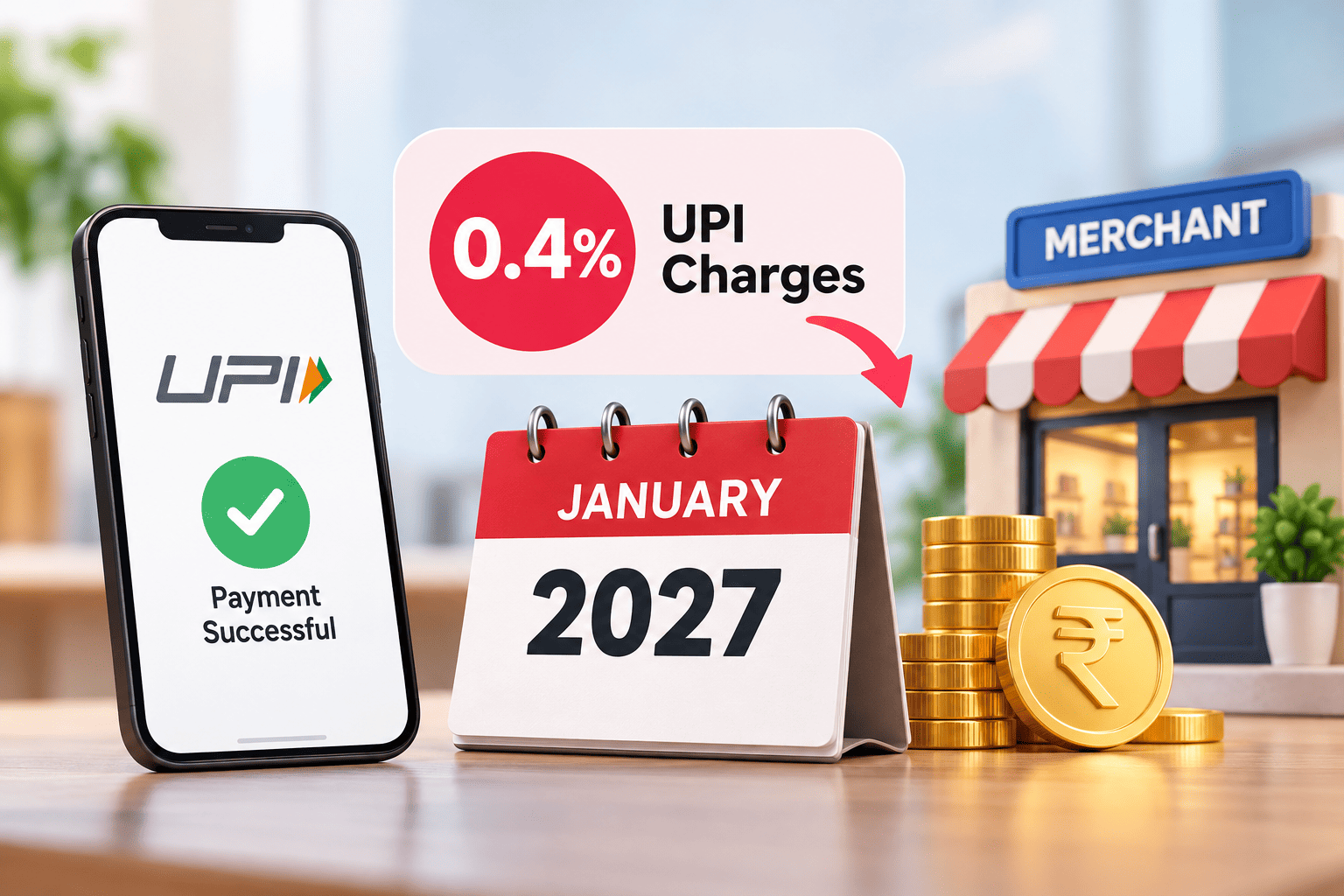
The government is considering postponing the new 0.4% UPI merchant charge from October 15, 2026, to January 2027. The proposed delay follows concerns raised by merchants and payment companies ahead of the festive shopping season.
Reuters reported on October 8 that the change in schedule was being discussed, while the National Payments Corporation of India (NPCI) was expected to consider the matter further. A final official confirmation of the revised date was still awaited.
The important point for UPI users is that the fee is intended for specified merchant transactions, not ordinary money transfers between individuals.
Before You Read This News
To understand the proposed UPI MDR changes and who may have to pay, read our earlier article: UPI Charges Above ₹2,000: Will Customers Pay MDR?.
What happened?
India may delay the introduction of Merchant Discount Rate (MDR) charges on certain Unified Payments Interface (UPI) transactions above ₹2,000. The original rollout date was October 15, 2026, but January 1, 2027, is now being considered. Merchant organisations and fintech companies have requested more time to prepare for the new payment charges.
Why are UPI charges being delayed?
The proposed October rollout comes during India's busy festival shopping period.
Merchants have raised concerns about additional payment costs at a time when businesses are preparing for higher sales volumes. Payment companies also need time to update their systems and clarify which transactions will attract the fee.
The main concerns include:
-
Higher transaction-processing costs for eligible merchants
-
Different MDR rates across payment categories
-
Technical changes required by banks and payment companies
-
Possible effects on merchant pricing
-
Confusion among customers about whether UPI payments will remain free
According to Reuters, delaying the rollout could give payment companies more preparation time and reduce disruption during the festive season.
The proposed January date is therefore a change in implementation timing, not a decision to abandon MDR permanently.
What are the new UPI MDR charges for 2026?
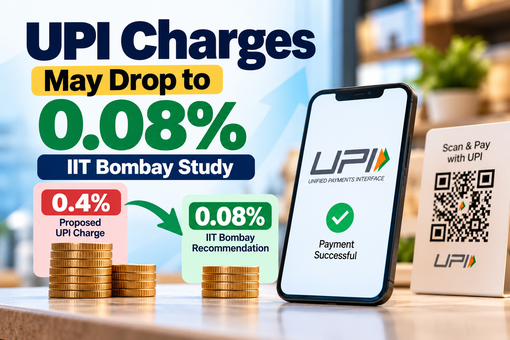
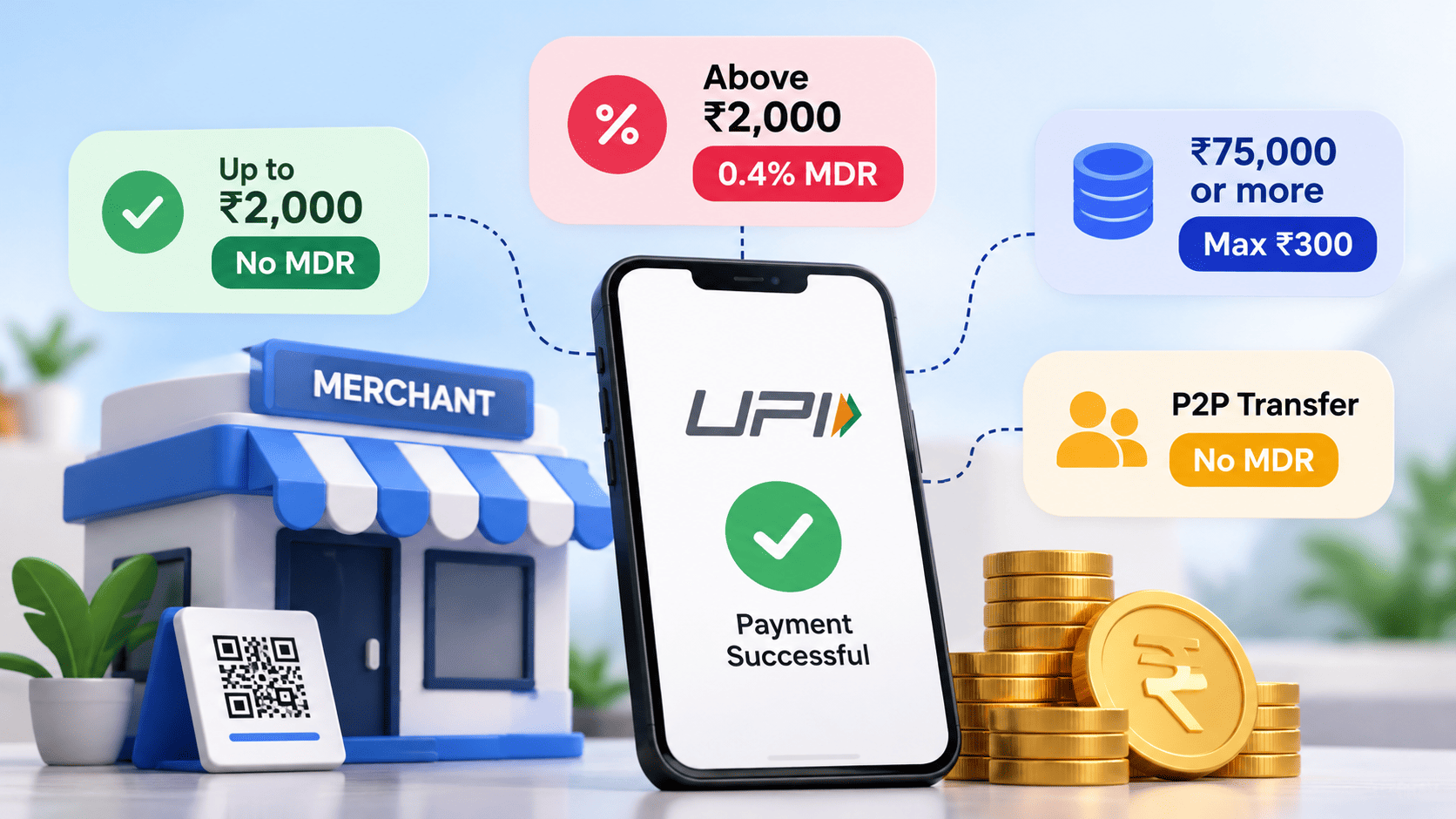
Under the announced framework, a 0.4% Merchant Discount Rate applies to specified person-to-merchant (P2M) UPI transactions exceeding ₹2,000.
For eligible transactions of ₹75,000 or more, the MDR is capped at ₹300.
The Ministry of Finance clarified in September that ordinary person-to-person UPI transfers remain free, regardless of the amount.
Payments of up to ₹2,000 to merchants and transactions covered by the small-merchant exemption also remain free.
UPI charges: What changes and what stays the same?
|
Payment type |
Announced MDR treatment |
|
Person-to-person UPI transfer |
No MDR |
|
Merchant payment up to ₹2,000 |
No MDR |
|
Eligible merchant payment above ₹2,000 |
0.4% MDR |
|
Eligible merchant payment of ₹75,000 or more |
Maximum ₹300 MDR |
|
Transactions covered by the small-merchant exemption |
No MDR |
|
Existing personal loan EMI |
No direct change from the MDR framework |
These charges concern payment processing. They should not be confused with a bank's personal loan interest rate or a lender's processing fee.
Who will pay the 0.4% UPI charge?
The MDR is a merchant-side payment-processing charge. It is not a direct fee imposed on individuals for sending money through UPI.
MDR is collected within the payment ecosystem and distributed among participating payment-service providers.
The government has also clarified that MDR is not a tax collected by the government or NPCI.
For consumers, the distinction is straightforward. Sending money to a friend or family member through UPI remains free. Buying goods from an eligible merchant is a different type of transaction, but the MDR is designed as a merchant charge.
Merchants may still consider payment-processing costs when setting prices. That does not make MDR a direct customer transaction fee.
How much is 0.4% MDR on a UPI payment?
Consider a merchant receiving an eligible UPI payment of ₹5,000.
At an MDR of 0.4%, the payment-processing charge would be ₹20.
The same calculation can be applied to other eligible amounts.
|
Eligible UPI merchant payment |
MDR at 0.4% |
|
₹2,500 |
₹10 |
|
₹5,000 |
₹20 |
|
₹10,000 |
₹40 |
|
₹25,000 |
₹100 |
|
₹50,000 |
₹200 |
|
₹75,000 |
₹300 |
|
₹1,00,000 |
₹300 (capped) |
These are illustrative calculations under the announced 0.4% framework. Actual applicability depends on the transaction category, exemptions and effective implementation date.
A ₹10,000 eligible payment, for example, would involve ₹40 in MDR. That does not mean the customer is automatically charged ₹10,040.
Will UPI charges start on October 15 or January 2027?
October 15, 2026, remains the originally announced implementation date. January 2027 is the reported alternative under consideration.
Merchant bodies and payment companies have requested postponement. Reports indicate that the NPCI-led payments ecosystem is reviewing the timing.
Until an official revised date is announced, customers and merchants should not treat January 1 as a final regulatory deadline.
Timeline of the UPI MDR development
|
Date |
Development |
|
September 2026 |
Government introduces the new UPI MDR framework |
|
September 15, 2026 |
Ministry of Finance explains consumer and small-merchant exemptions |
|
October 8, 2026 |
Reports emerge about a possible delay to January 2027 |
|
October 9, 2026 |
NPCI-led discussions on postponement are expected |
|
October 15, 2026 |
Originally planned implementation date |
|
January 1, 2027 |
Reported alternative implementation date, subject to confirmation |
Will UPI payments above ₹2,000 become chargeable for everyone?
No. The ₹2,000 threshold does not mean every UPI transfer above that amount attracts a fee.
For example:
-
Sending ₹5,000 to a family member is a person-to-person transfer and remains free.
-
Paying ₹1,500 at a shop remains outside the new MDR threshold.
-
Paying ₹5,000 to an eligible merchant may attract a ₹20 merchant-side MDR once the framework takes effect.
-
Payments covered by the small-merchant exemption remain outside MDR even when other conditions might otherwise apply.
The type of payment matters just as much as the amount.
What does this mean for borrowers?
The UPI MDR framework does not directly change personal loan interest rates, EMIs, credit scores or eligibility rules.
However, UPI is also used for payments connected to financial services, including certain loan repayments. Payment-category rules can differ, so borrowers should not assume that every financial transaction receives the same MDR treatment.
For someone repaying a loan, the important things to check are:
-
The repayment amount shown by the lender
-
The authorised repayment channel
-
Whether any payment-related fee is disclosed
-
The due date
-
Confirmation that the payment was received
-
Any applicable late-payment charge under the loan agreement
Borrowers should follow the lender's official repayment instructions and review the applicable terms before making a payment.
What happens if the UPI MDR rollout is postponed?
If the proposed delay is formally approved, the new MDR framework would begin later than October 15.
This would give eligible merchants additional time before the new processing charge applies.
Payment companies could also use the extra time to complete technical changes and finalise arrangements with participating banks.
For ordinary UPI users, person-to-person transfers would continue to remain free.
The postponement would not automatically change the 0.4% rate, ₹2,000 threshold or ₹300 cap. Those are separate elements of the announced framework.
What should Pocketly users know?
UPI payment charges and personal loan costs are different things.
If you are planning to borrow, compare the loan's actual cost rather than judging it by how quickly you can apply or repay.
Before accepting a personal loan, check:
-
Applicable interest rate
-
Monthly EMI
-
Repayment tenure
-
Processing charges
-
Total repayment amount
-
Late-payment charges
-
Name of the regulated lender
-
Key Fact Statement and other loan terms
Pocketly's personal loan resources and EMI calculator can help you understand repayment amounts before applying. Loan approval, pricing and disbursal depend on the applicable lender's assessment.
Key takeaways
-
The 0.4% UPI MDR rollout may move from October 15, 2026, to January 2027.
-
A final official postponement announcement was still awaited at the time of reporting.
-
MDR applies to specified merchant transactions above ₹2,000, subject to exemptions.
-
Eligible transactions of ₹75,000 or more have a ₹300 MDR cap.
-
Ordinary person-to-person UPI transfers remain free.
-
MDR is a merchant-side processing charge, not a government tax.
-
The change does not directly alter personal loan EMIs or interest rates.
Frequently asked questions
1. Are UPI charges postponed until January 2027?
A postponement is under consideration. Reports suggest that the new merchant discount rate may be delayed from October 15, 2026, to January 1, 2027. However, a final official confirmation of the revised implementation date was still awaited.
2. Will I be charged for sending ₹5,000 through UPI?
No, not when sending money to another individual through a normal person-to-person UPI transfer. Such transactions remain free regardless of the amount. The proposed MDR applies to specified merchant payments, not ordinary transfers between individuals.
3. What is the 0.4% UPI MDR charge?
It is a merchant-side processing fee under the announced UPI framework. For an eligible merchant payment of ₹10,000, a 0.4% MDR works out to ₹40. Exemptions and the maximum ₹300 charge for larger eligible transactions also apply.
4. Are UPI payments below ₹2,000 free?
Yes. The Ministry of Finance has clarified that merchant UPI payments up to ₹2,000 remain free under the framework. Transactions covered by the small-merchant exemption also remain outside MDR.
5. Who collects UPI MDR charges?
MDR is collected within the payment-processing system and distributed among eligible payment ecosystem participants, including banks and payment application providers. It is not a tax collected by the government or NPCI.
6. Will the new UPI charges affect personal loan EMIs?
The MDR framework does not change the amount of an existing EMI under a personal loan agreement. Borrowers should still check the repayment channel and any separately disclosed transaction-related charges, where applicable.
7. Why are merchants requesting a delay?
Merchant organisations and payment companies have raised concerns about additional costs, different transaction categories and system readiness. They also want to avoid disruption during the October–December festive shopping season, when digital payments are particularly important for retailers.
Compare Your Loan Costs Before Borrowing
UPI payment charges and personal loan charges are not the same. Before applying, understand the interest rate, EMI, processing fee and total repayment amount.
Explore Pocketly personal loans and use the available repayment tools to compare loan costs. Approval and loan terms are subject to lender eligibility and verification.
Sources used
|
Source |
Date |
What it confirms |
|
September 15, 2026 |
Official exemptions, P2P transfers, MDR purpose |
|
|
October 8, 2026 |
Proposed postponement, industry response |
|
|
October 8, 2026 |
Expected October 9 discussion |
|
|
October 8, 2026 |
Your supplied report and fee structure |