

India’s borrowing landscape has changed rapidly over the past few years, with the Reserve Bank of India noting that retail credit in India continued growing in double digits, with retail loan growth reaching around 11.6% in FY25.
As more people apply for personal loans, credit cards, and digital loans, lenders increasingly rely on credit scores to assess repayment behaviour and financial discipline.
If you have a 773 CIBIL score, you are already in a relatively strong position, since scores above 750 are generally viewed as lower-risk by many lenders in India. But what does a 773 score actually mean for loan approvals, interest rates, and borrowing flexibility?
In this article, we explain how lenders view a 773 CIBIL score, what advantages it may offer, why applications can still get rejected despite a good score, and how you can maintain or improve your credit profile over time.
Key Takeaways
-
A 773 CIBIL score is generally considered a strong score in India and is usually viewed positively by lenders.
-
Scores above 750 may improve your chances of getting approved for loans, credit cards, and unsecured borrowing.
-
A good CIBIL score does not guarantee approval, as lenders also review income, EMIs, repayment history, and recent credit activity.
-
Factors like high credit utilisation, multiple loan applications, EMI bounces, or settled accounts can still lead to rejection despite a strong score.
-
Paying EMIs on time, keeping credit usage low, and avoiding unnecessary loan applications can help maintain and improve your credit score over time.
Is a 773 CIBIL Score Good in India?
If you have checked your credit report and found a 773 CIBIL score, you are already in a fairly strong position with most lenders in India. A score in this range usually signals responsible repayment behaviour and lower credit risk, which can improve your chances of getting approved for loans or credit cards.
What Is Considered a Good CIBIL Score?
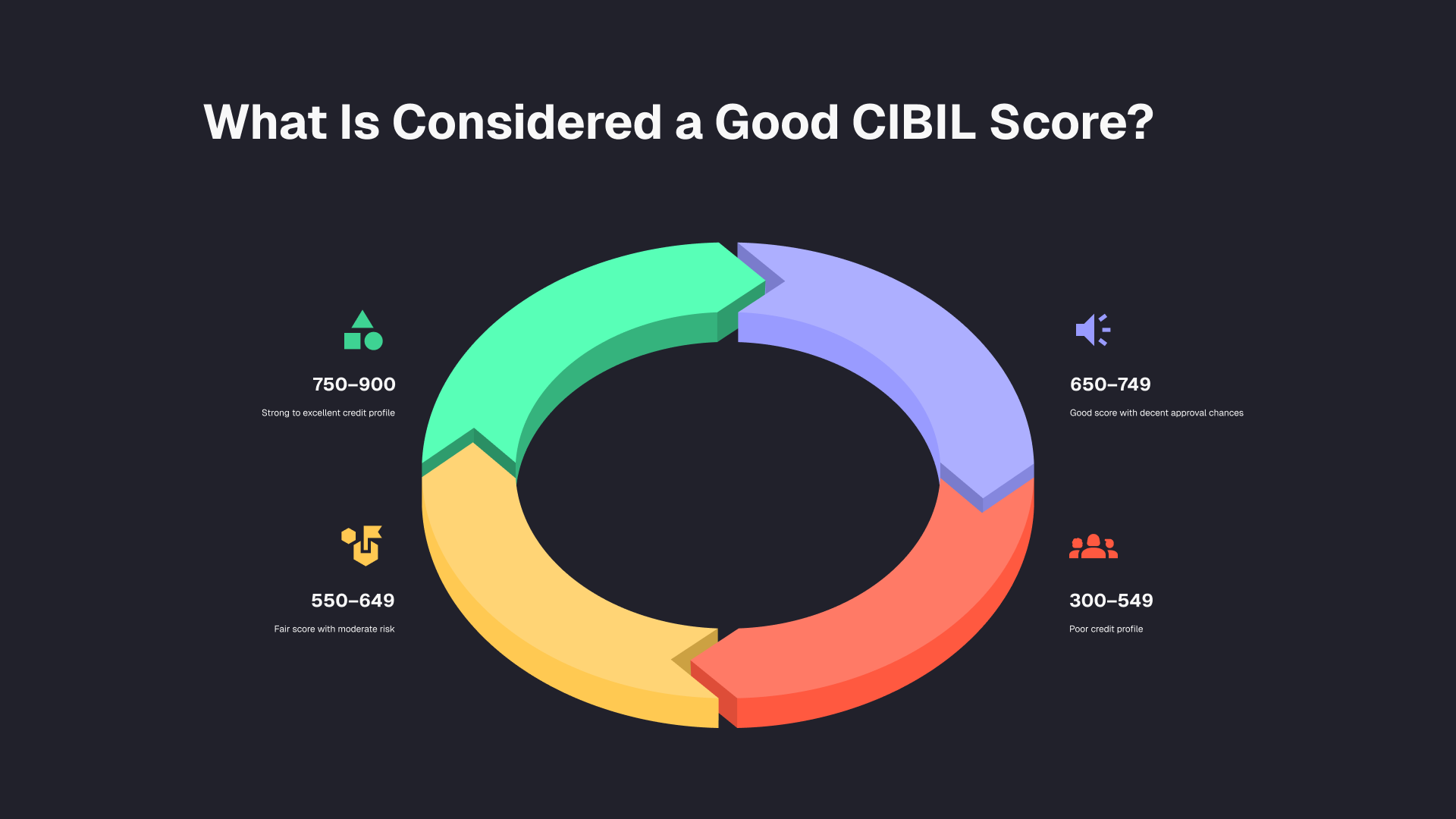
In India, CIBIL scores generally range between 300 and 900. The closer your score is to 900, the better your credit profile appears to lenders.
Here is how scores are commonly interpreted:
-
300–549: Poor credit profile
-
550–649: Fair score with moderate risk
-
650–749: Good score with decent approval chances
-
750–900: Strong to excellent credit profile
A 773 CIBIL score usually falls within the “good” or “very good” category. For many banks and digital lenders, crossing the 750 mark suggests that the borrower has managed credit responsibly over time.
Why Do Lenders View a 773 Score Positively?
Lenders use your CIBIL score to estimate how likely you are to repay on time. A 773 score generally indicates that you have handled past credit without major repayment issues.
For salaried professionals, a strong score can signal stable repayment habits. For self-employed borrowers, it may help offset concerns around irregular monthly income.
What Can You Usually Get With a 773 CIBIL Score?
A 773 CIBIL score can improve your borrowing experience in several practical ways. While it does not guarantee approval, it often places you in a lower-risk category for many lenders in India. This can make it easier to access credit when you need help managing a short-term expense or temporary cash gap.
For students, salaried professionals, and self-employed individuals, a stronger score may also reduce friction during the application process.
Better Chances of Loan and Credit Card Approval
One of the biggest advantages of a 773 CIBIL score is a stronger approval probability. Lenders generally prefer borrowers who have a history of paying EMIs and credit card bills on time.
This can help when applying for:
-
Personal loans
-
Small emergency loans
-
Credit cards
-
Consumer durable financing
-
Short-term working capital support
For example, a salaried employee facing an unexpected medical bill may find it easier to qualify for a small unsecured loan compared to someone with a lower score.
That said, lenders still review your income, repayment capacity, and existing debt before making a final decision.
Potentially Lower Interest Rates
Borrowers with higher credit scores are often viewed as less risky. Because of this, some lenders may offer comparatively better interest rates or repayment terms.
Even a small reduction in interest can matter over time, especially if you:
-
Already have ongoing EMIs
-
Use credit cards regularly
-
Need short-term funds during a financial crunch
For self-employed individuals, a strong score can sometimes help offset concerns around fluctuating monthly income.
Faster Processing and Fewer Delays
A good credit score may also help speed up the verification process. If your repayment history looks stable, lenders may spend less time reviewing risk-related concerns.
This can be useful during urgent situations such as:
-
Paying rent before salary credit
-
Covering exam or tuition fees
-
Handling vehicle repairs
-
Managing supplier payments for a small business
In many cases, faster processing matters more than borrowing a large amount.
Better Access to Unsecured Loans
A 773 score can improve your chances of qualifying for unsecured credit, which means loans without collateral.
This is especially important for:
-
Young professionals without major assets
-
Students with limited financial history
-
Small business owners who cannot pledge property or equipment
Lenders may feel more confident offering unsecured credit when they see responsible credit behaviour and lower repayment risk.
Higher Trust From Lenders
Your CIBIL score acts as a financial trust signal. A 773 score usually tells lenders that you:
-
Pay dues on time
-
Avoid excessive defaults
-
Manage credit responsibly
-
Maintain relatively healthy borrowing habits
This does not mean every application will succeed, but it can improve how lenders assess your profile compared to borrowers with weaker repayment histories.
Do All Credit Bureaus Treat 773 the Same Way?
Not exactly. India has multiple credit bureaus, including CIBIL, Experian, CRIF High Mark, and Equifax. Each bureau may calculate scores slightly differently based on its own model.
This is why you may notice small variations across reports. However, across most lenders, a score above 750 is commonly viewed as a lower-risk category.
However, many borrowers are surprised when applications still get rejected despite having a strong score. The next section explains why that happens and what lenders look at beyond your CIBIL number.
Also read: Steps for CIBIL Consumer Member Login and Score Check
Does a 773 Score Guarantee Loan Approval?
No. While a 773 CIBIL score improves your borrowing profile, it does not guarantee approval.
Lenders may still review:
-
Your monthly income
-
Existing EMIs and debt obligations
-
Recent missed payments
-
Number of recent loan applications
-
Employment stability
-
Bank statement patterns
For example, someone with a 773 score but multiple recent loan enquiries may still face delays or rejection. Similarly, a borrower with irregular income deposits could be assessed differently despite having a good score.
Why Can Loan Applications Still Get Rejected Despite a Good Score?
Lenders look at your full financial behaviour, not just the number shown on your credit report.
Recent EMI Bounces Can Raise Red Flags
Even with a good score, recent missed payments or EMI bounces can worry lenders. A bounced auto-debit may suggest cash flow issues, especially if it happened within the last few months.
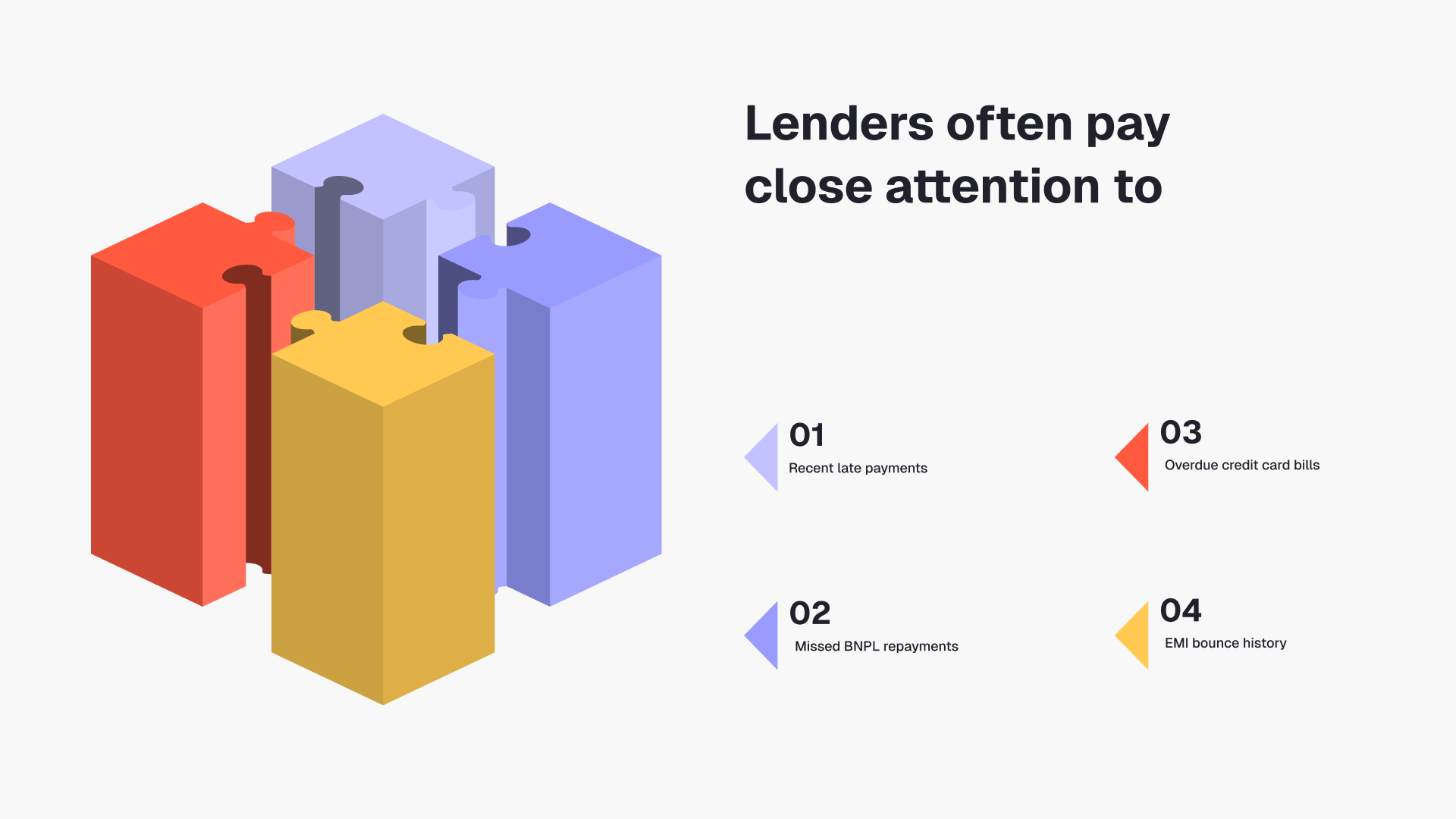
Lenders often pay close attention to:
-
Recent late payments
-
Overdue credit card bills
-
Missed BNPL repayments
-
EMI bounce history
A strong score helps, but recent repayment behaviour still carries weight.
High Credit Utilisation Can Signal Financial Stress
Credit utilisation refers to how much of your available credit limit you are using. If your cards are constantly close to the limit, lenders may see it as a sign of dependency on borrowed money.
For instance, someone using ₹90,000 out of a ₹1 lakh credit limit regularly may appear financially stretched, even with a good score.
High utilisation can affect:
-
Approval confidence
-
Loan amount eligibility
-
Interest rates offered
Keeping utilisation lower usually creates a healthier borrowing profile.
Too Many Recent Loan Applications Can Hurt Your Profile
Every loan or credit card application triggers a hard inquiry on your credit report. Multiple inquiries within a short period can make lenders think you are urgently seeking credit from several places.
This commonly happens when borrowers:
-
Apply across multiple apps at once
-
Submit repeated credit card applications
-
Get rejected and immediately reapply elsewhere
Even if your score stays above 750, frequent inquiries can reduce lender confidence.
“Settled” Accounts Are Different From “Closed” Accounts
Many borrowers misunderstand the difference between settling and closing a loan.
A “closed” account means the full repayment was completed as agreed. A “settled” account means the lender accepted a lower payment amount after repayment difficulty. A settled account in your report may still create hesitation during approval checks.
Lenders often treat settled accounts as a warning sign because they indicate past repayment stress.
Low or Unstable Income Still Affects Approval
A credit score shows repayment history, but lenders also need confidence that you can repay future EMIs.
This becomes important for:
-
Freelancers with irregular income
-
Students without steady earnings
-
Self-employed individuals with fluctuating cash flow
A small business owner may have a strong score but still face rejection if recent bank statements show inconsistent income deposits.
Thin Credit History Can Limit Trust
A good score built over a short period may not carry the same weight as a longer, stable credit history.
Someone who recently started using credit may have:
-
Very few active accounts
-
Limited repayment history
-
Low borrowing experience
In such cases, lenders may want more proof of consistent repayment behaviour before approving larger amounts.
Frequent Short-Term Borrowing Can Create Concern
Repeated borrowing for small gaps can sometimes signal dependency on credit, especially if loans overlap frequently.
Lenders may review:
-
How often you borrow
-
Whether existing loans are fully repaid
-
Gaps between applications
-
Repayment consistency
For example, taking multiple short-term loans back-to-back to manage monthly expenses may reduce approval confidence over time. A strong CIBIL score certainly improves your position, but maintaining healthy borrowing habits matters just as much.
Also read: Personal Loan Rejection Reasons: 7 Common Causes & Fixes in 2026
How to Protect and Improve a 773 CIBIL Score
A 773 CIBIL score already places you in a strong borrowing category, but maintaining it requires consistent financial habits. Many borrowers see their scores drop not because of one major mistake, but due to repeated small issues such as missed due dates, high card usage, or too many credit applications.
The good news is that a few practical habits can help you protect your score and improve it gradually over time.
Pay EMIs and Credit Card Bills Before the Due Date
Your repayment history is one of the biggest factors affecting your CIBIL score. Even a single delayed payment can stay visible on your report for years.
To avoid accidental misses:
-
Set auto-debit instructions carefully
-
Keep enough balance before EMI dates
-
Add payment reminders on your phone
-
Clear at least the full minimum due on cards
This becomes especially important for salaried professionals managing multiple monthly deductions or self-employed individuals with irregular income cycles.
Also read: 5 EMI Bounce Charges You Didn’t Expect in India
Keep Credit Card Usage Under Control
Using too much of your available credit limit can reduce lender confidence, even if you pay bills on time.
A safer approach is to avoid consistently using most of your credit limit. For example, if your card limit is ₹50,000 and your balance regularly stays close to that amount, lenders may view it as financial stress.
Lower utilisation generally signals:
-
Better financial discipline
-
Lower dependency on borrowed credit
-
Stronger repayment capacity
If possible, spread expenses across accounts instead of exhausting one card completely.
Avoid Applying for Multiple Loans Together
Applying across several apps or lenders within a short period can trigger multiple hard inquiries on your credit report.
This may create the impression that:
-
You are urgently seeking funds
-
Previous applications were rejected
-
Your financial situation is unstable
Instead of applying everywhere at once:
-
Compare options first
-
Apply only where you meet eligibility conditions
-
Space out applications where possible
This is particularly relevant for young borrowers trying multiple instant loan apps during temporary cash shortages.
Check Your Credit Report for Errors
Mistakes in credit reports are more common than many borrowers realise. Incorrect overdue entries, duplicate loans, or repayment mismatches can affect approval decisions.
You should review your report periodically for:
-
Incorrect personal details
-
Loans you never applied for
-
Wrong overdue amounts
-
Closed loans still marked active
If you notice an error, raise a dispute with the credit bureau or lender promptly.
Maintain Older Credit Accounts Responsibly
Older accounts with a good repayment history can strengthen your overall credit profile. Closing your oldest credit card immediately after repayment may reduce the average age of your credit history.
Instead:
-
Keep older accounts active if manageable
-
Use them occasionally for small expenses
-
Continue timely repayments
A longer repayment track record usually gives lenders more confidence.
When Does Taking a Small Short-Term Loan Make Sense?
A short-term loan is not meant for long-term financial problems or unnecessary spending. However, in certain situations, borrowing a small amount for a limited period can help you manage urgent expenses without disrupting essential payments.
For many individuals in India, the challenge is often timing rather than income itself. A temporary liquidity gap can still create pressure if an important payment is due immediately.
When a Temporary Cash Gap Creates Urgency
Short-term borrowing usually makes more sense when the problem is temporary and manageable.
Common situations include:
-
Salary getting delayed by a few days
-
Unexpected medical expenses
-
Urgent bike or phone repairs
-
Exam or tuition fee deadlines
-
Supplier payments for a small business
-
Rent due before incoming payments arrive
A salaried employee waiting for reimbursement may need a small amount to cover a utility bill and avoid late payment charges. The key difference is that the borrower already expects incoming funds within a short period.
When the Expense Cannot Be Delayed
Some expenses become more expensive if ignored or postponed.
Missing important payments may lead to:
-
Credit score damage
-
Late payment penalties
-
Service disconnections
-
Additional financial stress
In certain cases, taking a small short-term loan may be more manageable than missing an EMI or defaulting on a critical bill. For instance, a student who misses an exam fee deadline may lose an academic opportunity entirely. Similarly, a small business owner delaying a supplier payment could interrupt regular operations.
When You Have a Clear Repayment Plan
A short repayment horizon works best when you already know how you will repay the amount.
Before borrowing, ask yourself:
-
Will my next salary or payment cover this comfortably?
-
Can I repay without skipping other essentials?
-
Am I borrowing for a genuine need or impulse spending?
-
Do I already have too many active repayments?
If repayment depends on taking another loan immediately afterwards, the borrowing decision may not be sustainable.
How Pocketly Helps During Short-Term Cash Gaps
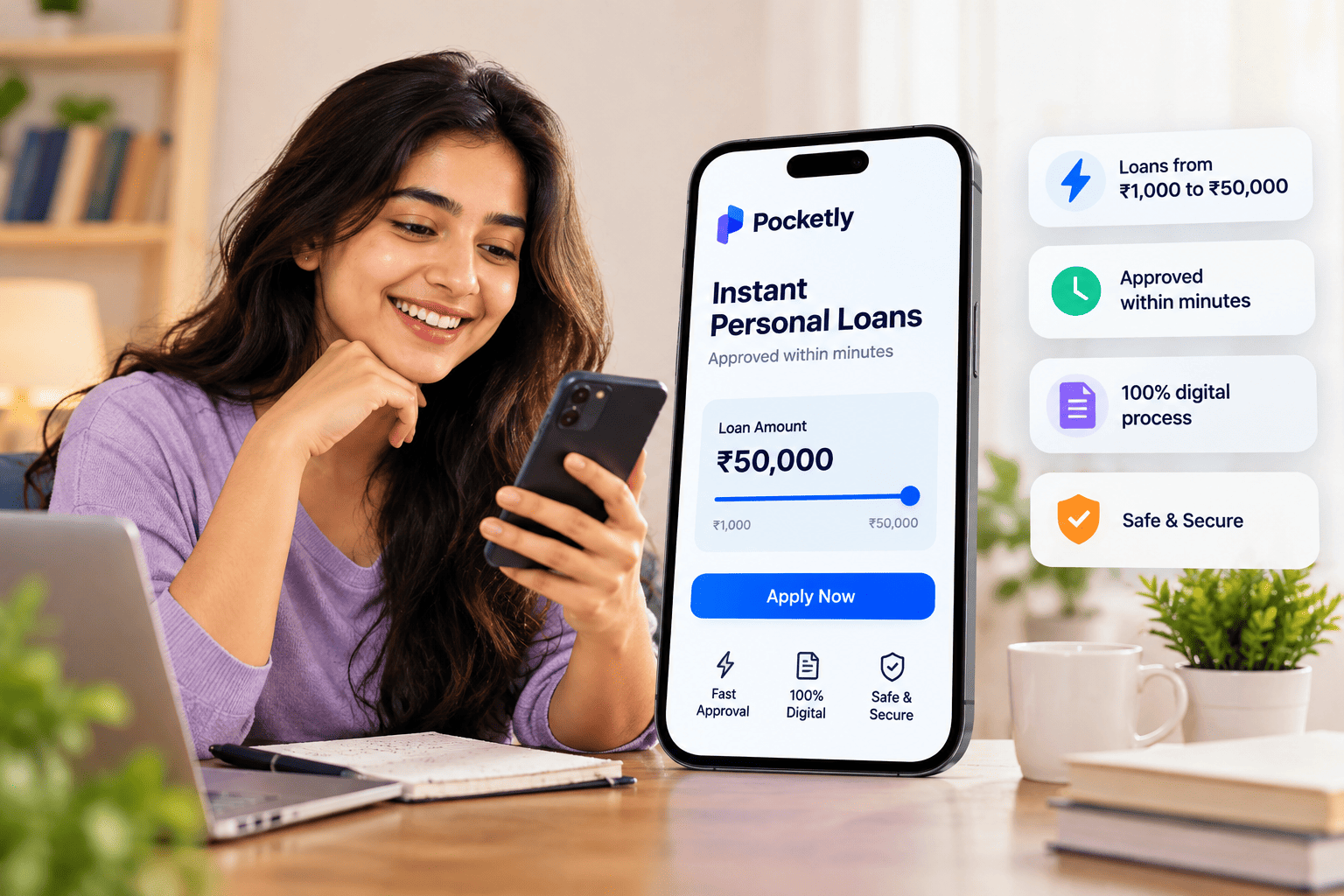
Unexpected expenses do not always arrive at the right time. Pocketly is a digital lending platform working with RBI-registered NBFCs. The platform is designed for Indians who may need quick access to smaller loan amounts for urgent short-term needs.
Pocketly offers:
-
Loan amounts ranging from ₹1,000 to ₹25,000
-
Interest starting from 2% per month
-
Processing fees between 1% and 8%
-
No collateral requirement
-
Fast digital application process
-
Quick digital KYC
The visible loan limit and eligibility may vary depending on the borrower’s profile, repayment behaviour, and verification checks.
How the Application Process Works
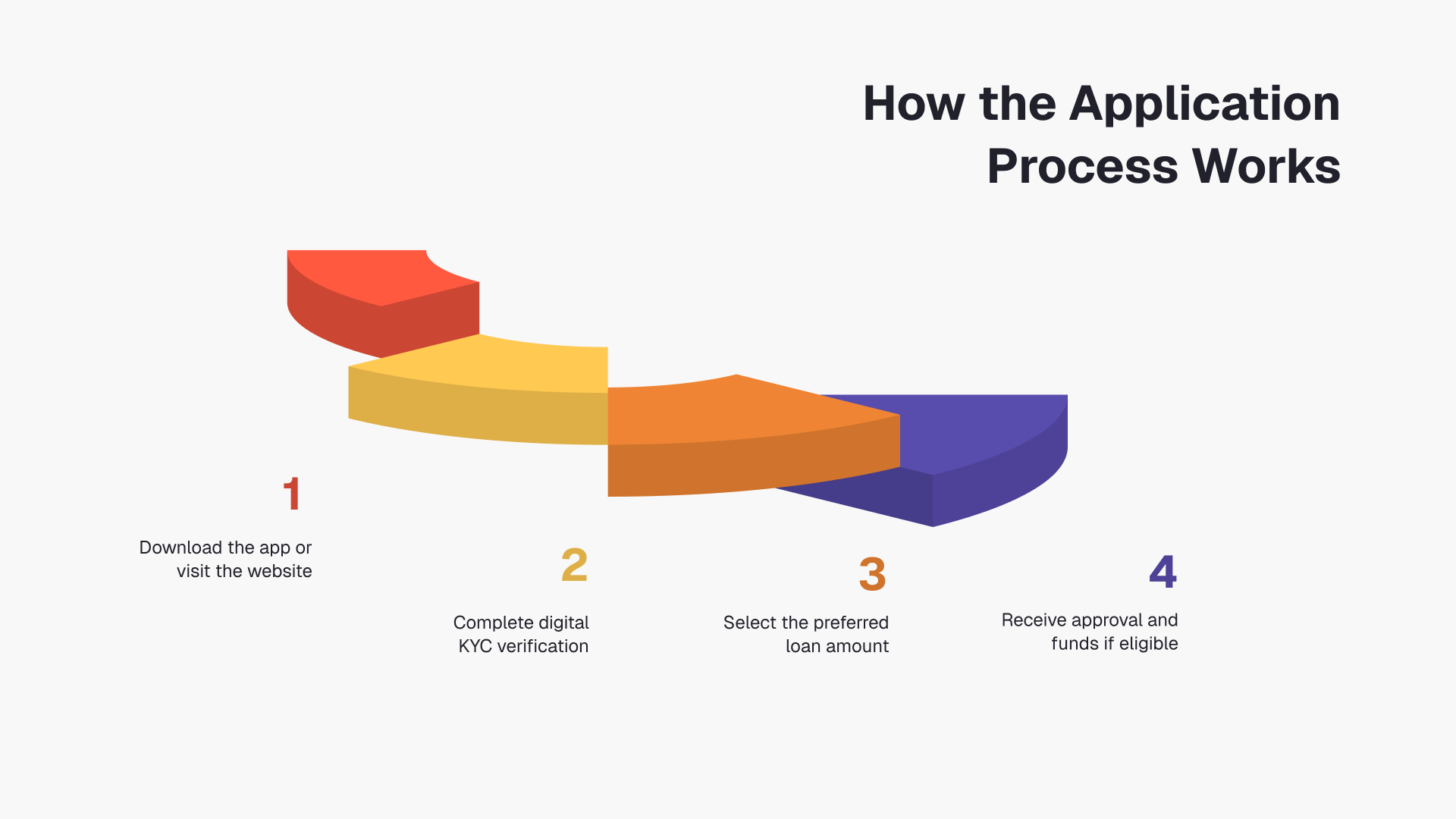
The process is fully digital and usually involves a few basic steps:
-
Download the app or visit the website
-
Complete digital KYC verification
-
Select the preferred loan amount
-
Receive approval and funds if eligible
Need quick funds for an urgent expense? With a fully digital process, minimal paperwork, and loans designed for short-term needs, Pocketly can help you bridge temporary cash gaps with greater convenience. Download the app today and check your eligibility in just a few simple steps.
Conclusion
A 773 CIBIL score is generally considered a strong score in India and can improve your chances of getting approved for loans and credit cards. However, lenders still review factors like income, existing EMIs, repayment history, and recent credit activity before making a final decision.
Maintaining timely repayments and responsible credit usage can help you protect and improve your score over time. And if you face a temporary cash gap, Pocketly offers a fully digital borrowing process with quick KYC and minimal paperwork for short-term financial needs. Download the app today and check your eligibility in just a few simple steps.
FAQs
Q. Is a 773 CIBIL score considered excellent in India?
A 773 CIBIL score is usually considered very good in India. Most lenders view scores above 750 as lower-risk profiles, which may improve your chances of loan or credit card approval.
Q.Can I get a personal loan easily with a 773 score?
A 773 score can improve your approval chances for personal loans, but approval is not guaranteed. Lenders also review your income, existing EMIs, employment stability, and repayment capacity before making a final decision.
Q.Why was my loan rejected despite having a 773 CIBIL score?
Loan applications can still get rejected due to factors such as low income, high existing debt, recent EMI bounces, multiple loan inquiries, unstable bank statements, or high credit card utilisation.
Q.Does checking my CIBIL score reduce it?
No. Checking your own CIBIL score is considered a soft inquiry and does not affect your credit score. However, repeated hard inquiries from lenders during loan applications may slightly impact your score.
Q.How can I improve my score from 773 to 800?
You can gradually improve your score by paying EMIs and credit card bills on time, reducing credit utilisation, avoiding frequent loan applications, maintaining older credit accounts responsibly, and checking your report regularly for errors.
Q.Can students or freelancers get loans with a 773 score?
Yes, students and freelancers may still qualify for certain loans with a 773 score. However, lenders may additionally review income consistency, repayment ability, bank statement patterns, and overall financial stability before approval.