

Spending money today feels effortless, but saving it consistently still feels difficult. With UPI payments, subscriptions, and instant checkouts, expenses happen quietly and add up before you realise it. Over time, this creates a gap between what you earn and what you actually keep.
This is not just personal. India’s household savings have dropped to 18.1% of GDP, showing a clear shift toward higher spending and lower savings.
The real issue is not income but the lack of a system that makes saving consistent and visible. Savings apps solve this by automating small actions, tracking your spending, and helping you build better financial habits.
In this blog, you will learn how savings apps work, which ones to use in India, and how to choose the right one for your goals.
Key Takeaways
-
Money disappears quietly if you don’t track it. UPI, subscriptions, and instant payments make spending effortless, but saving hard.
-
Savings apps automate the small actions that build consistent habits without stress.
-
Not all apps work the same; some track, some automate, and some invest. Pick one that fits your lifestyle and goals.
-
Beginner mistakes like ignoring rules, relying on cashback, or using too many apps can slow progress.
-
Unexpected expenses happen. Tools like Pocketly give short-term support so your savings habit stays uninterrupted.
What Is a Savings App and How Does It Work?
A savings app is simply a tool that helps you save money without overthinking it. Instead of trying to control every expense or saving whatever is left at the end of the month, it makes saving a part of your daily routine.
Most apps connect to your bank account or track your spending. They quietly observe how you spend and then help you save small amounts in the background.
Here’s what that looks like in real life:
-
You spend ₹240 on food, the app rounds it to ₹250 and saves ₹10
-
You set a rule to save ₹100 every week without remembering it
-
You create a goal like “Goa trip” or “emergency fund” and slowly add money to it
-
You get simple insights like “you spent more on eating out this week”
You don’t need to be good with money to use these apps. They are designed to do the thinking for you and make saving feel easy, not stressful.
In simple terms, a savings app helps you build the habit of saving little by little, without making big changes to your lifestyle.
Also Read: How to Manage Monthly Expenses Smartly in 2025
Types of Savings Apps in India (Choose What Fits You)
Not all savings apps work the same way. Some help you save automatically, some help you spend smarter, and some simply show you where your money is going. Here are the types:
|
App Type |
What It Does |
Best For |
|
Automatic Saving Apps |
Saves small amounts based on rules or triggers |
People who struggle to save consistently |
|
Cashback and Rewards Apps |
Gives cashback or rewards on spending |
People who shop or pay bills online often |
|
Expense Tracking Apps |
Tracks and categorises your spending |
People who want to control unnecessary expenses |
|
Investment-Based Saving Apps |
Invests small amounts into assets like gold or funds |
People who want their savings to grow |
Saving money doesn’t have to be hard. With a clear goal and simple steps, anyone can start building their savings. Learn easy, practical ways to achieve your savings goals even if you’re just starting out.
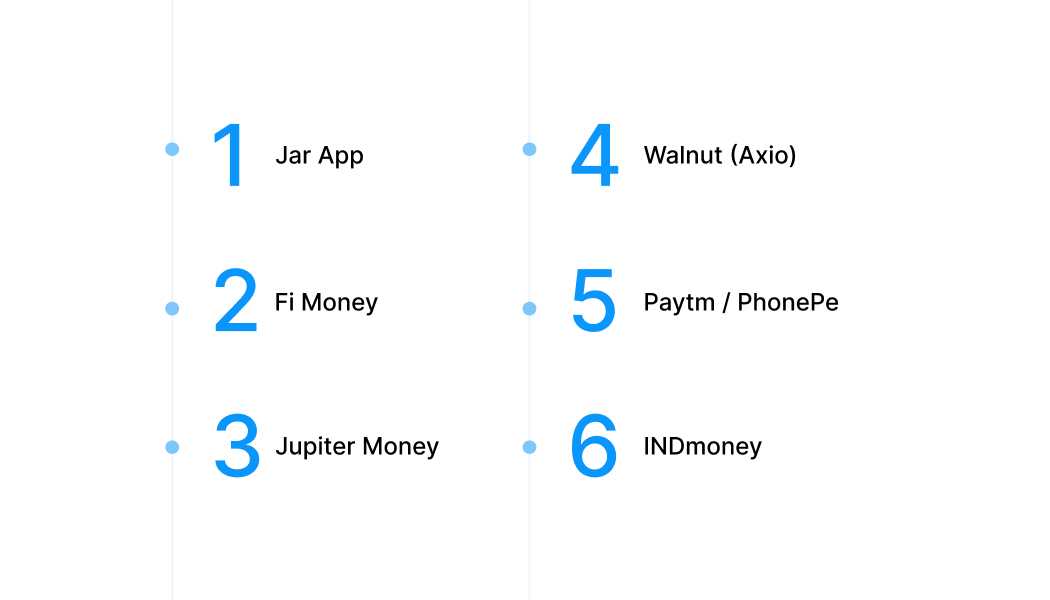
6 Best Savings Apps in India (2026)
There are many apps that claim to help you save money, but not all of them work the same way. The right choice depends on how you spend, how disciplined you are, and what you want to achieve.
Here are some of the most useful savings apps in India, explained in a simple, practical way.
1. Jar App
Jar helps you save by setting aside tiny amounts from your everyday spending. Instead of requiring a fixed monthly commitment, it collects spare change automatically, making the process feel almost invisible.
For example, when you make a payment, the app rounds off the amount and moves the difference into savings. These small contributions add up over time without affecting your daily expenses.
Your savings are stored as digital gold, which means the value is linked to gold prices rather than sitting idle in cash.
Best for: beginners who want to start saving with very small amounts
Features
-
Rounds off transactions to save small amounts
-
Converts savings into digital gold
-
Allows manual deposits
-
Simple and easy-to-use interface
Pros
-
Low barrier to start
-
No need for active effort
-
Suitable for first-time savers
Cons
-
Limited to one type of saving (gold)
-
Value fluctuates with gold prices
-
Not designed for detailed financial planning
2. Fi Money
Fi is a digital banking app that helps you save using simple rules and clear insights. Instead of saving randomly, you can decide exactly how and when money should move into savings.
For example, you can set a rule to save a fixed amount every time your salary is credited or whenever you spend in a certain category. This makes saving predictable and easier to maintain.
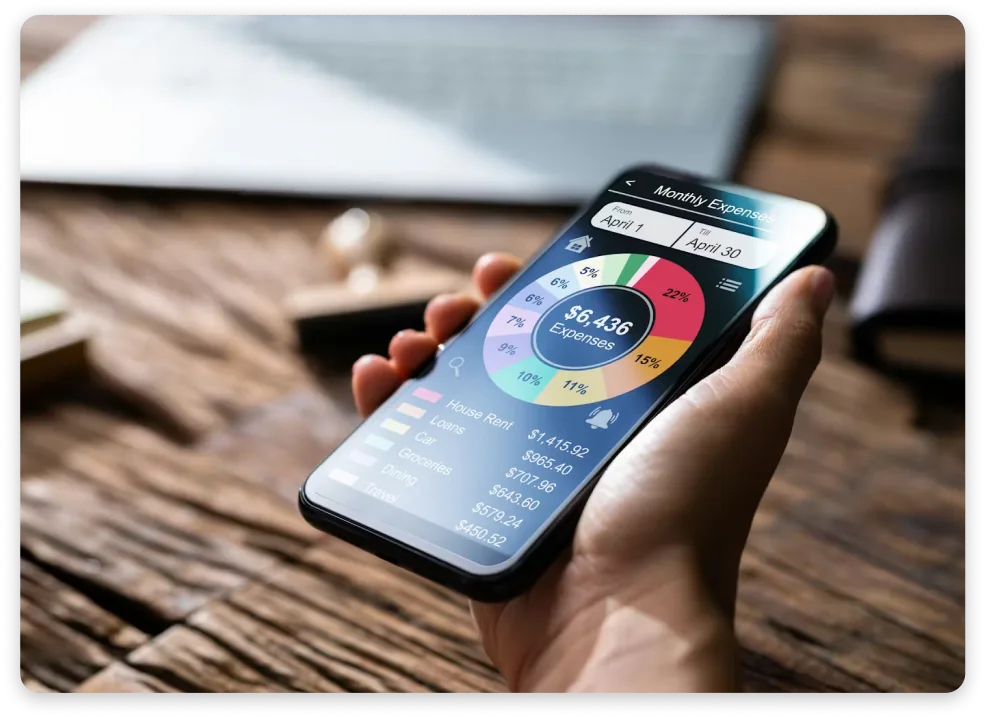
Along with automation, Fi also shows where your money is going. It breaks down your expenses into categories, helping you spot patterns and make better decisions.
Best for: salaried individuals who want structured savings with better visibility
Features
-
Rule-based automatic saving
-
Tracks and categorises expenses
-
Goal-based saving options
-
Clean dashboard with spending insights
Pros
-
Combines automation with visibility
-
Helps build disciplined financial habits
-
Useful for managing monthly income
Cons
-
Requires linking your bank account
-
May feel slightly complex for first-time users
-
Works best with a consistent income
3. Jupiter Money
Jupiter helps you manage your money by dividing it into separate sections for different needs. Instead of keeping everything in one place, you can create dedicated pots for expenses like rent, shopping, or savings.
This setup makes it easier to avoid overspending because you always know how much is available for each purpose. It also helps you plan ahead without constantly checking your balance.
The app also tracks your spending and gives simple insights so you can understand your habits over time.
Best for: people who want better control over how their money is organised
Features
-
Create separate pots for different expenses and goals
-
Track spending across categories
-
Get alerts and reminders for payments
-
Simple tools for basic budgeting
Pros
-
Clear visual organisation of money
-
Helps control spending across categories
-
Easy to understand for beginners
Cons
-
Less focus on automatic saving
-
Requires regular usage for best results
-
Limited advanced financial features
4. Walnut (Axio)
Walnut focuses on one core problem: most people don’t know where their money actually goes. It solves this by automatically tracking your expenses using SMS alerts from your bank, so you don’t have to enter anything manually.
Once connected, it organises your spending into categories like food, travel, bills, and shopping. This gives you a clear picture of your habits and helps you spot areas where you might be overspending.
It does not directly save money for you, but the visibility it provides is often the first step toward better financial control.
Best for: people who want to understand where their money is going without manual tracking
Features
-
Automatically tracks expenses from SMS alerts
-
Categorises spending into simple groups
-
Shows monthly summaries and trends
-
Sends bill reminders
Pros
-
No manual effort required
-
Helps build awareness of spending habits
-
Easy to set up and use
Cons
-
Does not automate savings
-
Requires access to SMS data
-
Insights are limited compared to newer apps
5. Paytm / PhonePe
Paytm and PhonePe are primarily payment apps, but they also help you save through cashback and rewards on everyday transactions. Whether you are paying bills, recharging, or shopping, you often get small returns in the form of cashback or offers.
This type of saving does not require any change in behaviour. You continue your usual spending, and the app gives you small benefits in return. Over time, these amounts can add up, especially if you use UPI frequently.
However, this is not structured saving. The amount you earn depends on offers and usage, so it can be inconsistent.
Best for: people who use UPI regularly and want to save while spending
Features
-
Cashback on bill payments, recharges, and UPI transactions
-
Discounts and offers on partner platforms
-
Easy payment tracking and history
-
Widely accepted across merchants
Pros
-
No extra effort required
-
Works with daily spending habits
-
Easy to use and accessible
Cons
-
Savings are small and unpredictable
-
Can encourage unnecessary spending
-
Not a replacement for planned savings
6. INDmoney
INDmoney isn’t just a budgeting app; it’s a financial companion that helps you track spending while guiding you toward smarter investments. If you’re new to managing money, INDmoney shows you where your income goes and how to grow it, all in one place.
Best for: students and young professionals who want simple budgeting plus beginner-friendly investment guidance
Features
-
Tracks income, expenses, and bills across bank accounts
-
Suggests beginner-friendly investments based on goals
-
Provides credit score insights and overall financial health
-
Let's you set and monitor savings and investment targets
Pros
-
Combines budgeting and investing in one app
-
Clear charts and dashboards for beginners
-
Encourages goal-based saving
Cons
-
Investment features require KYC
-
Learning curve for those who want only budgeting
-
Limited investment options in the free version
Keep your expenses in check. Pocketly provides ₹1,000–₹25,000 instantly to avoid delays and late fees. Apply in minutes and take control of your short-term cash needs.
Features That Actually Help You Save More (Not Just Look Good)
A savings app should do more than just show your balance; it should actively help you build financial discipline and reach your goals. Here’s what to look for, with practical examples you can relate to:
1. Automated Saving Made Easy
The best apps move money for you automatically, so you don’t have to remember or force yourself. It’s effortless and consistent.
Example: You spend ₹345 on groceries. The app rounds it up to ₹350 and transfers ₹5 to your savings pot. Do this daily, and by month-end, you’ve saved hundreds without noticing.
2. Goal-Oriented Savings Pots
Apps that let you create separate pots for specific goals make saving purposeful and motivating.
Example: You plan a ₹30,000 trip to Kerala in 6 months. The app automatically allocates ₹5,000 per month to this pot, showing a progress bar so you can track how close you are to your dream vacation.
3. Detailed Spending Insights
A good app categorises your expenses and highlights trends, helping you cut unnecessary spending and increase savings.
Example: Your app shows you spend ₹7,000 monthly on food delivery. Seeing this, you reduce it to ₹5,000, instantly freeing up ₹2,000 for investments or your emergency fund.
4. Rewards, Bonuses, and Smart Nudges
Small incentives and reminders make saving fun and habitual. Cashback, interest bonuses, or friendly nudges reinforce positive behaviour.
Example: The app gives 0.5% extra interest for consistent monthly savings or sends a push notification reminding you to top up your travel fund. Over time, these rewards compound into meaningful gains.
5. Flexible Access Without Penalties
Your money should grow but remain accessible in emergencies. Look for apps that allow partial withdrawals or instant transfers without harsh penalties.
Example: Your ₹20,000 emergency fund is growing steadily. When your phone breaks, you instantly withdraw ₹10,000 to replace it, while the remaining ₹10,000 continues earning interest.
Want to save without stress? “10 Simple Money Saving Habits For The Future” shows beginner-friendly ways to grow your savings step by step. Make small changes today that pay off tomorrow.
How to Choose the Right Savings App in India
Picking a savings app can feel overwhelming with so many options in India. The best one depends on your goals, habits, and lifestyle.
Think of it like picking a tool that actually works for you. Some apps help you save automatically, others help you track every rupee, and some even let you invest while saving.
Here’s how to choose:
|
Criteria |
What to Check |
|
Goal Alignment |
Short-term vs long-term savings |
|
Income Type |
Salaried vs variable income |
|
Features |
Automation, tracking, rewards, flexibility |
|
Safety & Costs |
RBI-approved, UPI integration, fees |
|
Personal Habits |
Impulse spender vs disciplined saver |
Tip: Try one app for a month, see if it helps you save consistently, then adjust. Apps help, but awareness makes the habit stick.
Common Mistakes People Make with Savings Apps
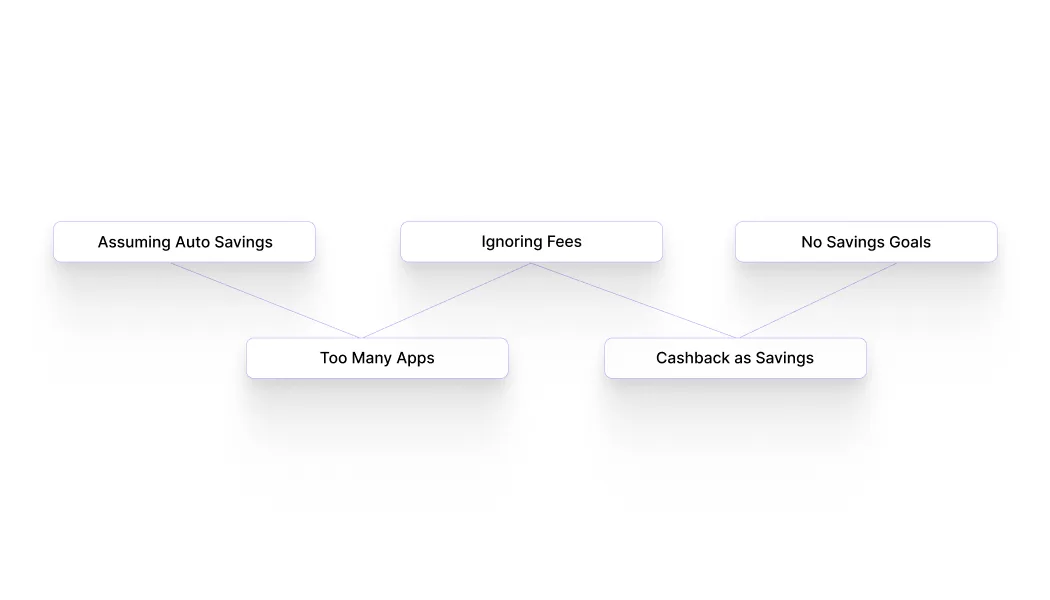
Even the best savings apps are only as effective as the way you use them. Many people make simple mistakes that prevent these tools from helping their money grow. From ignoring fees to skipping goal-setting, here are the common pitfalls to watch out for.
1. Assuming the App Saves for You Automatically
Risk: Many users think that just installing a savings app will automatically grow their money. Without clear rules, target amounts, or regular monitoring, deposits may be irregular or insufficient, leaving your savings stagnant.
Mitigation: Treat the app as a tool, not a solution. Set fixed rules like “save ₹500 every Friday” or automate weekly transfers. Regularly track progress and adjust contributions if you fall behind to ensure your goals are met.
2. Using Too Many Apps at Once
Risk: Multiple apps with overlapping goals can cause confusion, missed deposits, or duplicated effort. This often leads to frustration and can reduce the overall effectiveness of your savings plan.
Mitigation: Limit yourself to one or two apps that match your objectives, whether it’s short-term goals like travel or long-term goals like a home down payment. Consolidating your savings simplifies tracking and improves results.
3. Ignoring Fees or Hidden Terms
Risk: Some apps charge processing fees, have withdrawal restrictions, or enforce lock-in periods. Over time, these small charges reduce your actual savings and may create liquidity issues during urgent needs.
Mitigation: Always read the terms before depositing money. Know the interest rate, processing fees, and withdrawal rules. Factor these costs into your budgeting so you don’t get caught off guard.
4. Treating Cashback as Real Savings
Risk: Relying on cashback or rewards from transactions as a core savings strategy is risky. These are usually inconsistent, often small, and can give a false sense of progress.
Mitigation: Treat cashback or reward points as a bonus rather than your main savings. Focus on disciplined, recurring deposits to see real growth.
5. Not Linking Savings to Goals
Risk: Saving without a purpose can reduce motivation and lead to inconsistent contributions. Funds left unassigned may eventually be spent unintentionally.
Mitigation: Connect every account or app balance to a specific goal, like an emergency fund, a wedding, or a home renovation. Clear goals improve accountability and make saving psychologically satisfying.
Struggling to Save? Pocketly Can Give You a Quick Boost
No matter how disciplined you are, life throws unexpected expenses, medical emergencies, travel needs, or urgent repairs that can derail your savings. When your funds fall short, Pocketly steps in as a simple, safe way to bridge the gap and stay on track with your budget.
Here’s why Pocketly works for Indian users:
-
Borrow exactly what you need: Loan amounts range from ₹1,000 to ₹25,000, so you never take on more debt than necessary.
-
No collateral or guarantor: Access funds without pledging property or finding a co-signer.
-
Quick approval & instant transfer: Minimal KYC verification ensures fast decisions, with money sent directly to your bank account.
-
Flexible repayment: Pick a plan that fits your monthly budget without stress.
-
Transparent fees: Interest starts at 2% per month, with processing charges between 1–8%, no hidden costs.
-
Anytime access via app: Apply, track, and manage your loan 24/7 from your phone.
Pocketly gives you the breathing room to handle urgent expenses while keeping your long-term savings goals intact, without financial strain or surprises.
With short-term loans ranging from ₹1,000 to ₹25,000, fast approval, and simple KYC verification, you get quick access to funds when you need them most without derailing your savings plan.
Download Pocketly on iOS or Android to stay financially prepared, manage sudden costs, and keep your savings journey on track, anytime and anywhere.
FAQs
1. What is a savings app?
A savings app is a mobile application designed to help you save money efficiently. It can automate saving, track your expenses, offer cashback or rewards, and even link to investments to grow your money over time.
2. Are savings apps safe to use in India?
Yes, most reputable savings apps in India are regulated, use bank-grade encryption, and comply with RBI or financial guidelines. Always download apps from official sources like Google Play or Apple App Store and check user reviews.
3. Which savings app is best for beginners in India?
Beginner-friendly apps like Fi Money, Jupiter, or Walnut are ideal. They have simple interfaces, automated features, and goal-based savings to help you build habits without getting overwhelmed.
4. Do savings apps give interest on the money saved?
Some savings apps, especially investment-linked ones like INDmoney or Jar App, can grow your money through fixed deposits, digital gold, or mutual fund options. Pure cashback apps may offer rewards but not interest.
5. Can I use multiple savings apps at the same time?
Yes, using multiple apps is possible, but it’s important to have a strategy. For example, use one app for automated micro-savings, another for cashback rewards, and a third for expense tracking. Avoid overlapping goals to prevent confusion.