

Many young borrowers face the same situation: an unexpected expense comes up, and the only focus becomes getting cash quickly, without fully understanding how the repayment will affect their finances later. This often leads to choosing between instalment loans and payday loans without comparing how each one actually impacts cost and cash flow.
The need for short-term credit is clearly rising in India. According to the Financial Stability Report, non-housing retail loans now account for over 55% of total household borrowings, showing a strong shift toward consumption-driven credit.
This growing reliance on quick credit makes it even more important to understand how different loan types work before making a decision.
In this blog, we’ll break down instalment loans vs payday loans and which option actually makes more sense for emergency cash.
TL;DR
-
Instalment loans and payday loans both provide fast emergency cash, but they differ in repayment structure and financial pressure.
-
Instalment loans are repaid through EMIs over time, making repayment predictable and easier to plan monthly.
-
Payday loans require a single full repayment in a short period, which can create sudden cash flow stress.
-
Instalment loans generally lead to more manageable overall repayment, while payday loans can become costly if not cleared on time.
-
The better option depends on timing and affordability, structured repayment vs immediate, one-cycle repayment ability.
What Is an Instalment Loan?
An instalment loan is a type of borrowing where you receive a lump sum upfront and repay it through fixed, scheduled payments over time. Each payment includes both principal and interest, making repayment predictable and structured.
How it works
-
You borrow a fixed amount at the start
-
Repayment happens in equal monthly instalments (EMIs)
-
Tenure is set in advance (months or years)
-
Payments remain consistent throughout the loan cycle
What Is a Payday Loan?
A payday loan is a short-term, high-cost loan designed to be repaid in a single lump sum, usually on your next payday. It is typically used for urgent cash needs when repayment is expected within a very short time frame.
How it works
-
You borrow a small amount for a very short period
-
Repayment is due in full, usually within 2–4 weeks
-
Fees or interest are charged upfront or at repayment
-
No long repayment schedule or EMIs
Instalment Loan vs Payday Loan: What Really Makes Them Different
Instalment loans and payday loans may both provide quick access to cash, but they are structured very differently in how you repay, how much they cost, and how they impact your finances over time.
The following are the key differences between them:
|
Factor |
Instalment Loan (India) |
Payday Loan (India) |
|
Loan amount |
₹10,000 to ₹25+ lakh (banks/NBFCs) |
₹1,000 to ₹50,000 (loan apps) |
|
Tenure |
3 months to 5 years |
7–30 days (till next salary) |
|
Interest rate |
~10%–36% p.a. (CIBIL-based) |
Often 1% per day or high flat fees (can exceed 200%+ annualised) |
|
How interest is charged |
Reducing balance (EMI-based) |
Flat fee / short-term charge (no reducing benefit) |
|
Repayment structure |
Monthly EMIs |
Lump sum repayment |
|
Credit score (CIBIL) |
Required; impacts approval & rate |
Often not required or loosely checked |
|
Regulation (India) |
RBI-regulated banks/NBFCs |
Many loan apps operate in grey/loosely regulated areas |
|
Processing & approval |
Moderate checks (income, KYC, CIBIL) |
Instant approval, minimal checks |
|
Total cost |
Lower, spread over time |
Very high relative cost |
|
Risk level |
Manageable if planned |
High risk of debt cycle |
|
Best use case |
Planned expenses, medical, consolidation |
Emergency cash before salary only |
1. Loan Amount: Small Borrowing vs Real Financial Support
The amount you can borrow plays a big role in deciding which loan actually helps you. In India, payday loans are designed for very small, short-term cash needs, usually ranging between ₹1,000 and ₹50,000. These are typically used to cover temporary gaps like bills before salary.
Instalment loans, on the other hand, offer much higher borrowing limits, often starting from ₹10,000 and going up to several lakhs depending on your income and profile.
For example, if you need ₹3–5 lakh for a medical emergency or relocation, a payday loan simply won’t be enough. In such cases, an instalment loan becomes the only practical option, as it provides both adequate funds and structured repayment.
2. Interest Rates: Where the Real Cost Adds Up
At first glance, payday loans may seem affordable because the charges look small. But the reality is very different when you look at how these costs add up.
In India, instalment loans from banks and NBFCs usually come with interest rates starting from around 10% per annum, depending on your CIBIL score and income.
Payday loans, however, often charge daily interest or fixed fees, which can become extremely expensive when annualised.
For example, borrowing ₹10,000 and paying ₹1,000–₹2,000 as a short-term fee for just a few weeks may not seem like much—but over time, this translates into a very high effective cost.
This is why, even if payday loans feel convenient, instalment loans are usually far more cost-efficient in the long run.
3. How Interest is Charged: The Hidden Difference
One of the most overlooked differences is how interest is calculated.
Instalment loans in India typically use the reducing balance method, where interest is charged only on the remaining loan amount. As you keep paying EMIs, the interest portion reduces over time.
Payday loans don’t work this way. They usually charge a flat fee or fixed interest upfront, regardless of how quickly you repay.
For example, if you take a ₹20,000 payday loan for 15 days, you may have to repay the full amount plus fees in one go—without any benefit of reduced interest.
This makes instalment loans more transparent and predictable, while payday loans can feel simple but end up being costlier.
4. Repayment Structure: Monthly Ease vs One-Time Pressure
Repayment structure directly affects your monthly stress levels.
Instalment loans are repaid through fixed EMIs, which makes it easier to plan your budget. You know exactly how much you need to pay every month, and you can align it with your salary.
Payday loans, however, require a single lump-sum repayment, usually on your next payday.
For example, if your salary is ₹30,000 and you need to repay ₹12,000 at once, it can disrupt your entire monthly budget. This often forces people to borrow again, creating a cycle.
This is why instalment loans are generally easier to manage, particularly if your income is fixed.
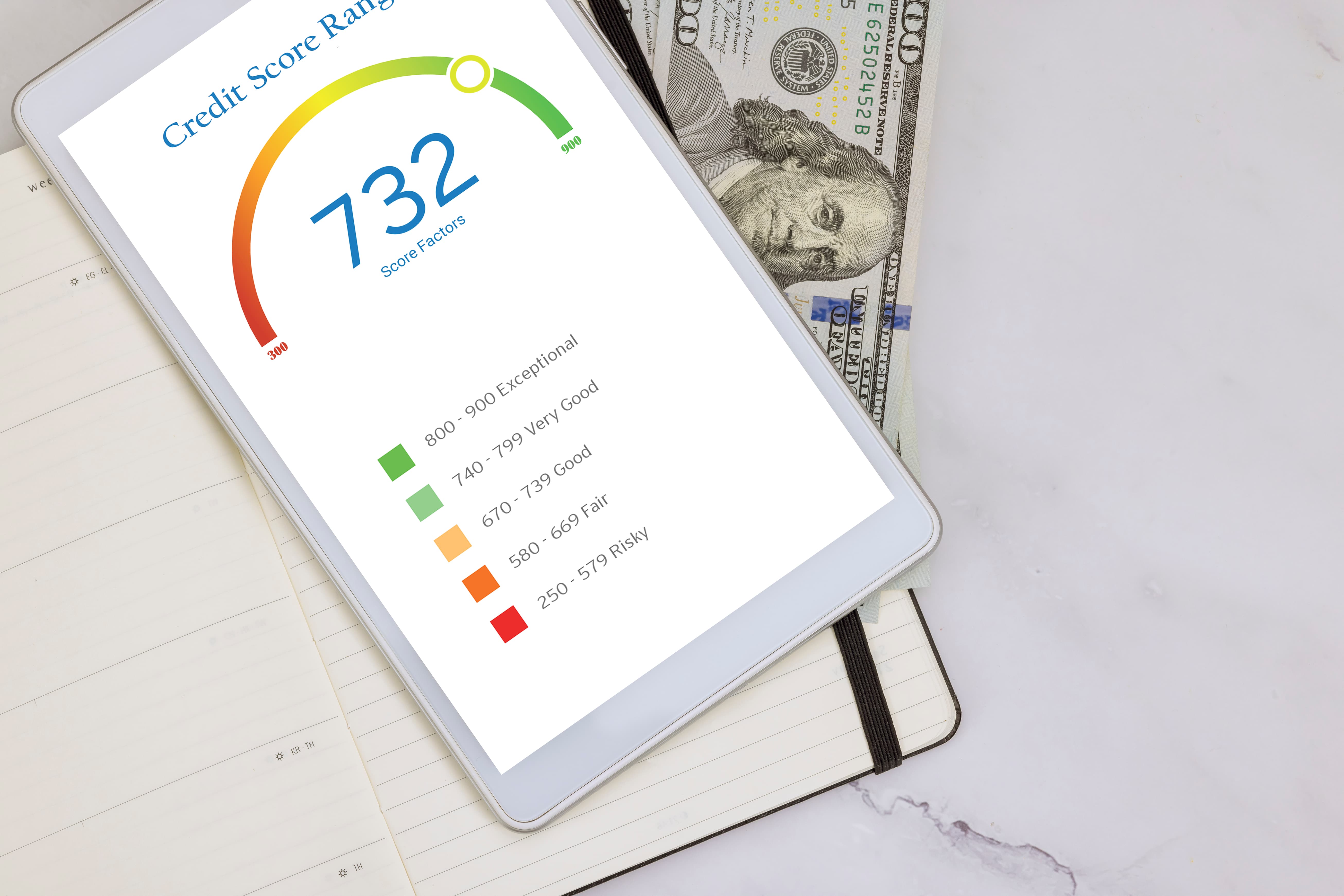
5. Credit Score (CIBIL): Access vs Long-Term Impact
Your credit score plays a major role in borrowing in India.
Instalment loans usually require a CIBIL score, and a higher score can help you get better interest rates and higher loan amounts.
Payday loans, on the other hand, often approve applications with minimal checks, making them accessible even if your credit score is low.
For example, someone with a score below 650 may struggle to get a bank loan but can still access instant loan apps.
However, this convenience comes with a trade-off. Missing repayments on such loans can still impact your financial profile, making it harder to access better, lower-cost loans in the future.
6. Risk of Debt Cycle: Short-Term Relief, Long-Term Problem
Payday loans are often marketed as quick solutions, but they can easily lead to repeated borrowing.
Since the repayment is due in one go, many borrowers are unable to repay the full amount and end up taking another loan to cover it.
For example, you take ₹5,000 → repay ₹6,000 → then borrow again next month. Over time, this pattern increases your total repayment significantly without actually solving the problem.
Instalment loans reduce this risk by offering structured repayment over time, helping you manage debt more sustainably.
7. Overall Cost vs Convenience: What Actually Matters
At the core, the difference comes down to cost vs speed.
Payday loans offer fast approval and instant access, which makes them useful in urgent situations. But this convenience often comes at a much higher cost.
Instalment loans may take slightly longer to process, but they provide lower interest rates, better structure, and long-term affordability.
For example, waiting an extra day for a loan approval could save you thousands in interest over time.
Read More: Quick NBFC Personal Loans for People with Bad Credit Score in India
Which Loan Works Better for Emergency Cash Needs?
A quick approval does not always mean a safer borrowing choice. In most cases, the right decision comes down to repayment structure and cash flow impact. Here’s how instalment and payday loans compare for emergency cash needs:
Instalment loans work better when:
-
You need time to repay in small, predictable EMIs
-
The expense is urgent but not repayable in one cycle
-
You want lower repayment pressure spread over months
-
Managing monthly budget consistency is important
Payday loan is only suitable when:
-
The cash need is very small and extremely short-term
-
You are certain of repayment from the next salary itself
-
No other credit option is available immediately
-
You can handle a single lump-sum repayment without stress
Handle short-term cash gaps without stress. Pocketly offers ₹1,000–₹25,000 instantly so you can manage urgent payments on time. Apply in minutes and get quick access when you need it most.
What Most Borrowers Don’t Realise About Loan Risks
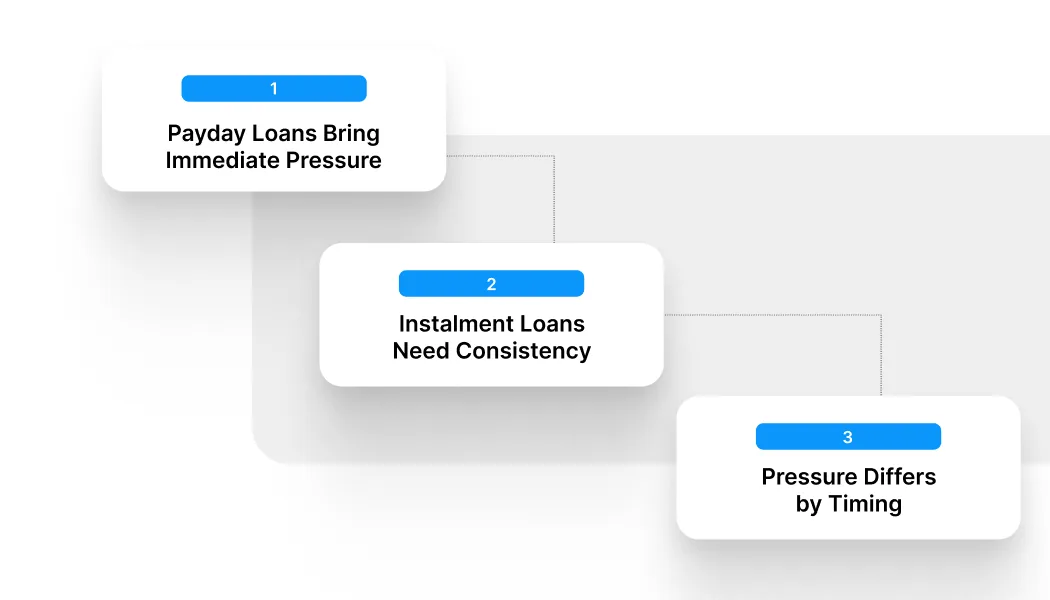
Before choosing any loan, it’s important to understand one simple thing: loans don’t just give you money; they decide how much pressure you will feel when it’s time to repay them.
Instalment loans and payday loans both solve short-term money problems, but they create very different types of financial stress.
Payday loans create quick relief but heavy repayment pressure
Payday loans may look simple because the money comes fast, but the repayment is where most people struggle.
The key risks are:
-
You have to repay the entire amount in one go
-
The due date is usually very close to your salary date
-
Even a small delay can increase your total cost
-
Some borrowers end up taking another loan to repay the first one
Simply put, the pressure comes all at once at the end.
Instalment loans feel lighter monthly but require consistency
Instalment loans are easier to manage because repayment is broken into smaller monthly parts.
The key risks are:
-
You need to pay EMIs every month on time
-
Missing payments can affect your credit record
-
You stay committed for a longer time
-
The total cost may increase if repayment is stretched too long
Simply put, the pressure is smaller, but it continues for longer.
The real difference is the timing of financial pressure
Both loan types have risks, but they feel different in real life.
-
Payday loans → short-term heavy pressure
-
Instalment loans → long-term steady commitment
The better choice depends on which type of pressure you can handle without disturbing your monthly life.
Also read: Interest Rates in India 2026: How They Affect Loans & Savings
7 Smarter Alternatives to Payday & Instalment Loans in India
If you want to avoid the high cost of payday loans or the long-term commitment of instalment loans, there are several alternatives in India that can offer lower interest, faster access, or more flexibility.
The key is to choose an option that solves your short-term need without creating long-term financial pressure.
1. Salary Advance & Cash Advance Apps
If you are salaried, accessing your earned income early can be one of the simplest and lowest-cost alternatives.
Many apps and employers now allow you to withdraw a portion of your salary before payday, often with no interest or minimal fees. Globally, similar cash advance tools are designed to help users avoid high-cost borrowing by giving early access to wages.
For example, if you need ₹3,000–₹5,000 a few days before your salary, a salary advance can solve the issue instantly—without taking on a loan or paying heavy charges.
2. Small Personal Loans from Banks or NBFCs
If your requirement is slightly higher, a small personal loan is usually a much safer alternative to payday loans.
These loans come with structured EMIs and lower interest rates, making repayment more manageable over time. Unlike payday loans, they are also regulated and transparent.
For example, instead of paying high fees on a ₹20,000 payday loan, you could take a short-term personal loan and repay it over 3–6 months. This spreads out your cost and reduces immediate financial pressure.
3. Secured Loans (Gold, FD, or Investments)
If you have assets, secured loans can give you quick access to cash at much lower interest rates.
Common options in India include:
-
Gold loans
-
Loan against fixed deposits (FD)
-
Loan against mutual funds or shares
These loans are cheaper because you provide collateral, which reduces the lender’s risk.
For example, instead of taking a high-interest loan, pledging gold for ₹30,000 can give you quick funds with significantly lower interest and flexible repayment.
4. Peer-to-Peer (P2P) Lending Platforms
P2P lending platforms connect borrowers with individual investors rather than banks.
These platforms often use alternative credit assessment methods, which can help if your CIBIL score is low.
For example, if a bank rejects your loan due to limited credit history, a P2P platform may still approve your application based on income and repayment ability.
5. Credit Card or BNPL (Buy Now, Pay Later)
If you already have a credit card or access to BNPL services, they can act as a short-term financial cushion.
Some BNPL services allow you to split payments into smaller parts, sometimes with zero interest for a short period.
For example, instead of borrowing ₹10,000, you can convert the expense into 3–4 smaller payments, reducing immediate pressure on your cash flow.
6. Government Schemes & Emergency Assistance
In India, certain situations may qualify for financial assistance through government schemes.
For example:
-
Medical emergency funds (like PMNRF-type support)
-
Welfare schemes for low-income households
These options are not instant like loans, but can provide financial relief without a repayment burden.
7. Borrowing from Friends or Family
While not always comfortable, this remains one of the fastest and lowest-cost options.
Unlike formal loans, there is usually no interest and flexible repayment terms, as long as expectations are clearly discussed.
For example, borrowing ₹5,000 from a trusted family member and repaying it over time can help you avoid high fees and strict deadlines.
How Pocketly Fits Into Small Emergency Cash Needs
Not every financial need requires a large loan or a long repayment plan. In many cases, the requirement is simple: a small amount of money for a short period of time until things get back on track.
This is where Pocketly fits in, especially for users who don’t want to go through lengthy banking processes for minor, time-sensitive needs.
Here’s how it fits this use case
-
Offers small loans ranging from ₹1,000 to ₹25,000, suitable for minor repairs or quick upgrades
-
Provides instant digital approval with minimal documentation and fast bank transfer
-
Interest starts from around 2% per month, with transparent processing fees of 1%–8% based on profile and loan amount.
-
Fully digital process, so there is no need for paperwork or branch visits
Pocketly works as a short-term financial buffer for small home improvement needs, especially when waiting for traditional loans is not practical.
Download Pocketly on iOS or Android to access funds when you need them and stay in control of your finances.
FAQs
1. What is the main difference between an instalment loan and a payday loan?
An instalment loan is repaid in fixed monthly EMIs over time, while a payday loan is repaid in a single lump sum, usually on your next salary date.
2. Which is better for emergency cash: an instalment loan or a payday loan?
Instalment loans are generally better for most emergencies because they offer flexible repayment, whereas payday loans require full repayment in a short time.
3. Why are payday loans considered expensive?
Payday loans often have very high fees or APRs, making them more costly than instalment loans, especially if repayment is delayed.
4. Do instalment loans have lower interest than payday loans?
Yes, instalment loans usually have lower and more structured interest rates compared to payday loans, where costs are often charged upfront or at maturity.
5. Can I repay an instalment loan early?
Most instalment loans allow early repayment or pre-closure, but terms may vary depending on the lender and any applicable charges.
6. What happens if I cannot repay a payday loan on time?
If you miss a repayment, payday loans can lead to additional fees, penalties, and, in some cases, a cycle of debt due to rollover charges.
7. How do I choose between an instalment loan and a payday loan?
Choose based on your repayment ability. Instalment loans suit planned repayments, while payday loans should only be used for very short-term, urgent cash gaps.