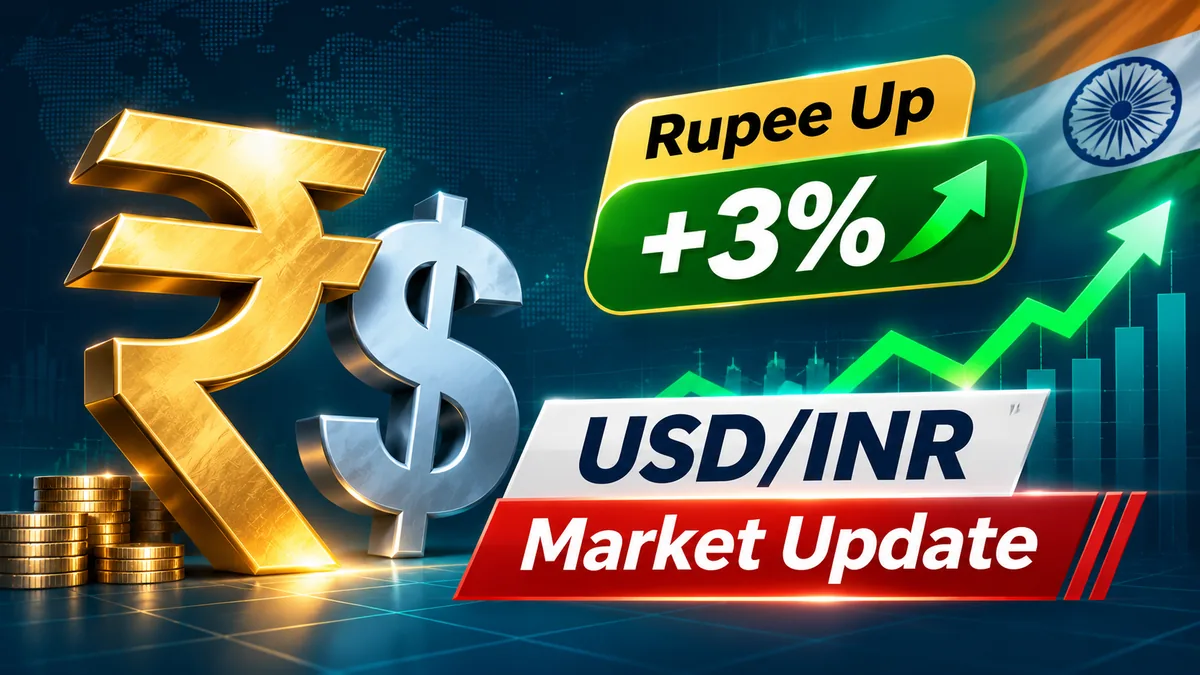


The Indian rupee has posted a recovery of more than 3% from its recent lifetime lows against the US dollar. After facing intense pressure from global geopolitical turbulence, aggressive capital outflows, and wide current account deficits that pushed the domestic currency past historic troughs of ₹96.90 earlier this year, the latest Indian rupee news signals a steady macro turnaround.
With international crude oil prices cooling, overseas institutional investors returning to domestic equities, and steady interventions by the Reserve Bank of India (RBI), the domestic currency has regained its balance. In the currency markets, the USD to INR spot exchange rate has retreated from peak panic levels, consolidating in the 93.70 to 93.90 corridor.
For salaried workers, small business owners, and household budget planners, currency fluctuations can seem disconnected from daily life. However, movements in the indian currency value directly impact what you pay at the petrol pump, the shelf price of everyday appliances, foreign education fees, and the interest rates charged on retail debt.
What Happened?
The Indian rupee has appreciated by more than 3% from its historic low against the greenback, moving from peaks near ₹96.90 down to the 93.70–93.90 range. This rebound stems from falling global crude oil benchmarks, sustained net purchases by Foreign Institutional Investors (FIIs), and calibrated market operations by the Reserve Bank of India (RBI). As the USD to INR exchange rate eases, pressure on wholesale import prices and consumer goods begins to moderate.
Catalysts Driving the Rupee vs Dollar Recovery
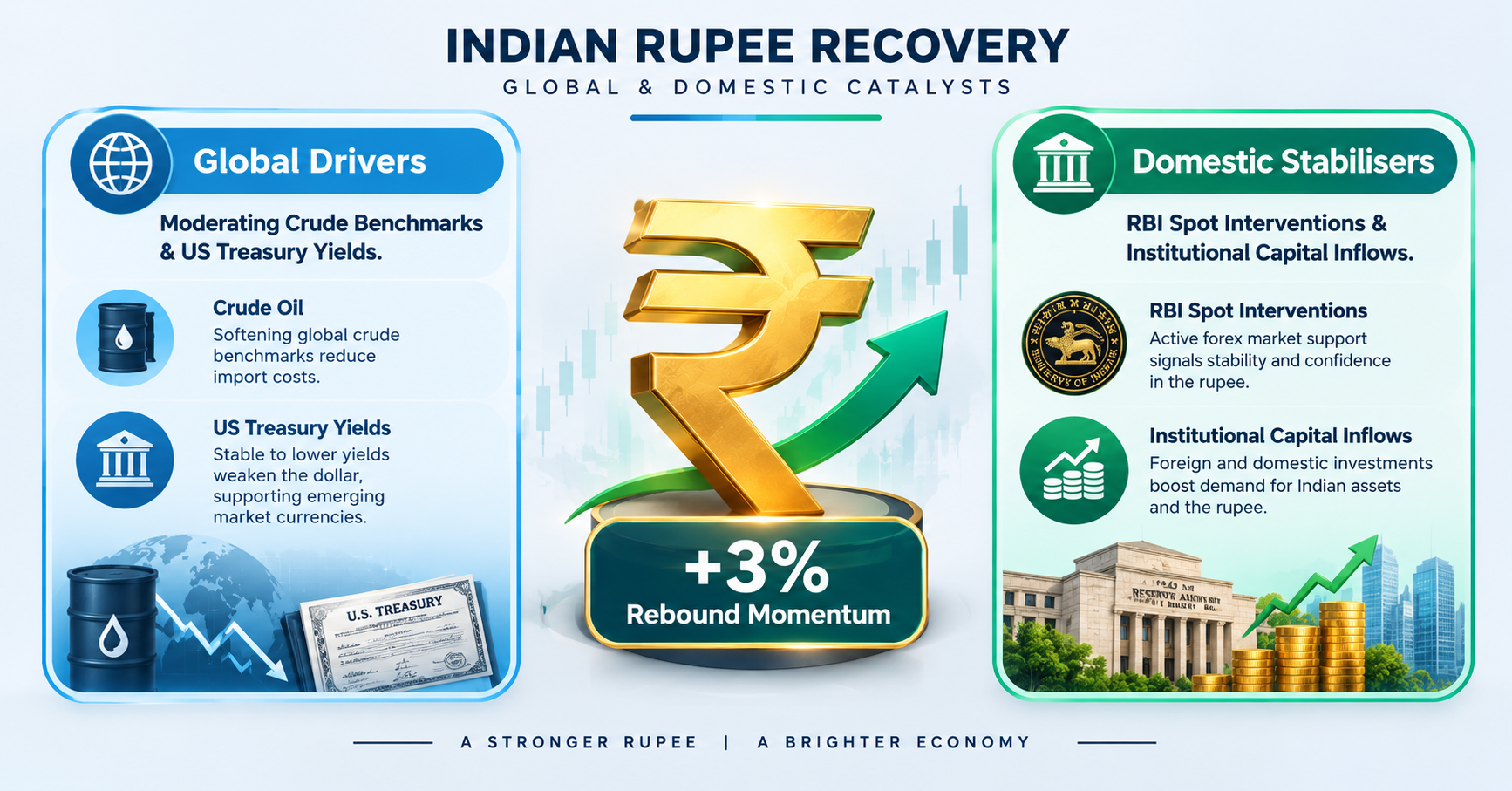
The shifting rupee vs dollar equation is shaped by a mix of international headwinds easing and domestic economic stabilisers gaining traction.
-
Softening Global Crude Oil Prices: India imports more than 85% of its crude requirements. When international oil rallies, domestic oil marketing companies (OMCs) must buy billions of dollars, draining forex reserves and weighing on indian money currency values. Recent drops in global energy benchmarks have eased this continuous dollar outflow.
-
Revival of Foreign Portfolio Inflows (FIIs): After persistent selling cycles earlier in 2026, foreign institutional investors have turned into net buyers across Indian equities and fixed-income assets, replenishing dollar liquidity in domestic banks.
-
Proactive RBI Currency Management: The Reserve Bank of India has maintained active, balanced interventions in non-deliverable forward (NDF) and domestic spot markets, mitigating speculative spikes without running down its foreign exchange buffer.
-
Resilient Domestic Macro Indicators: Robust tax collections, strong domestic consumption, and sustained manufacturing output continue to keep domestic capital markets attractive compared to competing emerging economies.
Rupee Recovery Drivers: Domestic vs. Global Factors
Macro Dynamics: Record Low vs. Post-Recovery Reality
The table below contrasts the domestic economy under extreme currency depreciation against current, stabilised trading conditions:
|
Economic Parameter |
Currency at Record Low |
Current Setup (USD to INR Rebound) |
Practical Impact on Indian Consumers |
|
USD to INR Spot Rate |
Breached ₹96.50–₹96.90 highs |
Stabilised near ₹93.70–₹94.00 |
Reduces wholesale import bills for domestic enterprises. |
|
Imported Inflation (Fuel & LPG) |
Upward pressure on landed port costs |
Moderation across transport logistics |
Keeps logistics surcharges and domestic fuel rates stable. |
|
Electronics & Hardware |
Price increases on components and chips |
Margin room for manufacturers |
Stabilises prices for laptops, smartphones, and components. |
|
Foreign Education Outlays |
Higher tuition and living deposits |
Noticeable savings on foreign remittances |
Families pay less when sending semester fees abroad. |
|
RBI Policy Stance & Lending Rates |
Risk of rate increases to protect the currency |
Greater scope for neutral monetary policy |
Benchmark retail lending rates (EBLR/MCLR) remain stable. |
What It Means for Indian Consumers
A 3% recovery in the indian currency value might look small in percentage terms, but across a massive import-dependent economy, the everyday benefits are concrete.
1. Relief from Imported Inflation
When the rupee falls, every imported barrel of crude, container of edible oil, and batch of factory components lands with a higher rupee cost. This imported inflation quickly filters into wholesale and retail consumer prices. As the currency claws back ground, transportation networks and freight charges stabilise, protecting households from sudden price hikes on essentials.
2. Stable Consumer Electronics and Gadget Pricing
Modern appliances—from laptops and mobile phones to electric two-wheelers—rely on imported microprocessors, memory chips, and battery components. A stronger indian money currency gives manufacturers breathing room to absorb component costs rather than passing them on through price hikes.
3. Lower Outlays for Students Abroad
For parents sending funds to university students overseas, exchange rate shifts make an immediate difference:
-
At an exchange rate of ₹96.80 to $1, a $25,000 university semester fee costs ₹24,20,000.
-
At the recovered rate of ₹93.80 to $1, that same remittance costs ₹23,45,000.
-
This represents an immediate saving of ₹75,000 on a single tuition transfer.
4. International Travel and Foreign Card Expenses
Travelers heading overseas or professionals paying for foreign digital subscriptions benefit from lower base conversion rates and reduced forex markups on card transactions.
The Retail Credit Environment: What Happens to Loans and EMIs?
Whenever foreign exchange markets go through sharp volatility, borrowers often wonder whether retail interest rates will rise.
When a domestic currency depreciates without support, central banks are sometimes forced to hike benchmark interest rates to halt capital flight. With the rupee finding stable ground, the Reserve Bank of India faces less pressure to introduce defensive rate hikes.
For retail borrowers, interest rates on home loans, auto loans, and personal loans tied to external benchmarks (EBLR) or MCLR are expected to remain predictable. Borrowers planning new financial obligations can assess repayment terms on our personal loan EMI calculator or plan their broader budget using our dedicated loan EMI calculator.
Managing Household Cash Flows During Macroeconomic Shifts
Even as broader economic signals improve, personal finances can still face short-term liquidity bottlenecks. Routine salaries arrive on a fixed monthly date, but unexpected medical bills, vehicle repairs, or academic deposits do not wait for payday.
To keep your personal finances resilient during shifting macro cycles:
-
Keep Fixed Repayments Balanced: Make sure your total monthly debt obligations do not exceed 40% to 50% of your net income. You can verify your balance using our FOIR calculator.
-
Apply Structured Budgeting: Divide your monthly take-home pay into 50% essentials, 30% discretionary spending, and 20% savings or debt reduction using our 50 30 20 rule calculator.
-
Guard Against Lifestyle Creep: As inflation settles and retail sentiment picks up, avoid taking on unneeded debt. Review our guide on lifestyle inflation and savings.
-
Compare Flat vs Reducing Interest Models: Never sign a credit agreement without understanding how interest is calculated. Evaluate reducing-balance against flat rates using our flat vs reducing rate calculator.
-
Address Missed EMIs Early: If an unexpected expense makes it hard to pay on time, understand the credit bureau impact via our guide on loan ki kissht nahi bhar pa rahe.
-
Understand How Inflation Interacts with Debt: See why consumers turn to short-term credit during price fluctuations in our article on personal loans during inflation.
-
Watch Out for Unregulated Lending Apps: Avoid unregulated platforms that charge predatory weekly interest rates. Learn how to identify safe tenures in our breakdown on 7 days loan vs 30 days loan.
-
Plan Early Debt Payoffs: If you receive a seasonal bonus, check your potential interest savings using our loan prepayment calculator and loan foreclosure calculator.
-
Follow Credit Industry Developments: Keep up with institutional funding trends and borrowing costs through our industry report on NBFC rising funding costs loan growth 2026.
How Pocketly Helps Manage Month-End Cash Gaps Responsibly
Tracking indian rupee news and changes in the rupee vs dollar exchange rate highlights a key financial reality: unexpected expenses can happen in any economic climate. When temporary cash gaps occur, liquidating long-term investments or running up revolving credit card debt at 36% to 49% annual interest can damage your financial stability.
Pocketly is India's most trusted financial app, used by more than 20 million happy users. We offer a transparent, 100% digital borrowing experience with instant personal loans and zero CIBIL score needed to get started:
-
Accessible Digital Credit Lines: Eligible users can access micro-credit from ₹1,000 to ₹50,000 disbursed directly into their bank accounts through a fast, paperless mobile process.
-
Tailored for Salaried Employees: Manage month-end expenses smoothly before your next salary cycle with a personal loan for salaried individuals.
-
Flexible Terms for Self-Employed Individuals: Cover short-term working capital needs or inventory costs with our personal loan for self employed options.
-
Support for Gig Workers and Students: Young earners and freelancers can build credit history without standard salary slips via our loan for non salaried tier.
-
Regulated, Transparent Borrowing: All lending through Pocketly is conducted in compliance with RBI digital lending directives via our partner NBFC, Speel Finance Company Private Limited, adhering strictly to our responsible lending charter.
-
Smart Planning Calculators: Check your borrowing profile with our personal loan eligibility calculator and benchmark monthly instalments against leading banks using our SBI loan EMI calculator, Axis Bank loan EMI calculator, and Kotak loan EMI calculator.
-
Long-Term Wealth Protection: Safeguard your personal savings against inflation and currency depreciation through accessible digital gold.
Key Takeaways
-
The Indian rupee gained more than 3% from its lifetime lows, supported by softening oil benchmarks, steady foreign institutional buying, and proactive RBI market measures.
-
The USD to INR conversion rate has pulled back from ₹96.90+ highs to trade around ₹93.70–₹94.00, reducing imported inflation risks.
-
Consumers benefit from stabilised electronics pricing, lower freight costs, and direct savings on overseas student fee transfers.
-
A steady currency helps the RBI keep policy rates balanced, ensuring predictable retail borrowing benchmarks.
-
Managing short-term liquidity challenges works best with disciplined budgeting and transparent digital credit lines rather than high-cost revolving debt.
Responsible Financial Planning with Pocketly
Navigating changing economic conditions requires flexible cash management. When unexpected expenses arise, apply for instant personal loans up to ₹50,000 on Pocketly—no CIBIL score needed, with a 100% digital application trusted by over 20 million users. Complete your digital KYC, review your Key Fact Statement, and access funds directly in your bank account today.
Frequently Asked Questions (FAQs)
Why did the Indian rupee recover from its recent record low?
The rebound in the indian currency value was driven by softening international crude oil prices, renewed equity purchases by Foreign Institutional Investors (FIIs), and proactive foreign exchange liquidity management by the Reserve Bank of India to calm volatility in the rupee vs dollar corridor.
How does the USD to INR exchange rate influence retail inflation?
Because India imports large volumes of crude oil, electronic parts, fertilizers, and raw materials, a weaker rupee increases domestic landed costs. When the rupee appreciates, import costs come down, slowing wholesale price increases and reducing cost pressures on consumer goods.
Will the rupee recovery bring down personal loan interest rates?
While currency moves do not trigger immediate cuts in retail interest rates, a stable rupee reduces the need for the RBI to introduce defensive rate hikes. Because retail personal loans follow benchmarks like EBLR or MCLR, an easing inflation environment keeps EMIs predictable. You can check your monthly payments using our personal loan EMI calculator.
How does the stronger rupee benefit students studying abroad?
University tuition and living expenses are invoiced in foreign currencies like USD, GBP, or EUR. As the domestic currency gains value, Indian families need fewer rupees to buy the required foreign currency, lowering the total cost of semester fee transfers.
Why choose a digital credit line over a revolving credit card balance?
Revolving credit card debt can carry annual interest rates ranging from 36% to 49% if balances roll over month to month. Regulated credit platforms like Pocketly provide fixed repayment tenures, clear Key Fact Statements (KFS), upfront APR disclosures, and predictable monthly instalments.
Sources & Regulatory References
-
Reserve Bank of India (RBI): Weekly Statistical Supplement, Exchange Rate Reference Data & Monetary Policy Statements (https://www.rbi.org.in)
-
Ministry of Commerce and Industry (GoI): Foreign Trade Updates & Merchandise Balance Releases (https://commerce.gov.in)
-
Petroleum Planning & Analysis Cell (PPAC): Daily Crude Oil Import Price & Volume Statistics (https://www.ppac.gov.in)
-
Reserve Bank of India (RBI): Guidelines on Digital Lending & Fair Practices Code for NBFCs