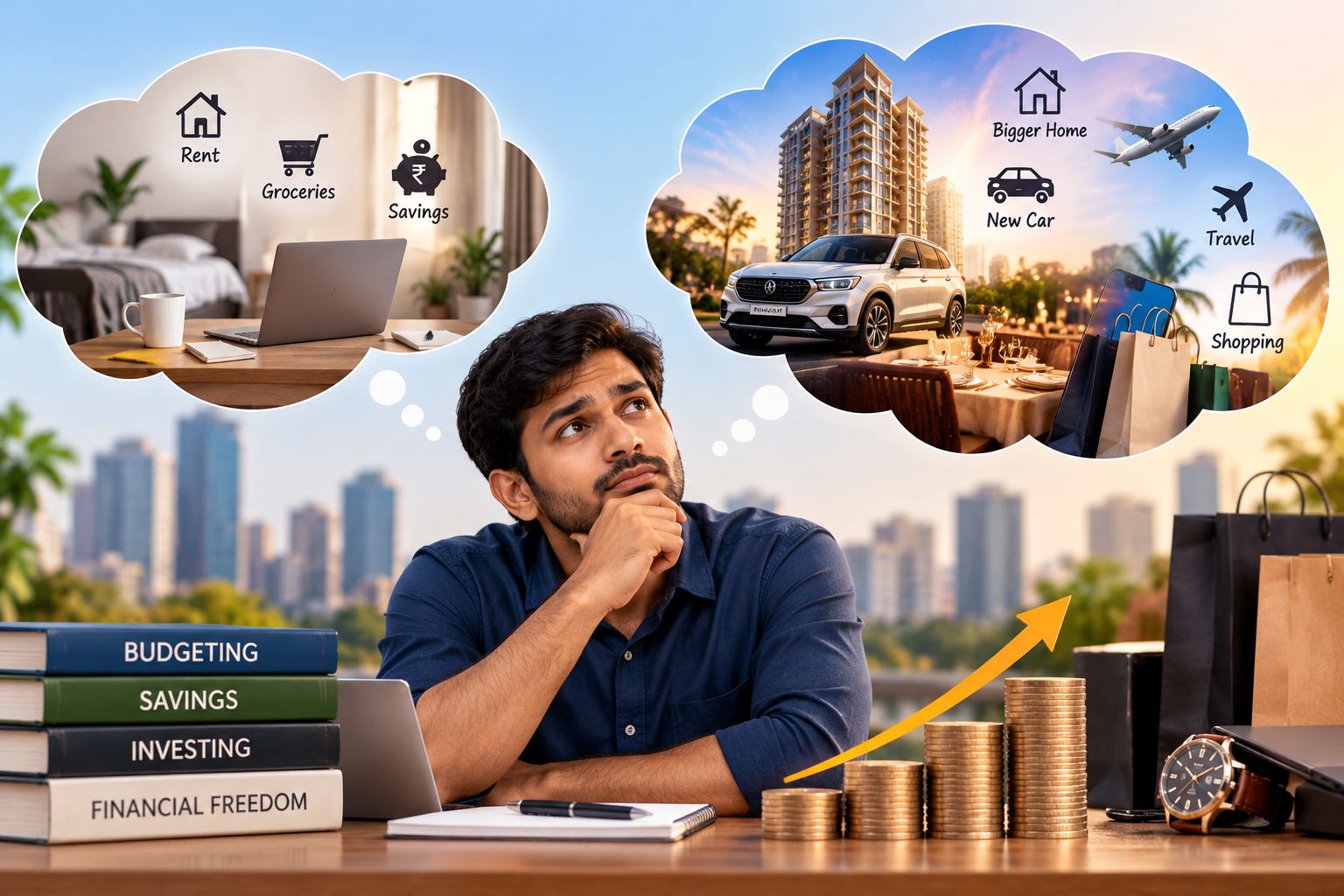


Getting a salary hike feels great. You may finally be able to upgrade your phone, move into a better apartment, eat out more often or plan that holiday you have been putting off. But a few months later, you might notice something surprising. Even though you earn more than before, your savings have barely increased. This is often the result of lifestyle inflation. It happens when your spending increases as your income grows, leaving little extra money to save or invest.
What Is Lifestyle Inflation?
Lifestyle inflation occurs when people gradually spend more as they start earning more. Instead of using the additional income to build savings, they upgrade their lifestyle and take on new expenses.
For example, imagine your monthly salary increases from ₹30,000 to ₹40,000. You might start ordering food more frequently, subscribe to more services or buy a vehicle with a monthly EMI.
These expenses may seem manageable individually. However, when several become part of your regular routine, the extra income can disappear quickly. Lifestyle inflation is not always about buying expensive things. Even small, repeated spending increases can affect your ability to save.
Lifestyle Inflation vs Smart Money Management
|
Situation |
Lifestyle Inflation |
Smart Money Management |
|---|---|---|
|
Salary hike |
Increase spending on wants |
Increase savings and investments |
|
Shopping |
Buy more items impulsively |
Spend according to a budget |
|
Monthly expenses |
Take on bigger EMIs |
Evaluate affordability before borrowing |
|
Dining and travel |
Increase spending without limits |
Set a fixed budget for enjoyment |
|
Savings |
Save whatever is left |
Save a portion of income first |
|
Financial goals |
Delay savings goals |
Continue working towards goals |
Why Does Lifestyle Inflation Happen?
1. Spending More Feels Like a Reward
After working hard for a salary increase, it is natural to want to enjoy it. You may treat yourself to new clothes, gadgets or restaurant visits. There is nothing wrong with enjoying your money. The challenge begins when occasional treats turn into regular expenses that are difficult to reduce.
2. Monthly Expenses Slowly Increase
A higher income can make bigger commitments seem affordable. You might rent a more expensive apartment, upgrade your car or choose a higher-priced phone on EMI. Over time, these commitments increase your monthly expenses and reduce the amount left for savings.
3. Social Pressure Influences Spending
Seeing friends upgrade their lifestyles or watching influencers showcase expensive purchases can make you feel that you should do the same. You may spend more to keep up with others, even when those purchases do not fit your financial priorities.
4. Savings Do Not Increase Automatically
Many people save whatever remains after spending. When income rises, spending often rises too, leaving savings almost unchanged. Without a clear savings plan, it is easy to use the entire salary increase without noticing.
How Can You Avoid Lifestyle Inflation?
Save part of every salary hike. Decide how much of your additional income will go towards savings or investments before increasing your spending. Create a realistic budget. Track essential expenses, lifestyle spending, debt repayments and savings. This helps you see where your money goes each month.
Think before taking on new EMIs. A higher salary may make a loan look affordable, but consider the total repayment cost and how it affects your other financial goals. Keep room for enjoyment. You do not have to stop spending on things you enjoy. Set aside an amount for dining out, shopping or travel while protecting your savings goals.
Build an emergency fund. Set aside money for unexpected expenses so that a medical bill, job change or urgent repair does not force you to rely on borrowing.
Conclusion
A higher income can improve your quality of life, but it does not automatically create financial security. What matters is how you use the additional money you earn. By controlling unnecessary spending, planning new commitments and increasing savings alongside your income, you can enjoy your progress today while building a stronger financial future.
Frequently Asked Questions
1. What is lifestyle inflation?
Lifestyle inflation happens when your spending increases as your income grows, leaving less money available for savings.
2. Why does a salary hike not always increase savings?
A salary hike may lead to higher spending on shopping, dining, travel or monthly EMIs. If expenses rise along with income, savings may remain unchanged.
3. How can I avoid lifestyle inflation?
Set a budget, save part of every salary increase, limit unnecessary purchases and review your monthly expenses regularly.
4. Is lifestyle inflation always a bad thing?
No. Spending more on comfort and experiences can be reasonable when it fits your budget. The problem arises when higher expenses affect savings or lead to debt.
5. How much of a salary hike should I save?
There is no fixed rule. Start by saving a portion of the increase that suits your financial goals and expenses. You can adjust the amount as your income and responsibilities change.
6. Can lifestyle inflation lead to debt?
Yes. Taking on larger EMIs, using credit cards frequently or borrowing to maintain a lifestyle can increase financial pressure when repayments become difficult to manage.