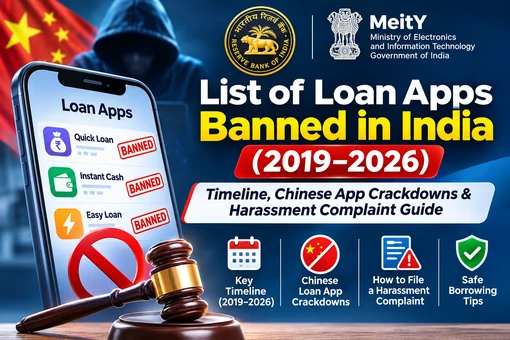


Searching for a list of loan apps banned in india from 2019 to 2026 is essential before sharing your PAN, Aadhaar, or bank details on any mobile platform. Neither the Reserve Bank of India (RBI) nor the Ministry of Electronics and Information Technology (MeitY) publishes a permanent public blacklist because illegal operators rebrand and launch clone Android Package (APK) files within days. Instead, the government blocks predatory platforms under Section 69A of the Information Technology Act, while the RBI maintains an official public directory of authorised Digital Lending Apps (DLAs) deployed by regulated banks and NBFCs on rbi.org.in. At Pocketly, we operate transparently as the digital lending platform of Speel Finance Company Private Limited, an RBI-registered NBFC, offering eligible borrowers personal loans from ₹1,000 to ₹50,000 subject to verification and underwriting criteria.
Quick Answer: At a Glance
-
Official Government Action (2019–2026): Between 2019 and 2026, Indian authorities—including MeitY, the RBI, and the Indian Cyber Crime Coordination Centre (I4C)—have blocked hundreds of unauthorised platforms, including the widely reported 94 loan apps banned in india list with Chinese links in February 2023 and 87 illegal loan apps confirmed blocked under Section 69A of the IT Act in December 2025, alongside ongoing 2026 Play Store takedown orders.
-
Why Blacklists Become Outdated: A chinese loan app or fake loan syndicate changes its app name, icon, and shell entity overnight. Always verify a lender against the RBI's official whitelist of Digital Lending Apps rather than relying solely on static lists.
-
Where to File a Fake Loan App Harassment Complaint: Dial the National Cyber Crime Helpline at 1930, log an online report at cybercrime.gov.in, and submit the illegal entity on the RBI Sachet Portal (sachet.rbi.org.in).
Timeline of Loan Apps Banned in India (2019 to 2026)
Understanding how digital lending enforcement evolved between 2019 and 2026 explains why checking any list of loan apps banned in india requires cross-checking official regulatory directories rather than unverified social media forwards.
|
Period |
Key Regulatory & Enforcement Action in India |
Impact on Borrowers & Digital Lending |
|
2019 – 2020 |
Rapid proliferation of unauthorised micro-lending APKs during the pandemic; early state police cybercrime crackdowns in Telangana, Maharashtra, and Karnataka. |
Exposed widespread loan fraud, 7-day repayment traps, and contact-list extortion by unregulated operators. |
|
2021 |
RBI Working Group on Digital Lending submits recommendations to curb predatory apps and unregulated pass-through accounts. |
Laid the groundwork for strict NBFC-borrower direct fund flows and mandatory grievance disclosures. |
|
2022 |
RBI issues formal Digital Lending Guidelines (September 2022) banning contact/gallery scraping and requiring upfront Key Fact Statements (KFS). |
Google Play updates developer policies; over 2,200 fraudulent loan apps removed between September 2022 and August 2023. |
|
February 2023 |
MeitY initiates urgent blocking orders targeting 138 betting apps and the 94 loan apps banned in india list linked to Chinese syndicates under Section 69A. |
Curtailed cross-border chinese loan apps banned networks, while compliant domestic platforms were subsequently restored after verification. |
|
2024 – 2025 |
RBI introduces the Digital Lending Apps (DLA) public directory on rbi.org.in (July 2025); Lok Sabha confirms 87 illegal loan apps blocked under Section 69A (December 2025). |
Gave Indian borrowers a single official whitelist to verify whether an app is genuinely backed by an RBI-registered bank or NBFC. |
|
2026 |
I4C and MeitY issue recurring fast-track takedown notices under Section 79(3)(b) of the IT Act (removing batches of shell loan apps in July–September 2026) alongside SRO-FT oversight. |
Accelerated removal of rebranded shell apps from app stores and tightened compliance across digital credit platforms. |
Why a "Chinese Loan App List" Changes Constantly
When borrowers search for a chinese loan app list or a list of loan apps banned in india, they frequently encounter outdated PDFs circulating on messaging apps. Enforcement investigations by I4C and state cybercrime units show that illegal loan fraud syndicates operate using disposable "shell" companies and nominee directors.
Once a chinese loan app or domestic fake loan APK is blocked on the Google Play Store or flagged on a list of loan apps banned in india, the operators simply upload a cloned APK with a fresh name, a new logo, and an unrelated developer account. Because chinese loan apps banned in earlier enforcement waves routinely reappear under new disguises, relying only on a static chinese loan app list leaves your personal data vulnerable. You can read more about spotting clone patterns in our detailed consumer guide on identifying fake loan apps and review common traps in 7 personal loan scams to watch out for.
Commonly Flagged Patterns & Examples on a Fake Loan App List
While no public blacklist stays permanently up to date, cybercrime advisories, user complaints, and app store takedown notices between 2019 and 2026 have repeatedly flagged specific unauthorised apps and clone naming patterns:
-
Unlicensed 7-Day Micro-Loan APKs: Apps such as Agile Loan, Asan Loan, Bellono Loan, Sharp Loan, Wave Cash, Star Loan, Cash Pal, Unit Cash, RupeeGo, and LoanMargLine (flagged in 2026 takedown notices) typically deduct 30%–40% upfront as "service charges" and demand full repayment within 7 days.
-
Advance-Fee Impersonation Apps: Fraudulent fake loan platforms using generic names like Quick Cash, Rapid Rupee, or Easy Credit demand ₹999 to ₹2,500 upfront via personal UPI IDs for "GST," "file clearance," or "insurance" before disappearing.
-
Brand-Clone Spoof APKs: Unauthorised APK files distributed via WhatsApp or SMS mimic legitimate NBFC logos to steal Aadhaar numbers, PAN details, and banking OTPs.
Note: Never rely solely on an app's name or icon. Even if an app is missing from an informal list of loan apps banned in india, treat it as unsafe unless its regulated NBFC partner is verified on the RBI website.
Regulated Digital Lending App vs. Illegal Fake Loan App
Comparing how RBI-regulated lending works against an unauthorised chinese loan app or fake loan operator helps you spot red flags immediately:
|
Verification Parameter |
RBI-Regulated Platform (e.g., Pocketly) |
Illegal / Fake Loan App |
|
Regulated Lending Entity |
Clearly names its RBI-registered NBFC or bank partner (Speel Finance Company Private Limited for Pocketly). |
Hides lender details or lists an unregistered software shell company. |
|
Upfront Fee Policy |
Zero advance cash demands before sanction; applicable processing fees (0% to 9.4% inclusive of 18% GST on Pocketly) are disclosed upfront. |
Demands upfront "release fees" or "security deposits" via personal UPI IDs or QR codes. |
|
Key Fact Statement (KFS) |
Issues a standardized KFS displaying exact APR, interest rate, tenure, and total repayment obligation before signing. |
Provides no written loan agreement or KFS, concealing exorbitant daily penalties. |
|
Repayment Tenure |
Realistic multi-month schedules (61 days to 9 months on Pocketly). |
Predatory 7-day or 14-day repayment traps. Compare costs in our guide on 7 days loan vs 30 days loan. |
|
Device Permissions |
Requests only essential KYC hardware access (such as camera for Video KYC) and maintains ISO 27001:2023 security certification. |
Scrapes your phone contact list, call logs, SMS inbox, and photo gallery for extortion. |
|
Disbursal & Recovery |
Direct bank-to-bank transfer from the NBFC and recovery governed by RBI's Fair Practices Code. |
Routes money through unverified accounts and uses abusive calls or morphed photos. |
How to File a Fake Loan App Harassment Complaint in India (Step-by-Step)
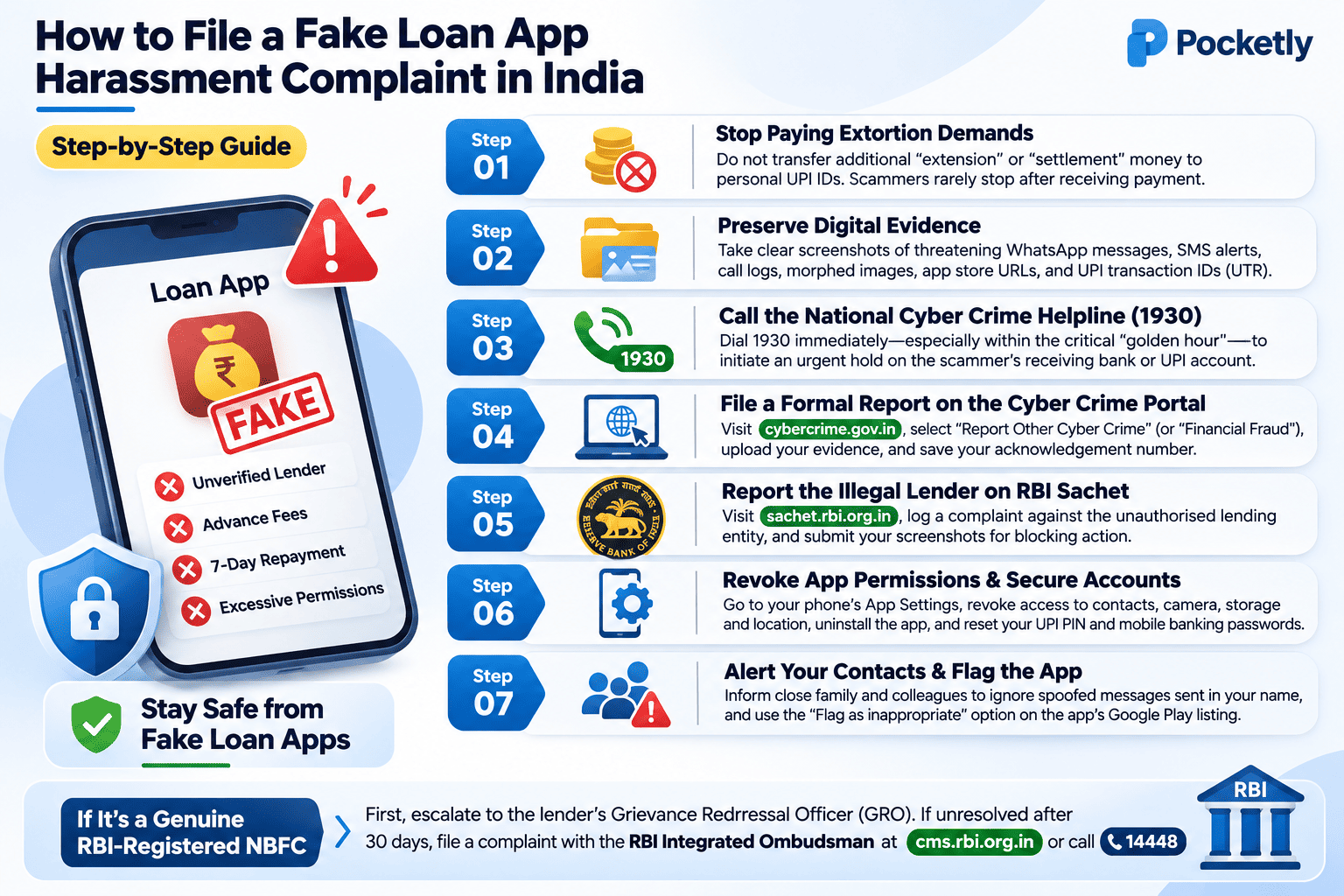
If you have downloaded an unverified app, paid an advance fee, or are facing abusive calls and messages to your contacts, act immediately. Filing a fake loan app harassment complaint across official government portals creates an immediate legal and banking trail:
-
Stop Paying Extortion Demands: Do not transfer additional "extension" or "settlement" money to personal UPI IDs. Scammers rarely stop harassment after receiving a payment.
-
Preserve Digital Evidence: Take clear screenshots of all threatening WhatsApp messages, SMS alerts, call logs, morphed images, app store package URLs, and UPI transaction IDs (UTR numbers).
-
Call the National Cyber Crime Helpline (1930): Dial 1930 immediately—especially within the critical "golden hour" if money was fraudulently debited—to initiate an urgent hold on the scammer's receiving bank or UPI account.
-
File a Formal Report on the Cyber Crime Portal: Visit cybercrime.gov.in, select Report Other Cyber Crime (or Financial Fraud), upload your evidence screenshots, and save your acknowledgement number for police follow-up.
-
Report the Illegal Lender on RBI Sachet: Visit the RBI Sachet Portal (sachet.rbi.org.in), log a complaint against the unauthorised lending entity, and submit your screenshots so the RBI and state agencies can initiate blocking action.
-
Revoke App Permissions & Secure Accounts: Go to your phone's App Settings, revoke access to contacts, camera, storage, and location, uninstall the app, and reset your UPI PIN and mobile banking passwords.
-
Alert Your Contacts & Flag the App: Inform close family and colleagues to ignore spoofed messages sent in your name, and use the Flag as inappropriate option on the app's Google Play listing.
If your complaint involves a genuine RBI-registered NBFC rather than an illegal app, escalate first to the lender's published Grievance Redressal Officer (GRO); if unresolved after 30 days, file a complaint with the RBI Integrated Ombudsman at cms.rbi.org.in or call 14448.
How to Verify Safe Digital Credit & Borrow Responsibly with Pocketly
If you are comparing options to find the best loan app in India for your requirements, check the regulated lender, APR, processing fees, repayment tenure, eligibility criteria, Key Fact Statement, and total repayment obligation rather than promotional claims.
At Pocketly, we built our platform to give students, first-jobbers, salaried professionals, freelancers, and self-employed earners a safe, regulated alternative to unverified lenders under our published responsible lending commitment:
-
Verified RBI-Registered NBFC Backing: All personal loans on Pocketly (from ₹1,000 to ₹50,000) are underwritten and disbursed directly to your bank account by Speel Finance Company Private Limited (CIN: U65920MH1995PTC090558).
-
Upfront Key Fact Statement (KFS): Monthly reducing interest ranges from 2% to 3% per month, with processing fees between 0% and 9.4% (inclusive of 18% GST), repayment tenures from 61 days to 9 months, and a transparent APR disclosed before you accept funds.
-
Tailored Borrower Categories:
-
If you receive a regular monthly paycheck, explore our personal loan for salaried applicants.
-
If you run a business or freelance, explore our personal loan for self employed applicants.
-
If you earn through stipends, gigs, or regular allowances without corporate payslips, our personal loan for non salaried option may be relevant.
-
Transparent Digital Onboarding: While phrases like instant personal loan online in 2 minutes describe how quickly you can submit your digital application and Video KYC on our app, final loan approval and bank disbursal always depend on automated identity verification and underwriting checks.
Before choosing your loan amount, use our personal loan EMI calculator to estimate your monthly installment, check your borrowing headroom with our FOIR calculator, and keep your monthly spending balanced using our 50 30 20 rule calculator.
Common Mistakes Borrowers Should Avoid
-
Downloading APK Files from Links: Never install loan apps shared via WhatsApp, Telegram, or SMS links, even if they claim to be missing from a list of loan apps banned in india.
-
Trusting "Guaranteed Approval" Claims: Regulated NBFCs must verify KYC and repayment capacity; unconditional approval promises are a hallmark of loan fraud.
-
Ignoring Repayment Schedules on Regulated Loans: Unlike illegal apps, regulated NBFCs report repayment history to credit bureaus. If you ever face temporary cash flow pressure near an installment date, read our guide on loan ki kissht nahi bhar pa rahe and understand how automated debits work via UPI mandate explained.
-
Borrowing for Impulse Spending: Reserve short-term credit for genuine liquidity gaps rather than lifestyle overspending. Learn practical budgeting habits in our article on lifestyle inflation and savings.
Also Read: Latest Guides & News on Pocketly
-
Loan Ki Kissht Nahi Bhar Pa Rahe? EMI Late Hone Par Kya Hoga?
-
Gold Loan Defaults Rise in India: Key Takeaways from CIBIL Report 2026
Final Takeaway: Stay Protected from Loan Fraud & Borrow Responsibly
Relying solely on a static list of loan apps banned in india is never enough when illegal operators launch new clone apps every week. Protect your data and finances by checking the RBI's Digital Lending Apps directory before installing any app, refusing upfront fee requests, and filing an immediate fake loan app harassment complaint via 1930, cybercrime.gov.in, and sachet.rbi.org.in if you encounter extortion.
When you need transparent, regulated small-ticket credit from ₹1,000 to ₹50,000 with clear Key Fact Statement disclosures and strict data privacy, we are here to help:
Frequently Asked Questions (FAQs)
1. Where can I check the official list of loan apps banned in India from 2019 to 2026?
The RBI and MeitY do not publish a single permanent list of loan apps banned in india because fraudulent operators constantly rebrand. Instead, check the RBI's official whitelist of Digital Lending Apps deployed by Regulated Entities on rbi.org.in—any lending app missing from that directory should be treated as unsafe.
2. What happened to the 94 loan apps banned in India list with Chinese links?
In February 2023, MeitY initiated blocking orders against 138 betting platforms and the 94 loan apps banned in india list linked to Chinese syndicates under Section 69A of the IT Act, while legitimate Indian digital lenders inadvertently caught in initial reviews were restored after compliance checks.
3. How can I identify a fake loan or chinese loan app before applying?
A chinese loan app or fake loan platform typically lacks an RBI-registered NBFC partner, demands upfront "processing" or "GST" fees via personal UPI IDs, forces 7-day repayment terms, and asks for access to your contacts and photo gallery. Always verify the regulated NBFC name and Key Fact Statement (KFS) first.
4. How do I file a fake loan app harassment complaint in India?
To file a fake loan app harassment complaint, immediately dial the National Cyber Crime Helpline at 1930, submit evidence screenshots on cybercrime.gov.in, and report the unauthorised app on the RBI Sachet portal (sachet.rbi.org.in). Do not pay extortion demands, and revoke the app's phone permissions right away.
5. How can I verify if Pocketly is a safe, RBI-compliant platform?
Yes. At Pocketly, all personal loans from ₹1,000 to ₹50,000 are sanctioned and disbursed directly by our RBI-registered NBFC partner, Speel Finance Company Private Limited (CIN: U65920MH1995PTC090558), with ISO 27001:2023 data security and upfront KFS disclosures.
6. Can I get an instant personal loan online in 2 minutes safely without falling for loan fraud?
Completing your digital onboarding and Video KYC on our app takes only a few minutes, though the phrase instant personal loan online in 2 minutes refers to application speed rather than guaranteed approval or disbursal. Legitimate lenders always conduct KYC and underwriting checks before releasing funds.
7. What should I check when comparing options for the best loan app in India?
If you are comparing platforms to find the best loan app in India for your needs, verify the RBI-registered NBFC or bank partner, all-inclusive APR, processing fees, repayment tenure, Key Fact Statement disclosures, and published Grievance Redressal Officer details.
8. Can self-employed or non-salaried applicants apply for a personal loan with Pocketly?
Yes. If you are self-employed, you can explore our personal loan for self employed option, while students and gig earners without corporate payslips can explore our personal loan for non salaried category, subject to applicable eligibility and underwriting criteria.
9. How can I estimate my monthly installment before applying with Pocketly?
Before applying, use our personal loan EMI calculator to check your estimated EMI, interest outgo, and total repayment obligation so your borrowing fits comfortably within your monthly income.