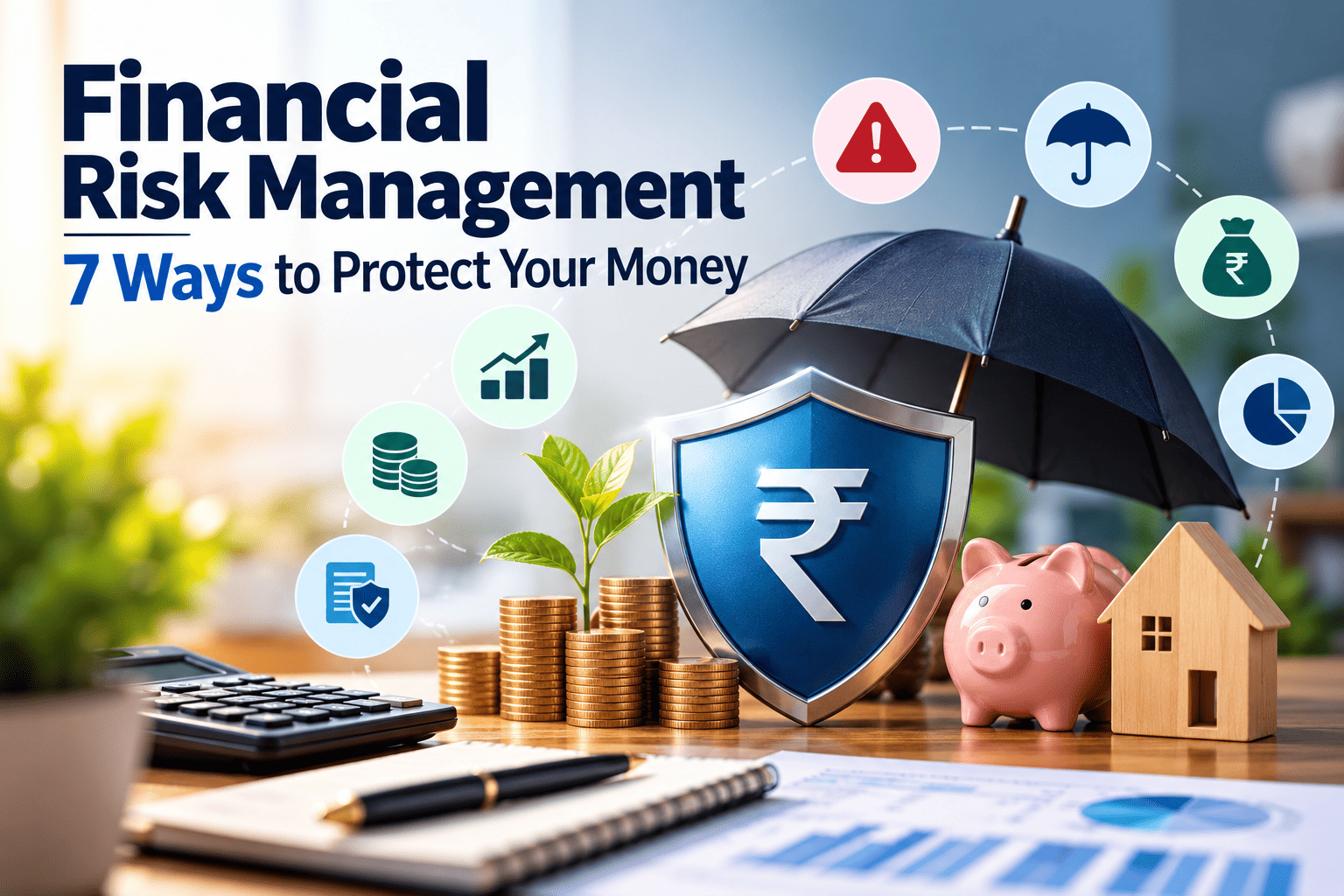


Financial risk management means spotting threats to your cash flow, checking how big they are, and taking smart steps to stop money loss. In India, managing day-to-day money risks involves guarding yourself against surprise layoffs, inflation spikes, health emergencies, and crushing debt cycles. While no plan can remove all uncertainty, building solid habits keeps unexpected events from destroying your life savings. At Pocketly, we help young earners protect their money, test debt payments with our personal loan EMI calculator, and borrow safely only when a genuine gap arises.
At a Glance: Key Money Risks and Quick Fixes
|
Risk Type |
What Causes It? |
Impact on Indian Earners |
Best Fix |
|
Liquidity Risk |
Late paychecks, urgent repairs, sudden bills |
Inability to pay rent or cover daily essentials |
Keep a 3 to 6-month emergency cash fund |
|
Debt Risk |
Overspending on credit cards, piled-up loans |
Lower credit scores and heavy interest costs |
Keep your FOIR under 40%; track payments via a loan EMI calculator |
|
Inflation Risk |
Daily living costs growing faster than earnings |
Cash loses real purchasing power year after year |
Invest money in mutual funds, PPF, or gold |
|
Health Risk |
Unplanned hospital visits or accidents |
Wipes out household savings overnight |
Buy a good personal health insurance policy |
|
Platform Risk |
Unregulated 7-day lending apps and scam links |
Unfair fees, data misuse, and mental stress |
Stick to apps tied to an RBI-registered NBFC |
What Is Financial Risk Management?
What is financial risk management for normal earners? It is the habit of asking what could go wrong with your money and setting up safeguards before problems hit.
So, what is risk management when applied to personal life? It means you stop judging wealth only by the balance in your account. Instead, you look at how long you could survive if your income stopped tomorrow.
Every choice carries some degree of financial risk. Leaving all your savings in a low-interest bank account means inflation quietly eats away at your money. On the other hand, taking on high monthly EMIs without a backup plan creates dangerous debt exposure. Practicing sensible risk management in financial management helps you balance savings, protect your credit profile, and handle life smoothly.
How Does Financial Risk Management Work?
Handling money threats follows a simple four-step loop:
[1. Spot Threats] ➔ [2. Gauge the Cost] ➔ [3. Set Up Defenses] ➔ [4. Review & Update]
-
Spot Threats: Find out where your cash flow is weak. Do you have only one client? Are you carrying overdue card balances? Do you lack medical coverage?
-
Gauge the Cost: Measure the potential damage. A small phone repair can come out of your monthly buffer, but an unplanned surgery can empty your savings if you lack insurance.
-
Set Up Defenses: Take clear action. Buy insurance, build liquid emergency reserves, cut back unnecessary debt, and keep your credit options open.
-
Review & Update: Check your setup whenever your situation changes—like taking a new job, starting freelance work, or adding a new monthly obligation.
7 Ways to Protect Your Money in India
Here are 7 clear, practical steps to protect your cash:
1. Build a Liquid Cash Reserve
Liquidity risk happens when you have money tied up in long-term assets or pending payments, but zero cash to pay today's grocery or medical bills.
-
Keep 3 to 6 months of basic living costs (rent, food, utility bills, active loan EMIs) in an easily accessible savings account or liquid mutual fund.
-
Never lock all your extra money into long-term investments where early withdrawals trigger penalties.
2. Keep Your Debt-to-Income Levels Safe
Taking on too many monthly instalments puts you at high risk of default if your earnings drop even slightly.
-
Keep your Fixed Obligation to Income Ratio (FOIR) under 40%. You can easily check where your monthly debt stands by using our FOIR calculator.
-
Never take a loan without testing how the payment fits your salary. Use our personal loan EMI calculator to see your exact estimated monthly payment before you apply.
3. Get Proper Health Insurance
A medical emergency can wipe out years of savings in days.
-
Buy a personal health insurance policy of at least ₹5 Lakh to ₹10 Lakh, even if your office provides corporate health coverage.
-
If your family depends on your income, take a simple term insurance plan worth 10 to 15 times your annual earnings to secure their future.
4. Diversify Your Income and Assets
Depending on one income source or putting all your savings into a single asset creates massive risk.
-
Avoid putting all your spare cash into volatile assets or single stocks. Spread your savings across safe instruments, index funds, and alternative holdings like digital gold.
-
Build a side income or freelance skill so a layoff or client loss does not cut off your cash flow completely.
5. Steer Clear of Unregulated Loan Apps
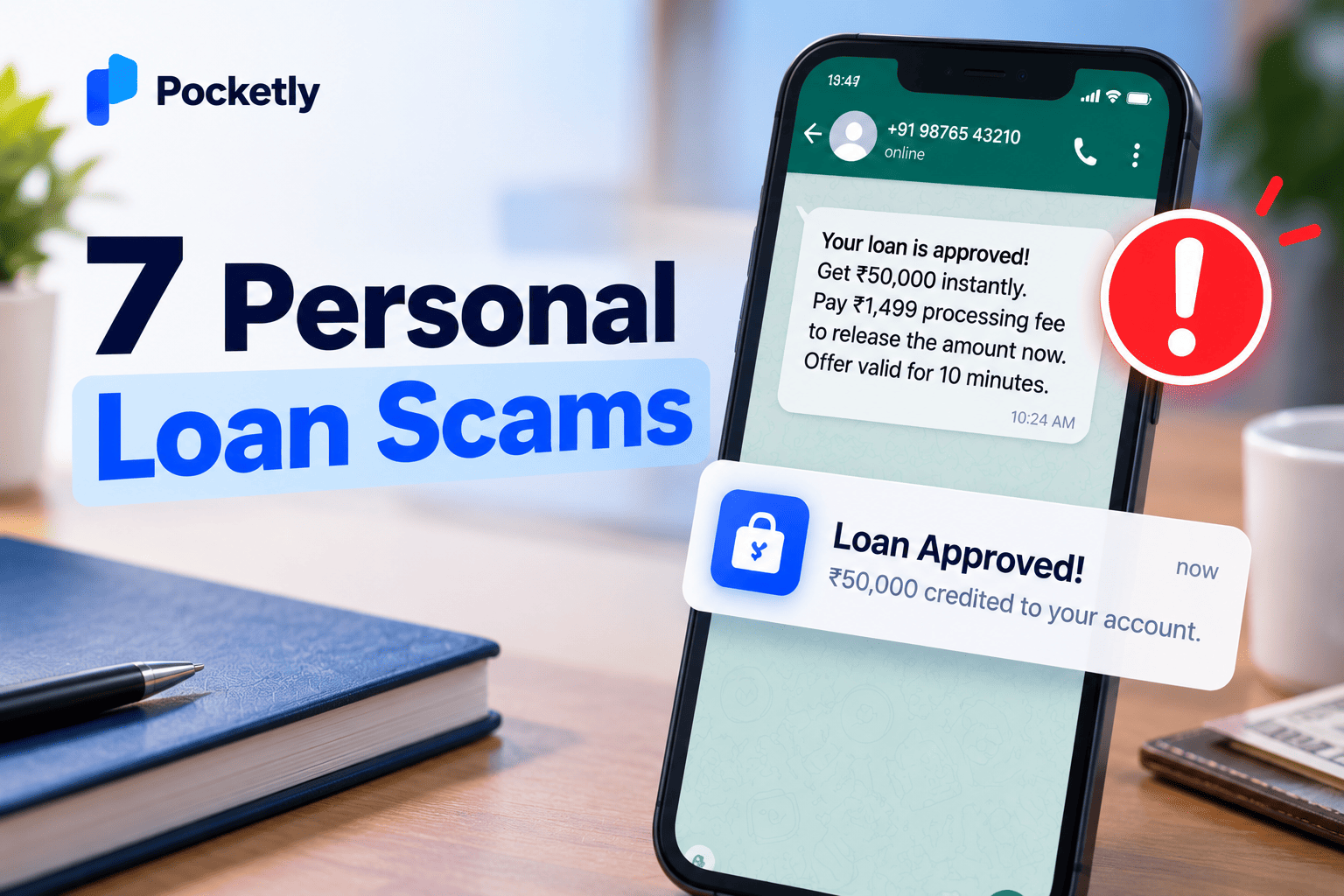
Online lending scams have grown, with fake apps using illegal recovery tricks and hidden fees.
-
Never install unknown APK files or accept loans from apps offering questionable 7-day repayment terms. To see why these apps are dangerous, read our guide on 7 Days Loan vs 30 Days Loan: Interest, Charges & Repayment.
-
Choose verified platforms. At Pocketly, all credit is extended by our RBI-registered NBFC partner, Speel Finance Company Private Limited, following transparent rules under our published responsible lending policy.
6. Know Your True Cost of Borrowing
Borrowing without checking fee details creates costly surprises.
-
Do not look only at the monthly interest rate. Always check the Annual Percentage Rate (APR), which includes the processing fee and 18% GST.
-
Use our flat vs reducing rate calculator to see how flat interest models compare against reducing balance calculations.
7. Budget for Up-and-Down Income Cycles
If you freelance or work gig jobs, income changes every month.
-
Plan your monthly living expenses based on your lowest-earning month, not your best month.
-
Keep an extra cash buffer in your bank account to smooth out the weeks between client invoice clearances.
How Different Earners Should Manage Financial Risk
|
Borrower Type |
Main Financial Threat |
Practical Strategy |
Helpful Pocketly Product Pathway |
|
Salaried Professional |
Single company reliance; month-end cash shortages |
Automate savings on payday; keep debt under 35% |
Explore our personal loan for salaried applicants for short-term support |
|
Freelancer / Self-Employed |
Delayed invoices, uneven project cash flow |
Maintain a 6-month reserve; price buffers into client bids |
Explore our personal loan for self employed individuals |
|
Student / Non-Salaried Earner |
Small savings, unexpected study or hostel expenses |
Track small spends; avoid get-rich-quick scams |
Explore our personal loan for non salaried applicants |
Costs, Interest, and Repayment Terms to Check
Borrowing responsibly means knowing all your costs upfront. Here are our verified borrowing terms at Pocketly:
-
Loan Amount: ₹1,000 to ₹50,000, depending on eligibility and profile verification.
-
Repayment Period: Flexible terms from 61 days up to 9 months.
-
Monthly Interest Rate: Between 2% and 3% per month.
-
Annual Percentage Rate (APR): Stated APR ranges between 30% and 121% (or up to 99.73% depending on loan structure), covering interest, processing fees, and GST.
-
Processing Fee: Between 0% and 9.4% (inclusive of 18% GST).
-
Early Repayment Charge: 2.5% on the remaining principal balance if you close early. You can check your potential savings with our loan foreclosure calculator.
Sample Loan Repayment Example
|
Loan Detail |
Sample Numbers |
|
Loan Amount |
₹5,000.00 |
|
Repayment Tenure |
90 days (3 months) |
|
Annual Interest Rate |
36% p.a. (3% per month) |
|
Estimated Interest |
₹443.80 |
|
Processing Fee & GST (Sample) |
₹425.00 |
|
Total Amount to Repay |
₹5,443.80 (plus applicable fees) |
(Note: This calculation is for demonstration purposes. Your exact loan limit, interest rate, fee, and tenure are shown on your Key Fact Statement during application.)
6 Steps to Access Emergency Funds Safely on Pocketly
When an unexpected emergency hits your monthly cash flow, taking a small loan can keep you from tapping long-term investments:
-
Download the App: Install the Pocketly app from the Google Play Store or Apple App Store.
-
Sign Up: Register your profile with your mobile number and confirm via OTP.
-
Verify Identity: Upload your PAN card and Aadhaar details for paperless address and identity checks, and complete a fast Video KYC.
-
Choose Your Terms: Select a loan amount from ₹1,000 to ₹50,000 and pick a tenure between 61 days and 9 months.
-
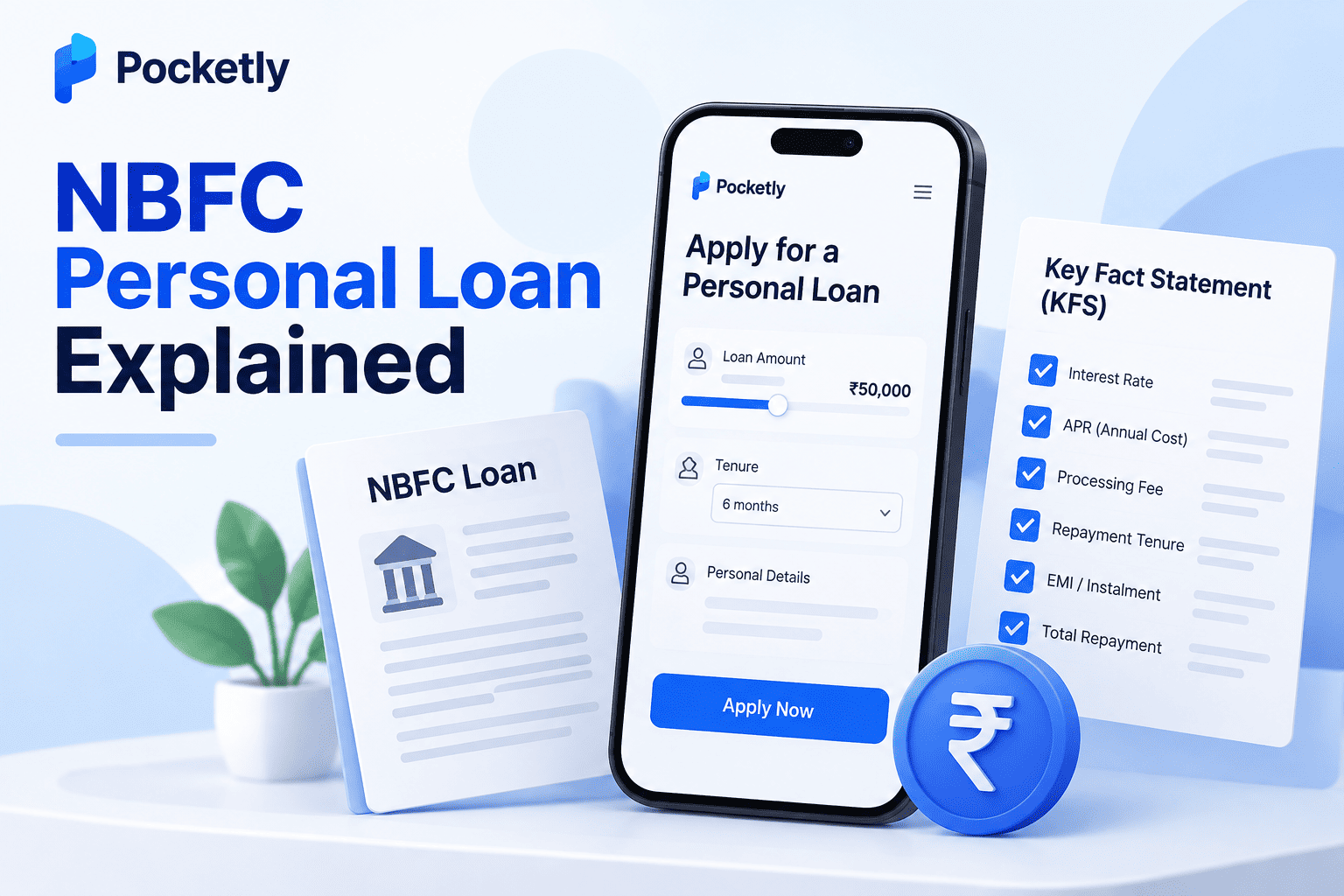
Review the Key Fact Statement: Check your interest rates, processing charges, net disbursal, and APR before confirming.
-
Get Direct Disbursal: Add your active bank account; once approved, your funds transfer directly via secure banking rails.
What to Check Before Taking a Loan
If you are researching options to find the best loan app in India, look past marketing claims and evaluate these fundamentals:
-
Check the Regulated Lender: Make sure the app works with an RBI-registered NBFC or bank. Pocketly provides credit through Speel Finance Company Private Limited.
-
Review the Full APR: Always review your Key Fact Statement (KFS) so you understand the total borrowing cost with fees included.
-
Check Your Borrowing Limit: Use our personal loan eligibility calculator to see what fits your monthly budget safely.
-
Understand Speed Claims: A phrase like instant personal loan online in 2 minutes describes the speed of our online application process, not a promise of approval without checks. Every regulated lender must verify KYC and underwrite your details before sending funds.
Common Money Mistakes to Avoid
-
Treating Loans as Income: A personal loan is a short-term cash bridge, not free money. Borrow only what you can repay comfortably.
-
Missing Due Dates: Late payments harm your credit profile and lead to late charges. If you are worried about an upcoming due date, read our guide on Loan Ki Kissht Nahi Bhar Pa Rahe? EMI Late Hone Par Kya Hoga? to take the right steps.
-
Letting Spending Rise with Income: When earnings rise, spending often climbs alongside them. Learn how to protect your savings in our guide on Lifestyle Inflation: Why Higher Income Does Not Always Mean More Savings.
-
Taking Unplanned Debt During Price Rises: When daily costs climb, borrowing without a budget causes stress. Read Why Do People Take Personal Loans During Inflation? to understand smart borrowing during high-cost periods.
Final Takeaway: Protect Your Money and Borrow Wisely
Managing money risks gives you stability and peace of mind. When you keep a cash reserve, secure adequate insurance, monitor your debt ratios, and steer clear of unregulated apps, you build lasting financial security.
When unexpected cash gaps happen, borrow safely and transparently with Pocketly.
Frequently Asked Questions (FAQs)
What is financial risk management in personal finance?
Financial risk management in personal life means finding the threats to your regular cash flow—such as sudden medical bills, job loss, or expensive debt—and using steps like emergency funds, insurance, and careful debt planning to avoid money troubles.
What is risk management in financial management?
Risk management in financial management is the process of reviewing credit, liquidity, and investment hazards, then using budgeting, diversification, and insurance to prevent financial loss.
What is financial risk?
Financial risk is the chance of losing money or facing severe cash shortages due to sudden expenses, job changes, inflation, or heavy debt obligations.
Can I get an instant personal loan online in 2 minutes?
You can complete our digital application in just a few minutes using the Pocketly app. However, loan approval and bank disbursal require real-time KYC verification and automated underwriting checks. We do not offer unverified or automatic approvals.
How do I figure out what loan EMI I can afford?
You can check your estimated monthly payment and total interest charges in seconds using our free personal loan EMI calculator.
Can self-employed professionals apply for loans with Pocketly?
Yes. If you run a small business, work as a freelancer, or provide consulting services, you can explore our personal loan for self employed individuals.
Can salaried workers use Pocketly to manage mid-month cash gaps?
Yes. If you work full-time and need funds before your salary arrives, you can check our personal loan for salaried applicants.
Can non-salaried earners and students apply for loans?
Yes. If you earn an allowance or make money from freelance gigs without a standard monthly salary slip, you can explore our personal loan for non salaried option.
What should I check to find the best loan app in India?
To find the best loan app in India, check that the platform works with an RBI-registered NBFC, provides a clear Key Fact Statement, limits processing charges and APR, and offers transparent customer support.
Does repaying a loan on Pocketly help my credit score?
Yes. Every timely repayment made on Pocketly is reported to credit bureaus by our partner NBFC, Speel Finance Company Private Limited. Repaying on time strengthens your credit history, while late payments will lower your score.