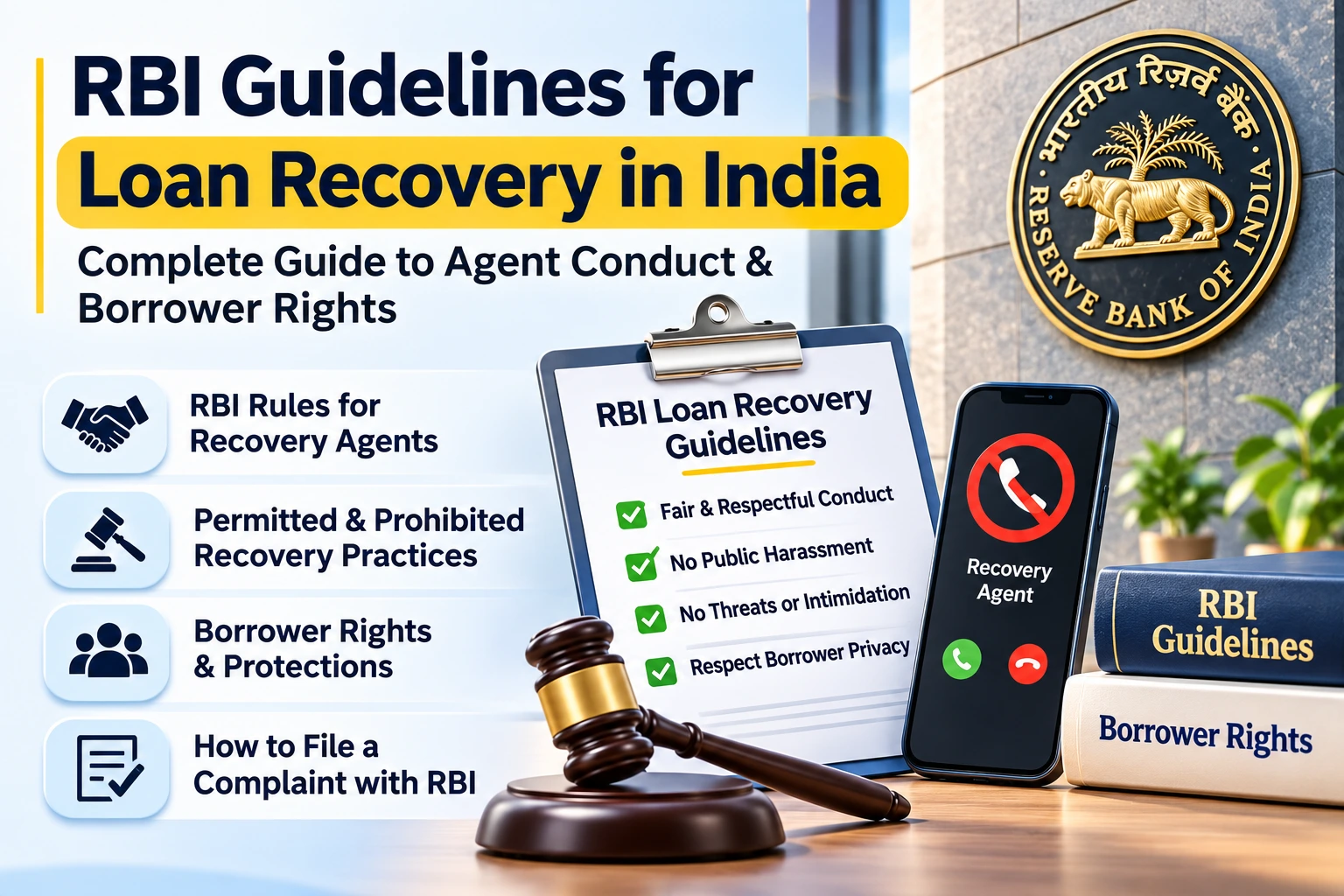


Under the RBI guidelines for loan recovery, banks, Non-Banking Financial Companies (NBFCs), and their outsourced collection representatives cannot call or visit borrowers before 8:00 AM or after 7:00 PM, use abusive or threatening language, contact family members or colleagues to shame borrowers, or access mobile phone contact lists and media files. In August 2026, the Reserve Bank of India (RBI) issued updated Responsible Business Conduct Amendment Directions (taking full effect on January 1, 2027) that consolidate loan recovery rules across banks, NBFCs, and housing finance companies, requiring mandatory call recording, Indian Institute of Banking and Finance (IIBF) agent certification, and strict limits on locking financed mobile devices. Note that these regulatory protections apply to RBI-regulated banks and NBFCs—illegal, unregistered 7-day loan apps operate outside RBI licensing and must be reported directly to cybercrime authorities. At Pocketly, we operate transparently as the digital lending platform of Speel Finance Company Private Limited, an RBI-registered NBFC, ensuring our collections and customer support strictly follow the RBI's Fair Practices Code.
Quick Answer: RBI Rules for Loan Recovery at a Glance
-
Permitted Contact Hours: Under RBI guidelines for loan recovery agents, phone calls and in-person visits are restricted strictly to between 8:00 AM and 7:00 PM.
-
Advance Notice & ID Proof: Lenders must notify borrowers in writing before assigning a recovery agency, and agents must carry an authorisation letter and valid ID card.
-
Zero Harassment & Privacy Protection: RBI rules for recovery agents strictly forbid threats, intimidation, public humiliation, contacting referees or relatives, and accessing borrower mobile data.
-
2026–2027 Regulatory Upgrades: Effective January 1, 2027, RBI mandates IIBF certification for every recovery agent, mandatory recording of recovery calls, and strict safeguards on financed mobile device restrictions.
-
Escalation Path: Report violations first to the lender's Grievance Redressal Officer (GRO), and escalate to the RBI Integrated Ombudsman (cms.rbi.org.in or 14448) if unresolved after 30 days.
What Are the RBI Guidelines for Loan Recovery?
The RBI guidelines for loan recovery are binding regulatory directives issued by the Reserve Bank of India under the Banking Regulation Act, 1949, and the Reserve Bank of India Act, 1934, to ensure ethical, dignified, and transparent debt collection by regulated banks and NBFCs. These bank loan recovery rules require every regulated lender to adopt a board-approved recovery policy, train and certify its collection personnel, protect borrower privacy, and remain vicariously liable for any misconduct committed by its outsourced recovery agencies.
In its August 6, 2026 Responsible Business Conduct Amendment Directions (applicable to commercial banks, NBFCs, and housing finance companies from January 1, 2027), the RBI unified its collection framework. The updated rules establish clear boundaries between legitimate repayment reminders and illegal loan recovery rules violations, ensuring young borrowers, salaried professionals, students, and self-employed earners are treated with dignity even during temporary financial hardship.
What Are the Key RBI Guidelines for Loan Recovery Agents?
Under RBI guidelines for loan recovery agents, collection representatives act strictly on behalf of the regulated lender and must follow a mandatory code of conduct during every call, message, or field visit.
Every borrower should know these eight core RBI rules for loan recovery and agent conduct:
-
Strict 8:00 AM to 7:00 PM Contact Window: Recovery agents cannot call, message, or visit your home or workplace before 8:00 AM or after 7:00 PM, unless you explicitly request contact outside these hours.
-
Prior Written Intimation of Agency Assignment: Before an outsourced agency contacts you, the bank or NBFC must inform you in advance about the agency's name and details.
-
Mandatory Identification & Authorisation: During any in-person visit, the agent must present an official authorisation letter from the lender alongside a valid identity card.
-
Mandatory IIBF Certification (2026–2027 Mandate): Under the RBI's updated directions, every recovery agent must complete training and hold a valid Debt Recovery Agent (DRA) certificate from the Indian Institute of Banking and Finance (IIBF).
-
Call Recording & Evidentiary Audit Trail: Lenders are required to record recovery calls and maintain audit logs so borrowers have verifiable proof in case of misconduct complaints.
-
Respect for Privacy & Safe Locations: Agents must contact you only at your specified location (or residence if no location is specified) and must avoid intruding during sensitive family occasions such as bereavements or weddings.
-
Zero Contact-List or Phone Data Scraping: Under RBI's Digital Lending Directions and the 2026 recovery framework, lenders and agents are strictly barred from accessing, using, or retaining data stored on your mobile phone (contacts, call logs, or photo gallery) for recovery.
-
Rules on Financed Mobile Device Locking: If you purchased a smartphone on a loan, the RBI's August 2026 rules allow lenders to restrict device functionality only in a graded manner after repeated default notices—while keeping emergency calls and essential features active—and forbid locking phones for ordinary unsecured personal loans.
Legal Recovery Practices vs. Prohibited Harassment Under RBI Rules
Borrowers often wonder where polite overdue reminders end and illegal harassment begins. The table below contrasts permissible collection actions under bank loan recovery rules against practices explicitly prohibited by the RBI:
|
Collection Activity |
Permitted Under RBI Loan Recovery Rules |
Strictly Prohibited Under RBI Guidelines |
|
Calling & Visiting Hours |
Calling or visiting politely between 8:00 AM and 7:00 PM to remind you of overdue EMIs. |
Calling late at night, early in the morning, or making continuous back-to-back spam calls. |
|
Communication Tone |
Courteous, factual reminders detailing exact overdue principal, interest, and late fees. |
Abusive language, threats of violence, fake arrest warnings, or impersonating police/court officials. |
|
Third-Party Contact |
Discussing loan status strictly with the borrower or legal co-borrower/guarantor. |
Calling or messaging your parents, friends, employer, or phone contacts to shame you. |
|
Repayment Collection |
Guiding you to pay via the lender's official app, net banking, or verified corporate account. |
Demanding cash without an official receipt or asking for transfers to an agent's personal UPI ID. |
|
Asset / Security Possession |
Following due legal notice, valuation, and auction rules for secured loans (e.g., home or vehicle loans). |
Forcibly entering your home or seizing personal items (phone, bike, TV) for an unsecured personal loan. |
Regulated NBFC Recovery vs. Illegal Fake Loan App Extortion
Understanding the difference between an RBI-regulated lender and an unauthorised 7-day loan app is essential because RBI rules for recovery agents govern licensed institutions, whereas fake apps commit criminal cyber-extortion:
-
Regulated Banks & NBFCs: Disclose their RBI-registered entity name, issue an upfront Key Fact Statement (KFS), follow RBI guidelines for loan recovery, and fall under the RBI Integrated Ombudsman Scheme.
-
Illegal / Unregistered Loan Apps: Conceal their lender identity, force 7-day repayment traps, scrape your contacts, and circulate morphed photos. If you face extortion from an unregistered platform, review our guides on identifying fake loan apps and 7 personal loan scams to watch out for, and immediately file a complaint on 1930, cybercrime.gov.in, and sachet.rbi.org.in.
How to File a Complaint If Recovery Agents Violate RBI Guidelines
If a bank, NBFC, or collection representative violates RBI guidelines for loan recovery agents, you do not have to tolerate intimidation. Follow these five steps to document and escalate the violation:
-
Record Evidence Immediately: Note the caller's phone number, date, exact time (especially calls outside 8:00 AM–7:00 PM), agent name, and agency name. Save call recordings, WhatsApp screenshots, SMS alerts, and any CCTV footage of unannounced visits.
-
Never Pay Cash or Personal UPI Transfers to Agents: Always settle overdue EMIs directly through the lender's official mobile application or verified bank account so your payment is recorded on your loan ledger.
-
File a Written Complaint with the Lender's GRO: Under RBI rules for recovery agents, the bank or NBFC is directly responsible for its agents' conduct. Email the lender's designated Grievance Redressal Officer (GRO)—whose contact details appear in your Key Fact Statement—attaching your evidence and requesting a formal complaint number.
-
Escalate to the RBI Integrated Ombudsman After 30 Days: If the lender fails to resolve your complaint within 30 days or provides an unsatisfactory reply, file a free complaint online at cms.rbi.org.in or call the RBI Contact Centre at 14448.
-
Approach Police / Cybercrime for Criminal Threats: If an agent threatens physical harm, trespasses into your home, or sends abusive messages, you do not need to wait 30 days—file an immediate police complaint or report online at cybercrime.gov.in (or dial 1930).
How We Practice Responsible Collections & Transparent Lending at Pocketly
If you are comparing platforms to find the best loan app in India for your requirements, check the regulated lender, APR, processing fees, repayment tenure, eligibility criteria, Key Fact Statement, and fair recovery commitment before borrowing.
At Pocketly, we operate under our published responsible lending charter and strictly adhere to RBI guidelines for loan recovery:
-
RBI-Registered NBFC Lending: Every personal loan on Pocketly (from ₹1,000 to ₹50,000) is sanctioned and disbursed directly by Speel Finance Company Private Limited (CIN: U65920MH1995PTC090558), an RBI-registered NBFC.
-
Respectful, Compliant Recovery: Our loan collection process strictly follows the RBI's Fair Practices Code—we prohibit abusive or misleading tactics, never access your contacts or photo gallery, and maintain ISO 27001:2023 data security standards.
-
Upfront KFS & Transparent Pricing: Before accepting a loan, you receive a standardized Key Fact Statement showing our monthly interest rate (2% to 3% per month), processing fee (0% to 9.4% inclusive of 18% GST), repayment tenure (61 days to 9 months), and exact APR.
-
Tailored Borrower Categories:
-
If you receive a monthly paycheck, explore our personal loan for salaried applicants.
-
If you run a business or freelance, explore our personal loan for self employed applicants.
-
If you earn through gigs, stipends, or allowances without formal salary slips, explore our personal loan for non salaried option.
-
Realistic Digital Onboarding: While searches like instant personal loan online in 2 minutes reflect how quickly you can complete paperless KYC on our app, final approval and disbursal depend on real-time verification and underwriting criteria.
-
Published Grievance Desk: You can review our grievance redressal policy anytime or contact our support team via toll-free helpline 1800 889 8941, WhatsApp +91 89040 51555, or email care@support.pocketly.in.
How to Avoid Default & Protect Your Credit Profile
The best way to avoid dealing with collection follow-ups is to borrow within your repayment comfort zone:
-
Check Your EMI Before Borrowing: Use our personal loan EMI calculator to preview your monthly installment and total repayment obligation.
-
Keep Your Debt Ratio Balanced: Verify that your combined EMIs stay below 40%–50% of your monthly take-home pay using our FOIR calculator and budget expenses with our 50 30 20 rule calculator.
-
Communicate Early During Cash Flow Crunch: Can a loan defaulter be sent to jail in India? No—missing an EMI due to genuine financial hardship is a civil default, not a criminal offence, though it damages your CIBIL score and incurs late charges. If you ever anticipate a delay, reach out to your lender early and read our guides on loan ki kissht nahi bhar pa rahe and UPI mandate explained.
Final Takeaway: Know Your Rights Under RBI Guidelines for Loan Recovery
Understanding the RBI guidelines for loan recovery protects you from intimidation, privacy invasion, and unauthorised collection demands. Remember that regulated banks and NBFCs can contact you only between 8:00 AM and 7:00 PM, must respect your dignity and data privacy, and are accountable to the RBI Integrated Ombudsman if their agents cross the line.
When you need transparent, small-ticket digital credit from ₹1,000 to ₹50,000 backed by an RBI-registered NBFC with upfront Key Fact Statement disclosures and fair, compliant customer support, we are here to help:
Also Read: Latest Guides & News on Pocketly
-
Loan Ki Kissht Nahi Bhar Pa Rahe? EMI Late Hone Par Kya Hoga?
-
Gold Loan Defaults Rise in India: Key Takeaways from CIBIL Report 2026
Frequently Asked Questions (FAQs)
1. What are the calling hours under RBI guidelines for loan recovery?
Under RBI guidelines for loan recovery, banks, NBFCs, and recovery agents can call or visit borrowers only between 8:00 AM and 7:00 PM. Calling outside these hours without the borrower's explicit request violates bank loan recovery rules and can be reported to the lender's Grievance Redressal Officer and the RBI Ombudsman.
2. Can loan recovery agents call my family, friends, or employer?
No, RBI guidelines for loan recovery agents strictly prohibit agents from contacting your relatives, friends, referees, or workplace colleagues to shame or pressure you into paying. Lenders and agents are also barred from accessing your mobile phone contact list under RBI Digital Lending Directions.
3. What changed in the RBI's 2026–2027 loan recovery rules?
In August 2026, the RBI issued unified Responsible Business Conduct Amendment Directions (effective January 1, 2027) that require every recovery agent to hold IIBF certification, mandate call recording for all recovery calls, and impose strict step-by-step limits on locking financed mobile devices after default.
4. Can I be arrested or jailed in India for missing personal loan EMIs?
No, genuine inability to repay a personal loan is a civil matter and does not result in arrest or imprisonment. Under RBI rules for recovery agents, collection staff have zero police powers and cannot threaten you with jail or criminal prosecution for ordinary payment delays.
5. Should I pay cash or transfer money to a recovery agent's personal UPI ID?
Never pay cash without an official lender receipt or transfer funds to a recovery agent's personal UPI ID. Under loan recovery rules, repayments should be made directly to your loan account via the lender's official mobile app, payment link, or verified corporate bank account.
6. How do I complain against harassment by a bank or NBFC recovery agent?
First, submit a written complaint with call logs and screenshots to the bank or NBFC's Grievance Redressal Officer (GRO). If the issue is not resolved within 30 days, file a free complaint with the RBI Integrated Ombudsman at cms.rbi.org.in or call 14448.
7. What if the harassment is from an unregistered or fake loan app?
If an illegal, unregistered app is harassing you or messaging your contacts, dial the National Cyber Crime Helpline at 1930, log a complaint at cybercrime.gov.in, and report the app on the RBI Sachet Portal (sachet.rbi.org.in).
8. How does Pocketly follow RBI guidelines for loan recovery?
At Pocketly, all personal loans from ₹1,000 to ₹50,000 are issued by our RBI-registered NBFC partner, Speel Finance Company Private Limited, under our published responsible lending policy. We strictly adhere to the RBI's Fair Practices Code, prohibit abusive collection tactics, and never access your phone contacts or photos.
9. Can salaried, self-employed, and non-salaried borrowers apply with Pocketly?
Yes. You can explore our personal loan for salaried, personal loan for self employed, or personal loan for non salaried options for credit lines from ₹1,000 to ₹50,000, subject to verification and underwriting criteria.
10. How can I check my monthly EMI before applying with Pocketly?
Before applying, use our personal loan EMI calculator to estimate your monthly installment and total repayment obligation so you can borrow comfortably within your monthly budget.