

India adds thousands of new businesses every day, yet access to early-stage funding remains one of the biggest hurdles for first-time founders. While entrepreneurship is growing rapidly, credit access has not kept pace. According to Government of India data, micro, small, and medium enterprises contribute over 30% of India’s GDP, yet a large share of these businesses struggle to secure formal credit in their initial years due to limited operating history and unpredictable cash flows.
As a result, many founders rely on personal savings, credit cards, or informal borrowing to get started. A startup loan for a new business can help bridge this gap by supporting early expenses such as registration costs, salaries, marketing, inventory, or essential tools. However, choosing the wrong loan type, borrowing too early, or misjudging repayment capacity can create long-term financial pressure instead of enabling growth.
This guide explains what a startup business loan is, the types available in India, who qualifies, how to choose the right option, and how responsible digital platforms like Pocketly can support short-term funding needs without disrupting long-term business stability.
Key Takeaways
- A startup loan for a new business can help founders cover setup costs, early hiring, marketing, or inventory, but only when borrowing aligns with clear business outcomes and repayment plans.
- India offers multiple startup loan options, including bank loans, government-backed schemes, NBFCs, fintech lenders, and short-term digital loans, each suited to different stages and needs.
- Eligibility for startup loans often depends more on the founder’s credit profile, business registration, and repayment clarity than on existing business revenue.
- Startup loans work best when they remove specific growth bottlenecks and should be avoided when used to cover ongoing losses, personal expenses, or unclear cash flow gaps.
- Founders must evaluate the true cost of borrowing, including interest structure, repayment tenure, cash flow impact, and hidden fees, not just headline rates.
- For short-term cash gaps caused by timing issues, platforms like Pocketly can provide flexible, transparent digital credit without locking founders into long-term debt.
What Is a Startup Loan?
A startup loan for a new business is a financing option designed to support entrepreneurs during the early stages of building their company. Unlike traditional business loans, which usually require operating history, collateral, or steady cash flows, startup loans are structured with early-stage realities in mind.
These loans are typically used to cover setup costs, initial operating expenses, early hiring, marketing, or working capital needs. Depending on the lender, startup loans may be offered to sole proprietors, partnerships, LLPs, or private limited companies.
The key distinction is that lenders often evaluate the founder’s profile, credit behaviour, and business plan rather than relying solely on past financial statements. This makes startup loans more accessible, but also means interest rates and terms vary widely.
Understanding how these loans differ from conventional business financing is essential before choosing one.
Types of Startup Loans Available in India
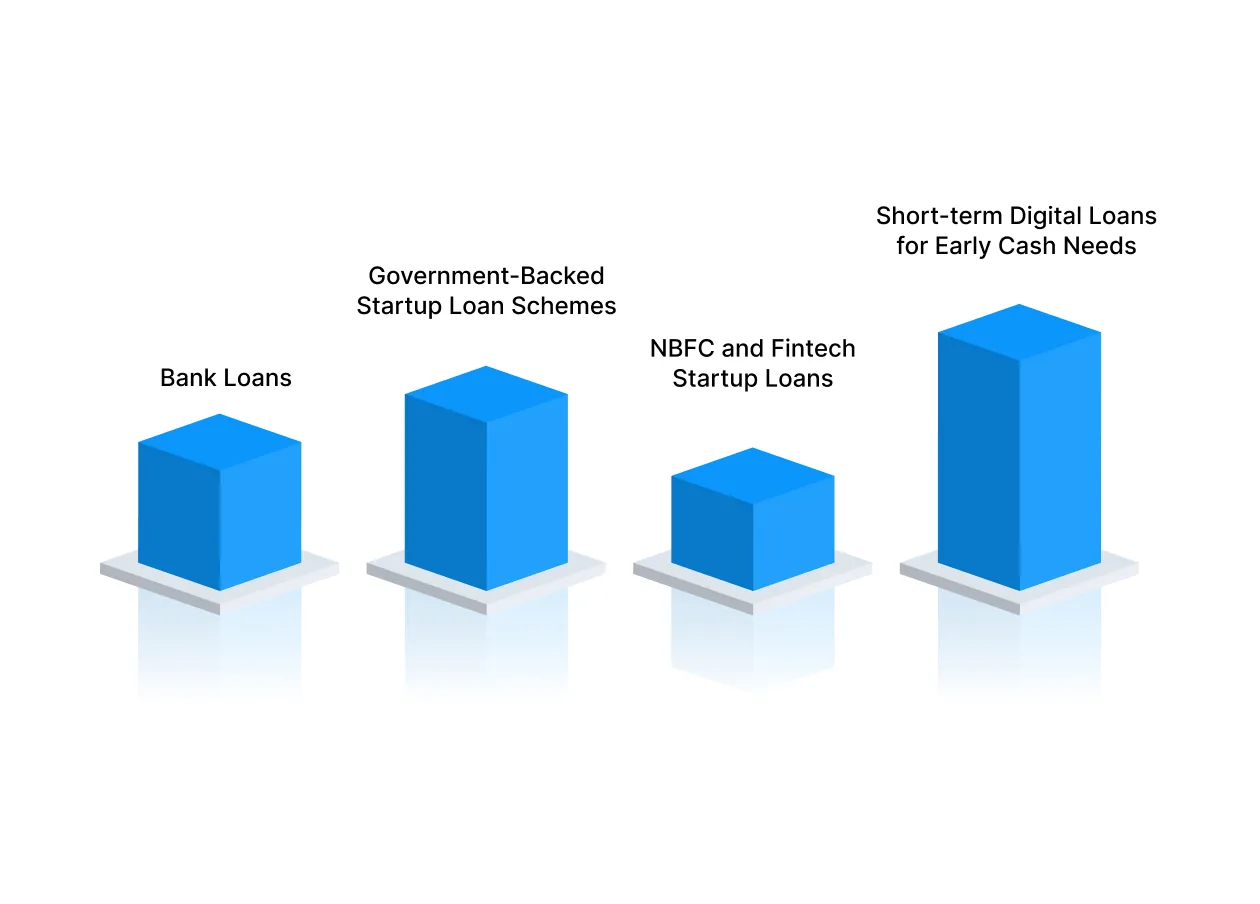
Startup loans in India come from multiple sources, each serving a different purpose and stage of growth. Knowing these options helps founders avoid mismatches between funding type and business need.
1.Bank Loans
Traditional banks offer term loans and working capital loans to startups, often backed by collateral or guarantees. These loans usually come with lower interest rates but involve strict eligibility checks, longer processing times, and extensive documentation. New businesses without a revenue history may find approval challenging.
2.Government-Backed Startup Loan Schemes
Government initiatives aim to improve credit access for small businesses. Common options include:
- Mudra loans under PMMY
- Credit Guarantee Fund Trust for Micro and Small Enterprises (CGTMSE)
- Startup India-linked lending programmes
These schemes can reduce collateral requirements and borrowing costs, but application processes can be time-consuming and approval timelines unpredictable.
3.NBFC and Fintech Startup Loans
NBFCs and digital lenders focus on speed and flexibility. These loans often have simpler eligibility criteria, faster approvals, and digital onboarding. Interest rates may be higher than banks', but access is quicker, making them suitable for early-stage needs.
4.Short-term Digital Loans for Early Cash Needs
Some founders face short-term gaps rather than long-term funding needs. Short-term digital loans can help manage timing issues such as delayed client payments or upfront expenses.
If your startup is facing a short-term cash gap rather than a long-term funding requirement, platforms like Pocketly can help you manage urgent expenses without committing to long repayment cycles.
With loan types clear, eligibility becomes the next deciding factor.
Eligibility Criteria for a Startup Loan
Eligibility for a startup loan depends on the lender, but certain factors consistently influence approval decisions. Founders should understand these early to avoid unnecessary rejections.
1.Founder Profile and Business Structure
Most lenders require the business to be legally registered. Sole proprietors, partnerships, LLPs, and private limited companies are commonly eligible. The founder’s age, background, and involvement in the business may also be reviewed.
2.Credit History and Financial Behaviour
In the absence of business credit history, lenders often rely on the founder’s personal credit profile. A healthy repayment record, low defaults, and disciplined credit usage significantly improve approval chances.
3.Business Plan and Cash Flow Visibility
Even early-stage businesses must explain how the loan will be used and repaid. Lenders look for clarity on revenue potential, expense structure, and realistic repayment ability rather than aggressive projections.
Meeting eligibility does not mean a loan should always be taken. Timing matters just as much.
Also Read: Short-Term Business Loans: Understanding Tenure, Interest Rates, and Benefits
When Does a Startup Loan Make Sense for a New Business?
A startup loan makes sense when it supports forward motion, not when it delays hard decisions. Borrowing should help your business move from one stable point to the next, not cover unresolved structural problems.
Before applying, founders should be clear on what the loan enables and how it will be repaid. The strongest use cases are tied to defined outcomes, timelines, and cash flow visibility.
Situations where A Startup Loan Helps
Startup loans work well when they remove a specific bottleneck that is holding the business back.
- Covering setup or registration costs: Legal registration, licences, compliance filings, or basic infrastructure often require upfront payment. A loan can help you formalise operations quickly so you can start generating revenue.
- Hiring early team members: Bringing in a first hire for sales, operations, or delivery can unlock growth that a solo founder cannot manage alone. In this case, borrowing supports capacity building rather than consumption.
- Marketing and customer acquisition: Early marketing spend can make sense when you already have a tested product or service and need capital to scale reach, not to “experiment blindly.”
- Purchasing inventory or essential equipment: When inventory directly links to confirmed demand or predictable sales cycles, a startup loan can help you fulfil orders without waiting on delayed cash inflows.
In these scenarios, borrowing acts as a bridge between opportunity and execution, helping operations begin or scale at the right time.
Situations where Caution is Needed
Startup loans can quickly become risky when they are used to patch uncertainty instead of solving it.
- Covering ongoing losses without revenue clarity: If the business has no clear path to income, debt only extends the runway without improving fundamentals.
- Funding personal expenses through business loans: Mixing personal spending with business borrowing weakens financial discipline and makes repayment unpredictable.
- Taking long-term loans for short-term problems: Using multi-year debt to solve a one-month cash issue often creates unnecessary interest burden and repayment pressure.
In these cases, borrowing can increase stress rather than reduce it, especially for first-time founders.
Interest Rates, Repayment, and Hidden Costs
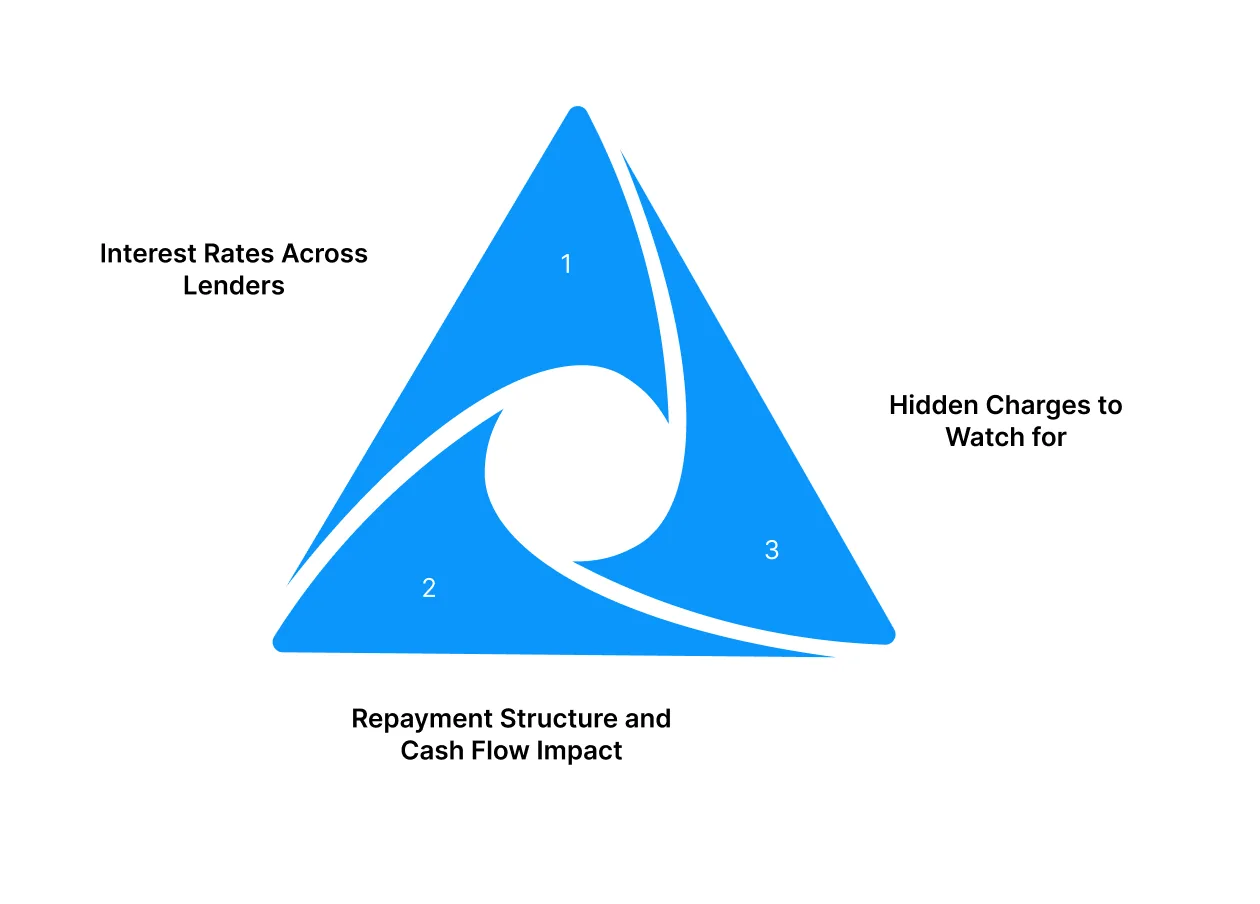
The true cost of a startup loan is rarely reflected in the headline interest rate alone. Founders need to assess repayment structure, cash flow impact, and hidden charges together to understand affordability.
Interest Rates Across Lenders
Interest rates vary widely depending on the lender and the startup’s risk profile.
- Bank loans generally offer lower interest rates but come with strict eligibility requirements, collateral expectations, and longer approval timelines.
- NBFCs and fintech lenders charge higher rates to account for early-stage risk but provide faster access and simpler onboarding.
- Short-term digital loans often use monthly pricing rather than annualised rates, which can appear small upfront but add up if rolled over repeatedly.
Comparing rates without comparing tenure and total repayment can be misleading.
Repayment Structure and Cash Flow Impact
Repayment schedules must align with how money actually flows into the business.
- Short tenures suit temporary gaps, seasonal expenses, or predictable incoming payments.
- Longer tenures fit planned expansion where returns take time to materialise.
When tenure and cash inflows are misaligned, even a manageable loan can strain working capital and force founders into reactive decisions.
Hidden Charges to Watch for
Borrowing costs increase quickly when fees are overlooked.
- Processing and onboarding fees
- Late payment penalties
- Prepayment or foreclosure conditions
Transparent terms often matter more than the lowest advertised rate. A slightly higher rate with clear rules is usually safer than a cheaper loan with unclear penalties.
Once costs and repayment impact are understood, choosing the right lender becomes far more straightforward.
Also Read: How to Build Business Credit Fast in Simple Steps
How to Choose the Right Startup Loan for Your Business
Choosing a startup loan is a strategic decision, not just a funding choice. The right loan fits your business stage, risk tolerance, and operational rhythm.
1.Match the Loan to Your Business Stage
- Early-stage startups benefit from smaller, flexible loans that reduce long-term pressure while supporting initial execution.
- Expansion-stage businesses with revenue traction may justify larger or longer-term borrowing tied to growth plans.
Borrowing ahead of readiness often creates more pressure than progress.
2.Prioritise Transparency and Flexibility
The best loan is one you fully understand before signing.
- Clear repayment schedules
- Upfront pricing
- Simple digital access and account visibility
These reduce surprises and allow founders to plan with confidence.
3.Avoid Over-Borrowing
More capital is not always better.
- Borrow only what the business can service comfortably under conservative assumptions.
- Protecting the founder’s credit profile is essential for future funding, partnerships, and scale.
Responsible borrowing preserves optionality.
Even with careful planning, startups often face short-term financial friction caused by timing mismatches, not poor decisions. This is where flexible, short-term tools can act as a support layer without creating long-term dependency.
Also Read: Strategies and Tips to Improve Your Business Cash Flow
How Pocketly Supports Early-Stage Business Owners
While traditional startup loans focus on long-term financing, early-stage founders often face short-term cash challenges that sit outside formal funding cycles. These gaps usually come from timing issues rather than poor planning.
Pocketly fits into this space by offering short-term digital credit that supports day-to-day continuity without locking founders into long-term obligations.
How Pocketly fits in as a digital lending platform:
- Short-term digital loans from ₹1,000 to ₹25,000: Suitable for handling small but urgent business expenses without over-borrowing.
- Fast, fully online application and approval: Designed for situations where waiting weeks for approval is not practical.
- Transparent pricing with clear repayment terms: Upfront costs and timelines reduce uncertainty and repayment stress.
- Useful for operational gaps and urgent expenses: Helps cover subscriptions, tools, vendor payments, or short-term shortfalls without disrupting broader financial plans.
Download the Pocketly App to manage short-term business expenses without disrupting your long-term funding strategy.
Conclusion
A startup loan for a new business can be an efficient tool when used at the right time and for the right reasons. Understanding loan types, eligibility, borrowing costs, and repayment impact helps founders avoid unnecessary pressure during the most fragile stage of their journey.
For long-term growth, loans should support momentum, not compensate for structural gaps or unclear revenue paths. When borrowing decisions are intentional and aligned with business needs, credit becomes a support system rather than a burden.
And when short-term cash needs arise, responsible digital lending platforms can help founders stay on track without compromising financial discipline.
Use Pocketly to handle urgent business expenses while keeping your startup finances stable. Download the App today.
FAQs
1. Can I get a startup loan without business income?
Yes. Some lenders assess personal credit history, business plans, or projected cash flow instead of existing revenue, especially for early-stage startups.
2. Is collateral required for a startup loan in India?
Not always. Government-backed schemes and some fintech lenders offer unsecured startup loans, though interest rates may be higher.
3. What is the best loan for a new startup?
There is no single best option. The right loan depends on your business stage, funding purpose, cash flow predictability, and repayment capacity.
4. Are startup loans risky for new founders?
They can be if taken too early or without a clear repayment plan. Loans work best when tied to defined outcomes and timelines.
5. Can Pocketly be used for business expenses?
Pocketly offers short-term digital loans that founders can use for urgent expenses, provided they are repaid responsibly and used to manage timing gaps rather than long-term costs.