

In 2027, the cost of living in bangalore ranges between ₹16,000 and ₹24,000 per month for a student or intern in a PG, ₹28,000 and ₹45,000 for a bachelor renting a shared flat, and ₹55,000 to ₹90,000 for married couples. Monthly living expenses in bangalore depend heavily on location, with tech hubs like HSR Layout, Koramangala, and Indiranagar commanding higher premiums for rent, food, and commute than areas like Electronic City or Kengeri.
The Reality of Bangalore Living Costs in 2027
Moving to India's Silicon Valley is an exciting career milestone. Home to top multinational technology firms, thriving product startups, and prestigious academic institutions, Bengaluru attracts hundreds of thousands of engineers, creators, students, and entrepreneurs every year.
However, modern city living comes with financial realities. Between security deposits, premium rents near tech parks, peak-hour cab surges, weekend dining, and grocery runs, your overall bangalore expenses can escalate quickly. For anyone navigating a career move, keeping track of every expense in bangalore is essential to avoid running out of funds before payday.
Whether you are budgeting an entry-level stipend or managing dual corporate incomes, evaluating the cost of living in bangalore ensures you build sustainable wealth rather than running into month-end deficits.
Cost of Living in Bangalore Per Month: Summary Matrix
Overall living expenses in bangalore vary widely based on your lifestyle, housing choices, and neighborhood. The table below outlines typical monthly spending patterns:
|
Monthly Expense Head |
College Intern / Student |
Single Working Bachelor |
Working Couple |
Family of Three (with Child) |
|
Housing (Rent / PG / Society) |
₹8,500 – ₹14,000 |
₹14,000 – ₹25,000 |
₹26,000 – ₹42,000 |
₹35,000 – ₹60,000 |
|
Food & Groceries |
₹4,000 – ₹6,000 |
₹6,000 – ₹10,000 |
₹11,000 – ₹16,000 |
₹16,000 – ₹22,000 |
|
Daily Commute & Travel |
₹1,200 – ₹2,500 |
₹2,500 – ₹5,500 |
₹5,000 – ₹9,000 |
₹7,000 – ₹12,000 |
|
Utilities, Wi-Fi & Maintenance |
Included in PG / ₹1,500 |
₹2,500 – ₹4,500 |
₹4,500 – ₹7,000 |
₹6,000 – ₹9,500 |
|
Discretionary & Weekend Leisure |
₹1,500 – ₹3,000 |
₹4,000 – ₹8,000 |
₹8,000 – ₹15,000 |
₹10,000 – ₹18,000 |
|
Estimated Total Monthly Outgo |
₹15,200 – ₹27,000 |
₹29,000 – ₹53,000 |
₹54,500 – ₹89,000 |
₹74,000 – ₹1,21,500 |
When calculating your monthly budget, ensure your essential living needs remain within 50% of your take-home pay using our 50 30 20 rule calculator.
Cost of Living in Bangalore for Students and Interns
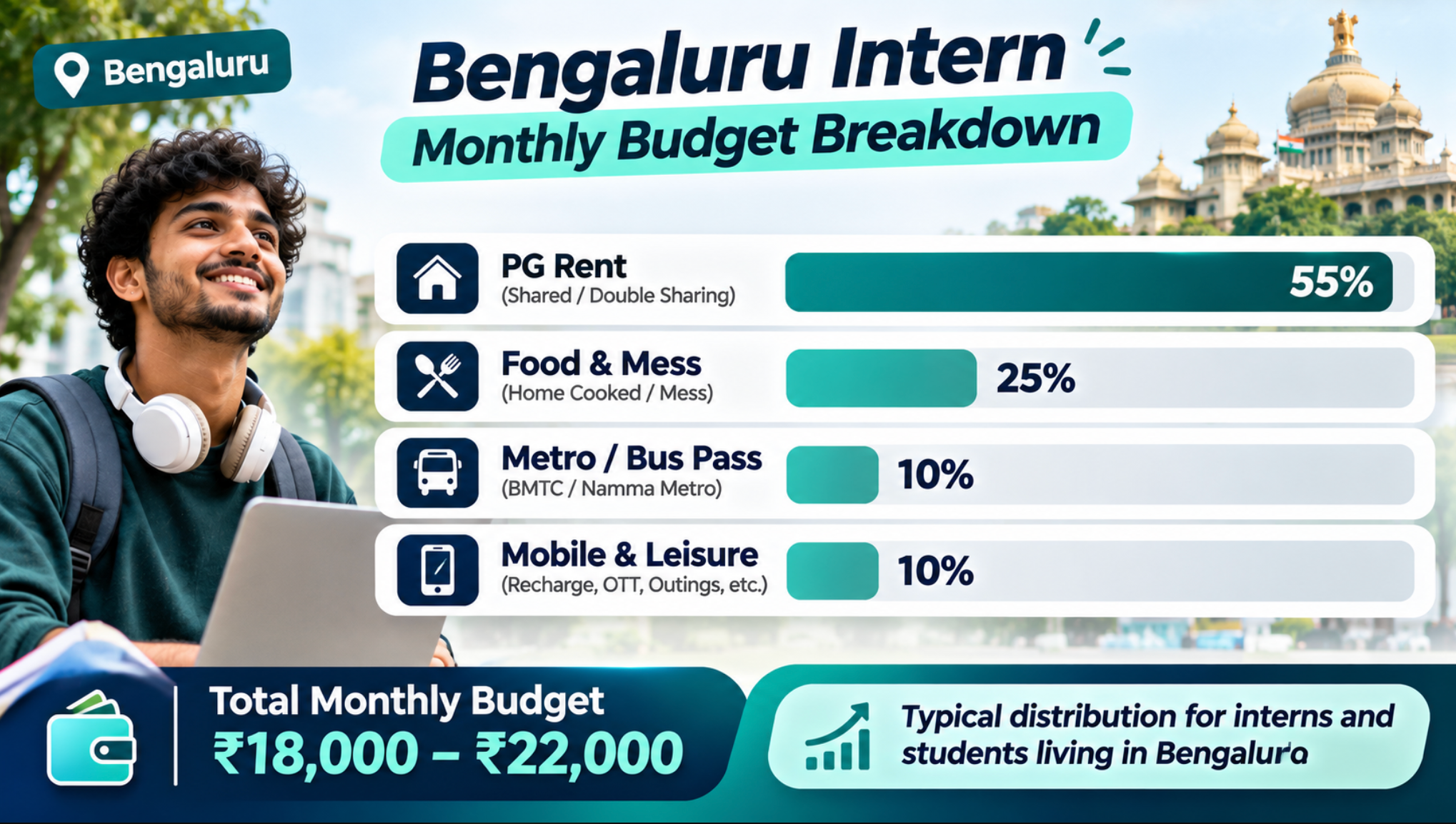
For university students and young graduates on a tech internship, the bengaluru intern monthly budget requires strict financial discipline.
1. Accommodation: Paying Guest (PG) vs. Shared Flat
Most interns opt for coliving spaces or PGs in areas like Marathahalli, BTM Layout, Electronic City, or Mathikere:
-
Double / Triple Sharing PG: ₹7,500 to ₹11,000 per month (usually includes two meals daily, Wi-Fi, and basic housekeeping).
-
Single Occupancy PG: ₹13,000 to ₹18,000 per month.
-
Security Deposit: Typically 1 to 2 months' rent in PGs, compared to 5 to 10 months for independent flats.
2. Food and Daily Commute
If your PG mess is basic, factor in ₹2,500 to ₹4,000 per month for local darshini breakfasts, eggs, and evening snacks. For commuting, an unlimited BMTC monthly bus pass (around ₹1,200 to ₹1,500) or Namma Metro smart card (₹1,000 to ₹1,800) keeps travel costs manageable.
In total, a realistic bengaluru intern monthly budget sits between ₹15,000 and ₹22,000 per month. When security deposits, exam fees, or laptop repairs create temporary shortages, students can access flexible starter micro-credit via our dedicated loan for non salaried category.
Cost of Living in Bangalore for Bachelors
For a single corporate employee, junior developer, or consultant, your monthly expense in bangalore depends on whether you value privacy or cost sharing:
1. Renting an Independent 1BHK vs. 3BHK Flatmate Sharing
The average rent in bangalore for a standalone 1BHK in primary hubs like HSR Layout or Koramangala ranges from ₹18,000 to ₹28,000. Sharing a spacious 3BHK with two colleagues brings the per-person room rent down to ₹12,000–₹16,000, while dividing utility bills, cook charges, and high-speed Wi-Fi evenly.
2. Cook, Maid, and Grocery Bills
Hiring a domestic cook for two meals a day costs approximately ₹3,000 to ₹4,500 per person in a shared arrangement. Adding weekly groceries and milk brings your food outgo to ₹7,000–₹9,000. Avoiding frequent late-night quick-commerce snack purchases helps keep this category under control.
3. Nightlife, Social Outings, and Commute
Bengaluru's microbreweries, specialty cafes, and social hubs are part of the city experience. Two to three weekend social outings typically cost ₹4,000 to ₹7,000 per month. Combined with daily office commutes via autos, bike taxis, or metro lines, a bachelor's total cost of living in bangalore generally settles between ₹30,000 and ₹48,000 per month.
Cost of Living in Bangalore for Couples and Families
When managing a household as a working couple, fixed costs increase, but combined household income often provides better financial stability:
1. Bengaluru Couple Annual Expenses Overview
A working couple renting a 2BHK in an apartment society can expect the following annual baseline:
-
Annual House Rent (₹30,000/month average): ₹3,60,000
-
Society Maintenance & Utilities (₹6,000/month): ₹72,000
-
Groceries & Fresh Mandi Supplies (₹14,000/month): ₹1,68,000
-
Transport, Fuel, & Cab Rides (₹7,000/month): ₹84,000
-
Weekend Leisure, Dining & Subscriptions (₹10,000/month): ₹1,20,000
-
Annual Domestic Travel & Home Visits: ₹60,000 to ₹1,00,000
-
Total Estimated Bengaluru Couple Annual Expenses: ₹8,64,000 to ₹11,04,000 per year
Planning your housing allowance carefully using our HRA calculator helps maximize your tax savings on rent outlays.
2. Family of Three (Including Child Schooling)
Adding a school-going child introduces daycare or school tuition fees (ranging from ₹80,000 to ₹2,20,000 annually in reputable CBSE/ICSE institutions), pediatric healthcare, and larger 3BHK rental requirements. A family's overall cost of living in bangalore typically starts from ₹75,000 and can cross ₹1,20,000 per month.
Area-Wise Rent Comparison in Bangalore (2027 Rates)
Housing represents the largest single item in your living expenses in bangalore. Neighborhood pricing reflects proximity to major tech parks, metro stations, and social infrastructure:
|
Neighborhood / Tech Corridor |
Typical 1BHK Rent |
Typical 2BHK Rent |
Standalone 3BHK Flat |
Security Deposit Norms |
|
HSR Layout (Sectors 1–7) |
₹20,000 – ₹28,000 |
₹34,000 – ₹48,000 |
₹50,000 – ₹75,000 |
4 to 8 Months |
|
Koramangala (Blocks 1–8) |
₹22,000 – ₹32,000 |
₹38,000 – ₹55,000 |
₹55,000 – ₹85,000 |
5 to 10 Months |
|
Whitefield (ITPB / Kadugodi) |
₹16,000 – ₹23,000 |
₹28,000 – ₹40,000 |
₹42,000 – ₹62,000 |
3 to 6 Months |
|
Marathahalli & Outer Ring Road |
₹15,000 – ₹22,000 |
₹27,000 – ₹38,000 |
₹40,000 – ₹58,000 |
4 to 6 Months |
|
Electronic City (Phase 1 & 2) |
₹11,000 – ₹17,000 |
₹19,000 – ₹28,000 |
₹30,000 – ₹44,000 |
3 to 5 Months |
|
Indiranagar & Domlur |
₹24,000 – ₹35,000 |
₹42,000 – ₹60,000 |
₹60,000 – ₹95,000 |
6 to 10 Months |
|
Hebbal & Manyata Tech Park Area |
₹15,000 – ₹21,000 |
₹26,000 – ₹36,000 |
₹38,000 – ₹55,000 |
4 to 6 Months |
Across the city, the average rent in bangalore for a standard 2BHK flat settles around ₹28,000 to ₹38,000 per month. High upfront rental deposits remain a unique feature of the Bengaluru rental market. If paying a 5-month security deposit upfront strains your liquid savings, plan your liabilities carefully using our loan affordability calculator before committing.
Is ₹25,000, ₹40,000, or ₹60,000 Salary Enough in Bangalore?
Whether your earnings match the average salary in bangalore depends on your stage of life, spending patterns, and personal financial goals:
Scenario A: Living on a ₹25,000 In-Hand Salary
-
Lifestyle Feasibility: Manageable for students, interns, and fresh graduates living in shared PGs or flat shares outside primary tech corridors (e.g., Electronic City, BTM Layout, Kengeri).
-
Budget Strategy: Keep your PG rent under ₹9,000 (inclusive of food), commute by BMTC bus or metro (₹1,500), and limit discretionary weekend spending to ₹2,500. Having a contingency plan for unexpected expenses is essential.
Scenario B: Living on a ₹40,000 In-Hand Salary
-
Lifestyle Feasibility: Comfortable for a single professional sharing a 2BHK or 3BHK flat in Whitefield, Marathahalli, or HSR Layout.
-
Budget Strategy: Allocate ₹14,000 for your room share, ₹8,000 for groceries and cook services, ₹3,500 for travel, and ₹4,500 for personal leisure. This leaves a healthy savings buffer of ₹10,000 each month.
Scenario C: Living on a ₹60,000 In-Hand Salary
-
Lifestyle Feasibility: Allows a bachelor to rent an independent 1BHK or enables a working couple to live comfortably in a 1BHK/2BHK in suburban hubs.
-
Budget Strategy: Easily covers independent housing, daily domestic help, routine dining out, and regular contributions to mutual funds and retirement accounts, provided you manage discretionary lifestyle spending carefully.
Managing Macro Inflation and Living Expenses in Bangalore
Every urban market experiences cost-of-living shifts over time. Understanding broader macroeconomic changes helps you plan your personal balance sheet more effectively:

Watch Out for Lifestyle Inflation: Moving to a higher income bracket often leads to bigger discretionary spends. Learn how to prevent unnecessary lifestyle upgrades from eating into your savings in our guide on lifestyle inflation and savings.
-
Understand Macro Inflation's Impact: See how rising urban retail prices influence personal credit and daily budgeting in our analysis of personal loans during inflation.
-
Follow Credit Industry Developments: Learn how changing liquidity and rate trends affect retail borrowing in our report on NBFC rising funding costs loan growth 2027.
-
Keep Debt Servicing Safe: Financial advisors recommend keeping your total monthly debt obligations below 40% to 50% of your net income. Check your exact debt capacity with our free FOIR calculator.
Practical Tips to Reduce Your Monthly Expenses in Bangalore
Simple lifestyle adjustments can reduce your overall bangalore expenses without impacting your quality of life:
-
Rethink Peak-Hour Cab Commuting: Relying daily on app-based cabs during peak traffic hours between Silk Board and Marathahalli can cost ₹8,000 to ₹14,000 each month. Using Namma Metro or carpooling brings this down to under ₹2,500.
-
Shop at Local Mandis for Produce: Purchasing fresh vegetables from neighborhood sabzi mandis rather than ordering through quick-commerce delivery apps saves 20% to 35% on kitchen expenses.
-
Audit Subscription Services: Review recurring gym memberships, multiple OTT platforms, and meal subscriptions every six months to eliminate unused services.
-
Negotiate Rental Lock-Ins: Landlords in non-gated buildings are often open to deposit negotiations if you agree to longer lock-in terms or demonstrate stable employment.
Bridging Cash-Flow Gaps in Bangalore with Pocketly
Even with careful budgeting, living in a fast-paced metro brings occasional financial surprises. Advance security deposits, unexpected vehicle servicing, medical bills, or delayed freelance payments can create temporary month-end shortfalls.
Turning to high-interest credit card cash advances (which can carry charges up to 42%–48% APR) or borrowing from unverified quick-loan platforms often creates long-term stress. Review our consumer advisory on 7 days loan vs 30 days loan to recognize dangerous lending practices and protect your personal data.
Pocketly provides a responsible, 100% digital personal credit alternative:
-
Micro-Credit Flexibility: Access loan amounts from ₹1,000 to ₹50,000 disbursed directly into your bank account via a paperless smartphone process.
-
For Salaried Employees: Handle month-end rental or utility gaps before payday through our personal loan for salaried facility.
-
For Self-Employed & Freelancers: Smooth out project billing lags and working capital needs with our personal loan for self employed product.
-
For College Students & Non-Salaried Earners: Young professionals without formal salary slips can access starter credit through our loan for non salaried tier.
-
Transparent & Regulated: All credit lines are underwritten and disbursed by our partner NBFC, Speel Finance Company Private Limited (an RBI-registered NBFC), in full compliance with responsible lending norms.
-
Predictable Monthly EMIs: Plan your repayments beforehand with our personal loan EMI calculator or calculate early payoff savings with the loan foreclosure calculator.
If an unexpected expense creates payment timing difficulties, review our practical guide on loan ki kissht nahi bhar pa rahe to protect your credit profile. You can also build a steady financial backup by exploring micro-investments in digital gold alongside your monthly budgeting.
Manage Your Bangalore Budget Confidently with Pocketly
Bengaluru offers exceptional professional opportunities, dynamic tech communities, and an exciting lifestyle. Navigating the city successfully comes down to smart budgeting: picking the right neighborhood, managing daily commute choices, and keeping an eye on your recurring expenses.
Take charge of your personal finances today:
-
👉 Calculate Your Repayments with Our Personal Loan EMI Calculator
-
👉 Plan Your Monthly Budget Using the 50 30 20 Rule Calculator
Frequently Asked Questions (FAQs)
What is the average cost of living in Bangalore for a single person in 2027?
The cost of living in bangalore for a single working professional typically ranges between ₹28,000 and ₹45,000 per month. This covers a room in a shared 2BHK or 3BHK flat, home-cooked food or cook charges, daily transit via metro or bus, utilities, and occasional weekend leisure.
How much is the average rent in Bangalore for a 1BHK flat?
The average rent in bangalore for an independent 1BHK apartment ranges from ₹14,000 to ₹22,000 in suburban areas like Electronic City, Kengeri, or Horamavu, and ₹20,000 to ₹30,000 in central tech hubs like HSR Layout, Indiranagar, and Koramangala.
What is the expected bengaluru intern monthly budget for college students?
A realistic bengaluru intern monthly budget is between ₹15,000 and ₹22,000 per month. Living in a shared double or triple PG (₹8,000–₹11,000 including food) and using a BMTC bus pass or Namma Metro smart card (₹1,500) keeps total expenses within a standard corporate internship stipend.
What are typical Bengaluru couple annual expenses for working professionals?
Estimated bengaluru couple annual expenses range between ₹8.5 Lakh and ₹11.5 Lakh per year. This accounts for a 2BHK rental flat in an apartment complex, society maintenance, monthly groceries, city transit, utilities, health insurance, and moderate weekend dining.
Is an average salary in Bangalore of ₹40,000 enough for a comfortable life?
Yes, an average salary in bangalore of ₹40,000 in hand is sufficient for a single individual to live comfortably, provided you share an apartment with flatmates and keep high-cost cab rides and discretionary nightlife within reasonable limits.
How do security deposits affect the overall bangalore price of accommodation?
Security deposits in Bengaluru are among the highest in India, with landlords commonly asking for 4 to 8 months' rent upfront. This represents a significant initial bangalore price barrier for newcomers, requiring ₹60,000 to ₹1,50,000 in liquid capital upon moving into an independent flat.
How can I manage an unexpected expense in Bangalore if cash runs short?
When an unexpected medical bill or security deposit creates a mid-month shortage, consider an RBI-compliant digital micro-loan from Pocketly (ranging from ₹1,000 to ₹50,000) with clear repayment terms rather than turning to expensive revolving card debt or unregulated apps.
Which areas offer the most affordable living expenses in Bangalore?
Locations like Electronic City, BTM Layout 2nd Stage, Kengeri, Uttarahalli, and Kadugodi offer more economical living expenses in bangalore compared to premium central hubs like Indiranagar, Koramangala, and HSR Layout.