

What do you do when household expenses pile up unexpectedly? Rent, bills, groceries, and daily costs can stretch your budget, especially before your next paycheck. In fact, over 58% of Indian households report struggling with expenses, with average quarterly costs rising from ₹42,000 in 2022 to ₹56,000 in 2025.
Trying to balance all essential payments while still covering regular needs can quickly become stressful and overwhelming. When funds are tight, even routine costs can feel hard to cover, creating pressure and uncertainty.
There’s a way to regain control. In this blog, we’ll share practical steps to help you manage household expenses more confidently and avoid common pitfalls. We’ll also show how Pocketly can help with quick financial relief when unexpected household costs appear, helping you stay in charge of your finances.
TL;DR
- Household expenses, like rent, groceries, and utilities, can overwhelm your budget, especially when unexpected costs arise.
- Track essential expenses like rent, utilities, and debt payments to avoid overspending and spot areas for savings.
- Reduce household costs by budgeting, using energy-efficient appliances, meal planning, and canceling unused subscriptions.
- If you can’t manage household expenses on time, prioritise essential bills, communicate with providers, and consider short-term loans for quick relief.
- Pocketly offers loans from ₹1,000 to ₹25,000 with fast approval, helping you manage unexpected expenses without stress.
What Are Household Expenses?
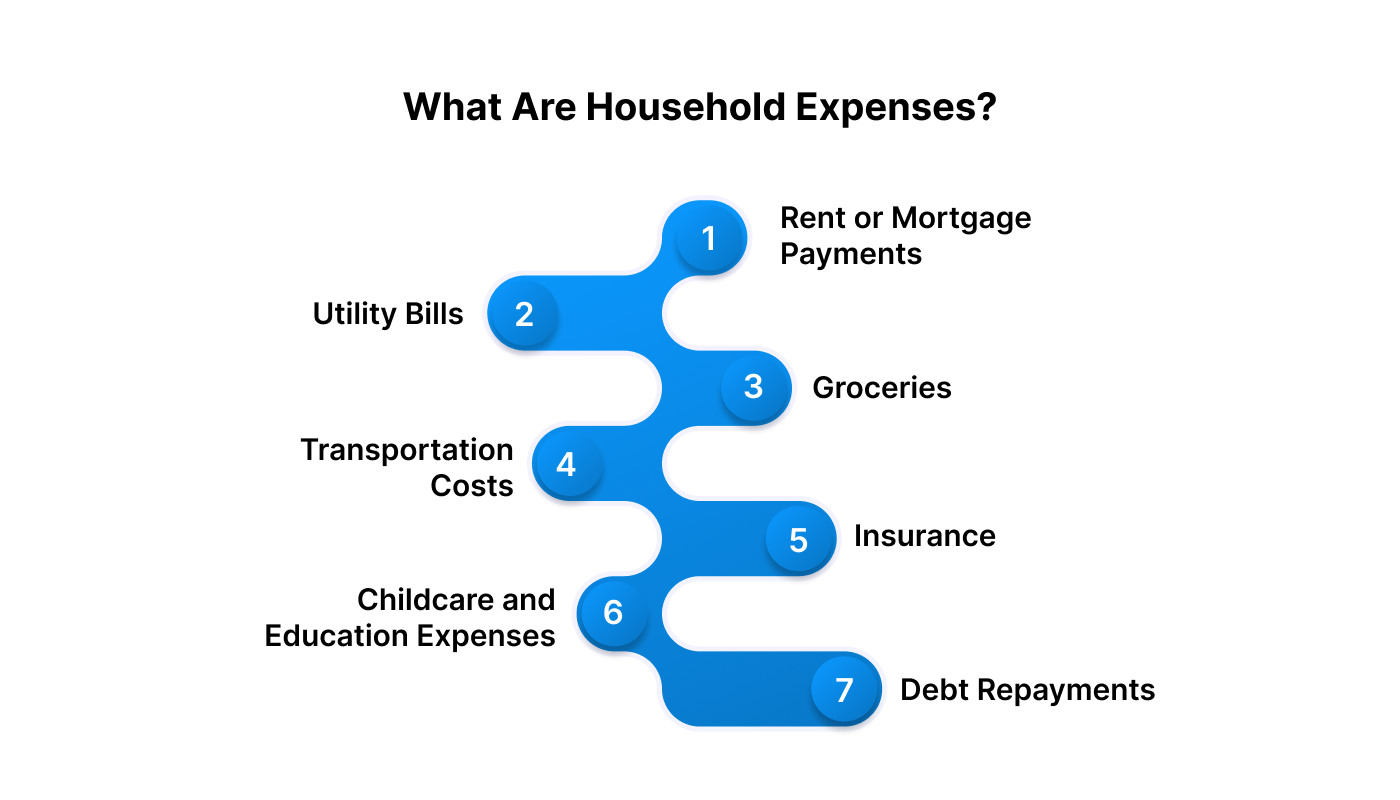
Household expenses are the necessary costs that come with maintaining a home and supporting everyday living. They include:
- Rent or Mortgage Payments
- Utility Bills (electricity, water, internet, etc.)
- Groceries (food and household supplies)
- Transportation Costs (fuel, public transit)
- Insurance (health, life, property)
- Childcare and Education Expenses
- Debt Repayments (loans, credit cards)
These expenses are essential for everyday living, but they can quickly add up and affect your budget if not managed properly. For families or individuals, household expenses can fluctuate based on location, lifestyle, and family size.
Note: Tracking and managing these expenses is crucial to avoid financial strain and ensure your household stays within budget.
Detailed Monthly Household Expenses in India
Household expenses are the essential recurring costs most people need to budget for every month. These include housing, utilities, groceries, internet and mobile plans, and other basic living costs.
The table below reflects typical monthly household expenses in India:
| Household Expense | Approximate Monthly Cost (INR) | Notes |
| Rent – 1BHK in City Centre | 14,600 | Price for a one‑bedroom apartment in a major city centre. |
| Rent – 1BHK Outside City Centre | 9,400 | Slightly lower cost outside central areas. |
| Basic Utilities (Electricity, Water, Garbage, etc.) | 3,500 | Monthly utility costs for a typical household. |
| Groceries (Food Staples) | 7,400–10,400 | Estimated minimum monthly food cost per person. |
| Mobile Phone Plan | 340 | Standard monthly mobile plan with data. |
| Broadband Internet | 680 | Unlimited high‑speed connection for home use. |
| Public Transport Pass | 780 | Monthly ticket for regular commuting. |
Which Household Expenses Should You Track Closely?
Keeping an eye on your household expenses is crucial for managing your budget. Here are the key costs you should monitor to stay on top of your finances:
- Rent or Mortgage: The largest monthly expense, essential to keep track of to ensure you’re within budget.
- Utilities: Bills for electricity, water, gas, and internet can vary, so it’s important to monitor and look for areas to reduce consumption.
- Groceries: A necessary expense, but meal planning and bulk buying can help keep costs in check.
- Transportation: Includes fuel or public transport costs; look for opportunities to carpool or use public transport more to save.
- Insurance: Essential for protection, but it’s important to review your policies regularly to avoid overpaying.
- Debt Payments: Regular repayments are crucial to avoid debt build-up. Ensure you’re sticking to payment schedules to avoid interest penalties.
By tracking these key expenses, you can spot areas where you might be overspending, helping you regain control over your household budget.
6 Ways to Reduce Household Expenses Without Sacrificing Comfort
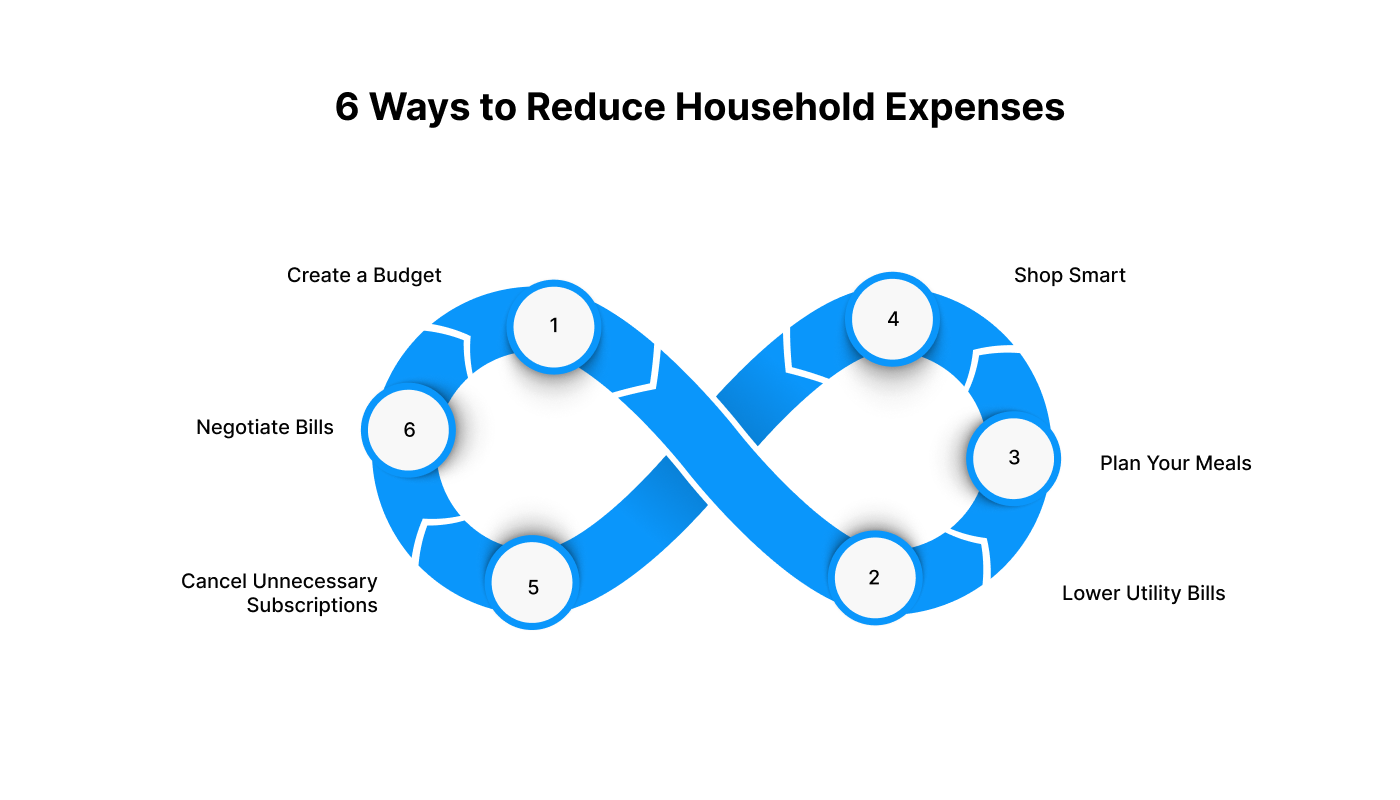
Reducing household expenses doesn’t have to mean compromising your lifestyle. Here are actionable steps you can take:
1. Create a Budget That Works for You
Most people think they know where their money goes, but without a clear budget, it’s easy to overlook areas where they could save.
Allocate specific amounts for categories like rent, utilities, and groceries, and stick to them. Life can be unpredictable, but avoid exceeding your set amounts.
For example, if your grocery budget is ₹5,000 a month, track every purchase. Having a clear budget helps you control your spending and avoid surprises.
2. Lower Utility Bills Without Sacrificing Comfort
Utility bills are often unpredictable, but small changes can significantly lower them.
Switch to energy-efficient appliances, use natural light during the day, and unplug electronics when not in use. Additionally, reduce water usage by turning off taps while brushing your teeth or buying water-efficient showerheads.
Switching out old light bulbs with LED ones can reduce up to ₹1,500 annually on electricity costs. These small changes add up, reducing costs without compromising comfort.
3. Plan Your Meals to Avoid Wasteful Spending
Impulse grocery shopping can quickly increase your costs. Planning meals in advance helps avoid unnecessary purchases.
Prepare a weekly meal plan and buy in bulk for non-perishable items like rice and pasta. Preparing meals in advance not only saves money but also saves time during the week, eliminating the need for last-minute, expensive food runs.
4. Shop Smart and Stick to the Essentials
Shopping smart means making use of sales, discounts, and bulk-buying opportunities while avoiding unnecessary items. Focus on your essential purchases and avoid impulse buys.
For instance, buying staple items like rice or flour in bulk reduces the per-unit cost, saving you money over time.
By sticking to necessities and making the most of bulk deals, you can save significantly without missing out on anything important.
5. Cancel Unnecessary Subscriptions and Save
Subscriptions are often a hidden drain on your finances. Review your subscriptions regularly and cancel those you no longer need.
For example, if you subscribe to numerous streaming services but only use one, canceling the extras could save ₹500 to ₹1,000 each month. This simple step frees up cash that can be better spent elsewhere.
6. Negotiate Your Bills for Better Rates
Fixed costs like utilities and internet can often be negotiated, especially if you’ve been a loyal customer. Call your service providers to ask for discounts or better plans.
For instance, contact your internet provider and request a discount for renewing your contract or switching plans. You could save ₹300 to ₹500 each month without changing your level of service.
By making these simple changes, you can cut household expenses while still living comfortably, allowing you to focus on savings and long-term financial goals.
Also read: How to Manage Monthly Expenses Smartly in 2025
What Common Mistakes Are Affecting Your Household Expenses?
When it comes to managing household expenses, it’s easy to make mistakes that can affect your financial stability. Here are some common pitfalls to avoid:
1. Not Having an Emergency Fund
Many people fail to set aside money for unexpected expenses, believing they can manage without it. However, this can lead to financial stress when an emergency occurs.
Without an emergency fund, unexpected costs like medical bills, car repairs, or job loss can force you into debt or strain your budget.
Example: If your car breaks down and you don’t have an emergency fund, you may need to take out a loan or use credit cards, which could lead to interest charges and debt. Having even ₹5,000 to ₹10,000 set aside for emergencies can prevent this scenario.
2. Buying Convenience Instead of Value
It’s tempting to buy convenience items, but they often come with a higher price tag.
Paying more for convenience can add up quickly and stretch your budget, especially when these items are not essential.
Example: Pre-chopped vegetables might cost ₹200 more per week compared to buying whole vegetables. Over a month, this can add ₹800–₹1,000 to your grocery bill unnecessarily.
3. Not Tracking Impulse Purchases
Impulse purchases, especially small ones, can seem insignificant, but they can quickly add up.
These small, unplanned purchases can exceed your budget and take away from money that could be spent on more important priorities.
Example: Buying snacks, drinks, or other small items during each grocery run might only cost ₹50 to ₹100 at a time. However, if this happens multiple times a month, it could easily add ₹1,000 or more to your overall spending without you even realising.
4. Not Shopping Around for Insurance
Many people stick with the same insurance provider year after year without comparing other options. This can result in paying more for coverage than necessary.
Overpaying for insurance premiums, even though better deals may be available from different providers offering the same or better coverage.
Example: If you’ve been with the same car insurance provider for years, you might be paying ₹2,000 more annually than if you shopped around. By comparing quotes from different providers, you could save a significant amount each year on your premiums.
5. Overlooking Small, Recurring Costs
Small, regular expenses such as daily coffee runs, online subscriptions, or convenience items may not seem significant individually, but they add up.
These minor costs build up over time and take a bigger chunk out of your finances, leaving you with less money to save or invest.
Example: Spending ₹100 a day on coffee adds up to ₹3,000 a month. Cutting back to two coffee runs a week can save you ₹2,000 per month, which can go towards savings or paying off debt.
By being aware of these mistakes, you can avoid unnecessary financial strain and take control of your household expenses.
Also read: 7 Best Budgeting Apps In India 2025
What to Do When You Can't Manage Household Expenses on Time?
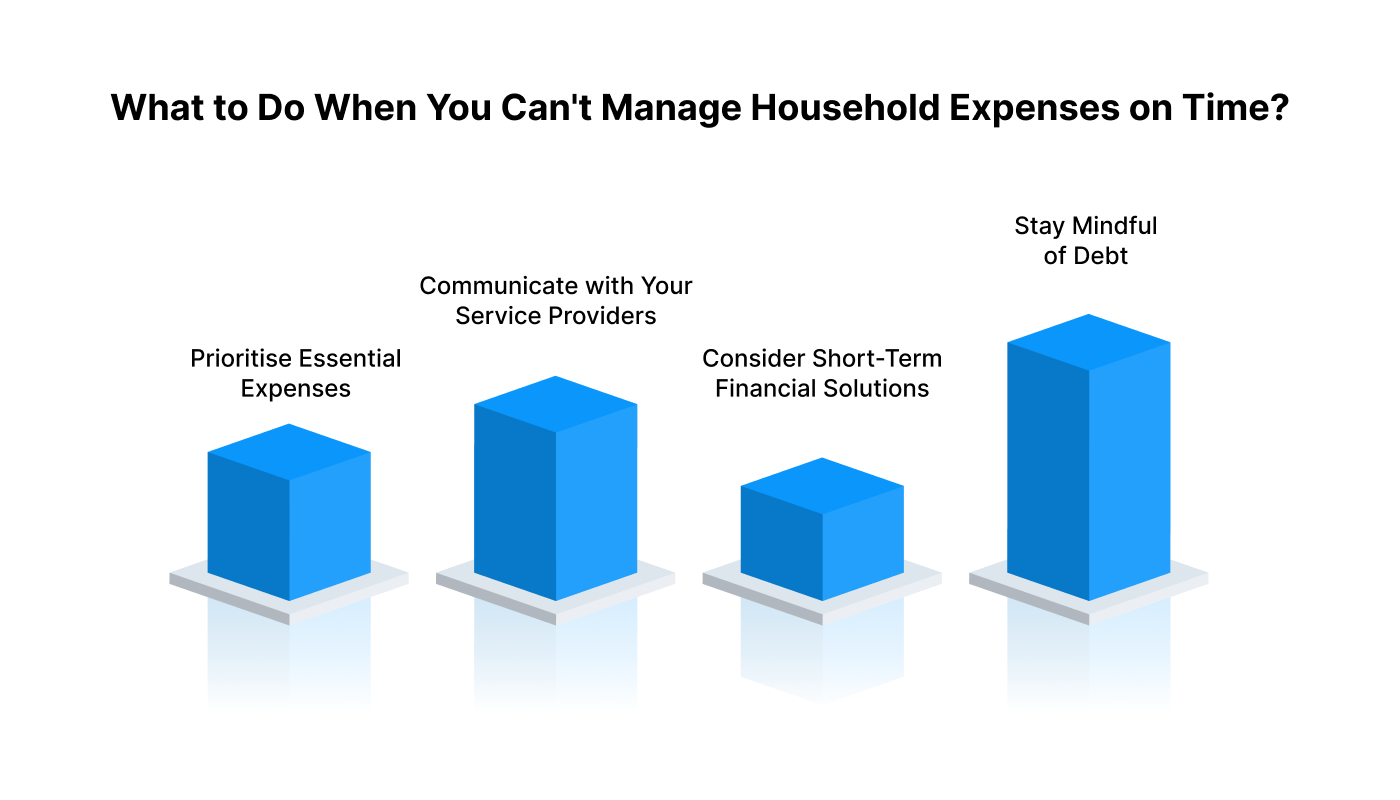
Unexpected events, like emergency repairs or surprise bills, can make it hard to manage household expenses. Here’s how to stay on track:
1. Prioritise Essential Expenses
When money is tight, focus on the necessities:
- Priority 1: Rent and utilities to avoid interruptions in essential services.
- Priority 2: Transportation to ensure you can get to work or handle key tasks.
- Priority 3: Non-essentials like entertainment or dining out can wait.
2. Communicate with Your Service Providers
If you’re unable to make a payment, don’t wait until the deadline has passed. Reach out to your service providers to discuss extensions, instalment options, or the possibility of waiving late fees.
3. Consider Short-Term Financial Solutions
When unexpected expenses arise, short-term loans can help cover the gap. Pocketly offers loans from ₹1,000 to ₹25,000, with interest rates starting at 2% per month. With fast approval and instant transfer, you can quickly access funds to manage urgent expenses.
4. Stay Mindful of Debt
Use short-term loans only when necessary, and make sure to repay them quickly to prevent long-term debt from accumulating.
Dealing with household expenses during tough times can be challenging, but with the right approach and solutions like Pocketly, you can keep your finances in check and avoid unnecessary stress.
Unexpected Household Expenses? Pocketly’s Here to Help You Manage
When unplanned household expenses like emergency repairs, surprise bills, or sudden costs catch you off guard, Pocketly is here to offer quick financial relief, so you can stay in control of your budget.
Here’s why Pocketly stands out:
- Borrow only what you need: Loans ranging from ₹1,000 to ₹25,000.
- No collateral required: Skip the paperwork, no assets or guarantors needed.
- Fast approval: Quick KYC verification and an instant decision.
- Instant transfer: Funds are directly credited to your account right after approval.
- Flexible repayment options: Select a repayment plan that works with your budget.
- Clear, transparent pricing: Interest rates starting at just 2% per month, with processing fees between 1% and 8%.
- Available anytime, anywhere: Access funds 24/7 via our easy-to-use mobile app.
With Pocketly, you get access to secure loans through regulated NBFCs, ensuring clear terms and no hidden charges. When surprise household expenses arise, Pocketly ensures you’ve got the flexibility to handle them without the stress.
Conclusion
Household expenses are a necessary part of everyday life, but they shouldn’t overwhelm your budget. By tracking your spending, sticking to a budget, and identifying areas where you can cut back, you can stay on top of your finances.
Manage household expenses with thoughtful planning. Regularly review your spending, prioritise essential costs, and set realistic limits to avoid overspending. When unexpected expenses arise, don’t wait for them to add up; take action quickly. Short-term loans can provide the financial flexibility you need to keep things running smoothly without disrupting your budget.
Download the Pocketly app now on iOS and Android to get quick funds when household expenses catch you by surprise, giving you the financial freedom to manage your costs with ease.
FAQs
1. What are household expenses?
Household expenses include essential costs such as rent or mortgage, utilities, groceries, transportation, insurance, and any other regular payments needed to maintain your home and daily life.
2. How can I reduce my household expenses?
You can reduce household expenses by creating a budget, cutting back on utilities, shopping smartly for groceries, and cancelling unnecessary subscriptions or services.
3. How can Pocketly help with household expenses?
Pocketly provides quick loans ranging from ₹1,000 to ₹25,000 to help cover unexpected household expenses. With fast approval and instant transfer, it offers flexibility when your budget is stretched thin.
4. Are there any fees or interest rates on Pocketly loans?
Yes, Pocketly offers loans with interest rates starting at 2% per month and processing fees between 1% and 8% of the loan amount. All terms are clear, with no hidden charges.
5. How quickly can I get funds through Pocketly?
Pocketly offers fast approval and instant bank transfers, meaning you can access the funds you need within minutes, helping you manage urgent household expenses without delay.