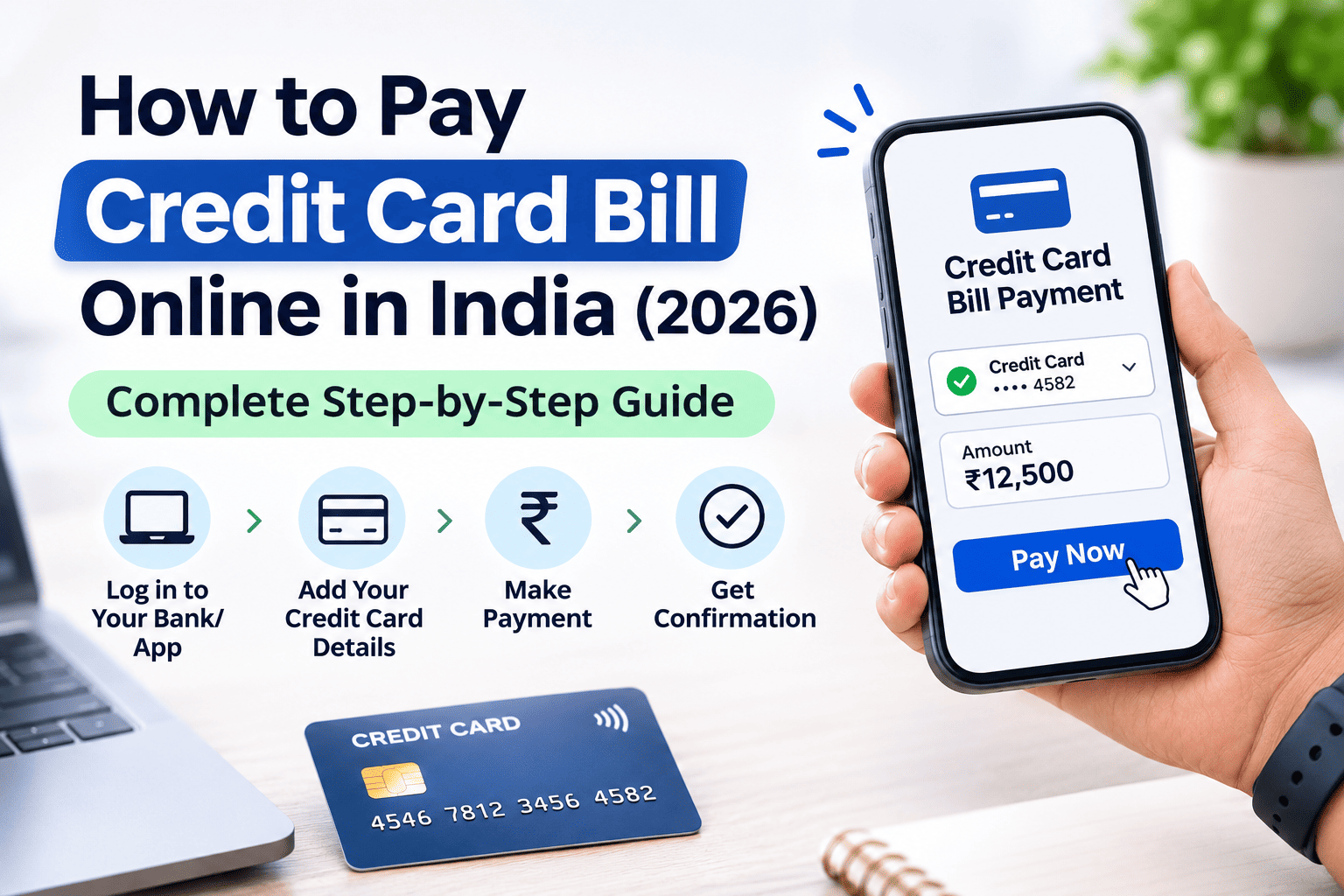


To learn how to pay credit card bill dues on time in India, you can use RBI-regulated digital channels such as the Bharat Bill Payment System (BBPS / Bharat Connect), UPI apps, Net Banking, NEFT/IMPS transfers, or auto-debit standing instructions from your savings bank account. Most digital credit card bill payment methods settle instantly or within 24 to 48 hours, helping you avoid late payment penalties and 36% to 49% annual finance charges. However, keep one critical limitation in mind: paying only the Minimum Amount Due (MAD) does not stop interest from accruing on your remaining balance. At Pocketly, we help young Indian earners bridge temporary month-end cash shortfalls cleanly so you never miss a credit card payment due date.
Quick Answer: Best Ways for Credit Card Bill Payment in India
-
Fastest Digital Method: Paying via UPI or BBPS-enabled apps (Bharat Connect) settles most credit card bill payment requests instantly with a digital transaction reference ID.
-
Best for Zero Missed Due Dates: Setting up an NACH or e-Mandate auto-debit instruction from your primary bank account ensures your full credit card bill clears automatically.
-
Important Cost Rule: Always pay the Total Amount Due rather than the 5% Minimum Amount Due to retain your interest-free grace period.
-
Liquidity Shortfall Backup: If a delayed salary or client invoice leaves you short before your due date, we offer transparent micro-credit from ₹1,000 to ₹50,000 at Pocketly to help you avoid expensive revolving debt.
What Is a Credit Card Bill Payment and Why Does Timing Matter?
A credit card bill payment is the settlement of funds you borrowed against your revolving credit limit during a specific billing cycle. At the end of every 30-day billing period, your card issuer generates a statement listing your Total Amount Due, Minimum Amount Due, and Payment Due Date (typically 15 to 20 days after statement generation).
Knowing how to pay credit card statements on or before the due date protects your financial profile in three ways:
-
Preserves Your Interest-Free Period: Clearing 100% of your credit card bill keeps your 45-to-50-day interest-free grace period active for fresh purchases.
-
Prevents Compounding APR: Unpaid balances trigger annualized interest rates between 36% and 49.36%, plus 18% GST.
-
Protects Your CIBIL Score: Payment history carries the highest weight in bureau scoring; even a delay beyond three days past the due date can lower your score.
How to Pay Credit Card Bill Online: Step-by-Step Methods
Under Reserve Bank of India (RBI) and NPCI Bharat BillPay Limited (NBBL) frameworks, all major Indian credit card issuers are onboarded onto the Bharat Bill Payment System (BBPS—now branded as Bharat Connect). Here is how to pay credit card bill dues online across verified channels:
|
Payment Method |
Settlement Timeline |
Charges / Fees |
Best For |
|
BBPS / UPI Apps |
Instant to 2 hours |
Nil (Zero convenience fee on BBPS) |
Paying any bank's card from one app |
|
Issuer's Mobile App / Net Banking |
Instant (Same bank) |
Nil |
Direct, real-time limit restoration |
|
Other Bank Net Banking (BillDesk / NEFT) |
1 to 2 working days |
Nil (Standard NEFT rules apply) |
Paying from a different primary savings account |
|
Auto-Debit (e-Mandate / NACH) |
On the due date |
Nil (Bounce charges apply if underfunded) |
Salaried earners wanting automated discipline |
|
IMPS Transfer |
Instant to 30 minutes |
Bank-specific nominal IMPS fee |
Urgent last-day credit card payment |
1. How to Pay Credit Card Bill via BBPS / UPI Apps
-
Open any RBI-compliant UPI or banking app integrated with Bharat Connect (BBPS).
-
Navigate to Bills & Recharges and select Credit Card Bill Payment.
-
Choose your card issuing bank (such as HDFC Bank, SBI Card, ICICI Bank, or Axis Bank) and enter your 16-digit card number and registered mobile number.
-
Fetch your current credit card bill details, verify the cardholder name, and select Total Amount Due.
-
Authorize the credit card payment using your UPI PIN and save the BBPS Transaction Reference ID.
2. How to Pay Credit Card Using Issuer Net Banking or Mobile App
-
Log in to your card issuer's official mobile banking app or internet banking portal.
-
Go to the Cards section and select Pay Credit Card Bill.
-
Select your linked savings account, enter the exact statement amount, and confirm via OTP.
-
Your available credit limit updates almost immediately upon successful debit.
3. How to Pay Credit Card Bill via NEFT or IMPS
-
Add your credit card as a beneficiary in your savings bank's Net Banking portal.
-
Enter your 16-digit credit card number in the Account Number field and use your card issuer's dedicated credit card IFSC code.
-
Initiate an IMPS transfer for instant credit or NEFT for standard batch settlement, keeping a buffer of at least 2 working days before your due date.
Credit Card to Credit Card Payment: Is It Allowed in India?
You cannot directly execute a credit card to credit card payment through standard BBPS or UPI bill-payment rails because RBI and network rules restrict paying off one revolving credit line directly with another card. However, borrowers facing temporary cash constraints sometimes use indirect alternatives—each carrying significant costs:
-
Credit Card Balance Transfer: You can apply to transfer an outstanding balance from one bank's card to another bank's card offering a promotional 0% to 1.5% monthly rate for 3 to 6 months. Banks typically levy a 2% to 5% processing fee plus GST.
-
E-Wallet Loading (High Fee Route): Loading money into a digital wallet using Card A and transferring it to a bank account to pay Card B usually attracts a 2% to 3.5% wallet loading surcharge plus GST, alongside potential quasi-cash fees from the issuer.
-
ATM Cash Advance (Avoid): Withdrawing cash from Card A to deposit into your bank account for Card B triggers an immediate 2.5% to 3% cash advance fee and daily interest from day one with zero grace period.
Important Note: Relying on an indirect credit card to credit card payment simply shifts debt from one high-interest card to another. If you cannot clear your full statement, a structured, fixed-tenure personal loan is often far more transparent and predictable than rolling over plastic debt.
Bridging Credit Card Bill Shortfalls Responsibly with Pocketly
Unexpected medical bills, delayed freelance invoices, or month-end cash crunches can leave you short right when your credit card bill is due. Instead of paying only the Minimum Amount Due and falling into a 42% APR compounding trap, you can explore structured short-term micro-credit with us.
At Pocketly, we facilitate 100% digital personal loans from ₹1,000 to ₹50,000 with flexible tenures ranging from 61 days to 9 months, underwritten and disbursed by our RBI-registered NBFC partner, Speel Finance Company Private Limited.
How Our Loan Options Fit Different Borrower Profiles
-
For Salaried Employees: If a sudden expense leaves your account short before payday, explore our personal loan for salaried applicants to clear urgent dues on time.
-
For Self-Employed Professionals & Freelancers: When client payments are delayed around your card billing cycle, our personal loan for self employed tier offers quick working liquidity.
-
For Students & Non-Salaried Earners: If you earn regular stipends or gig income without traditional corporate payslips, check out our personal loan for non salaried category.
Before deciding how much to borrow, use our free personal loan EMI calculator to check your exact monthly installment and ensure it fits comfortably within your budget.
Also Read:Cost of Living in Bangalore in 2026: Realistic Monthly Budgets for Students, Bachelors, and Couples
Illustrative Cost Comparison: Rolling Over Card Balance vs. Fixed Pocketly EMI
Suppose you face a ₹20,000 credit card bill shortfall:
|
Borrowing Parameter |
Revolving Credit Card Minimum Due |
Fixed Pocketly Micro-Loan (Illustrative) |
|
Principal Amount |
₹20,000 |
₹20,000 |
|
Interest Structure |
3% to 3.75% per month (36%–49% APR) |
2% to 3% per month (disclosed upfront in KFS) |
|
Repayment Discipline |
Open-ended 5% minimum due rollover |
Fixed monthly EMIs over 3 to 6 months |
|
Grace Period Impact |
Lost immediately on all new card spends |
Card stays clear; fixed loan closure date |
(Note: Pocketly's published APR ranges from 30% to 121%, with processing fees of 0% to 7.5% plus 18% GST depending on individual underwriting. Always review your Key Fact Statement before accepting any loan offer.)
How to Apply for a Short-Term Liquidity Bridge on Pocketly
If you decide a fixed-tenure digital loan makes more sense than carrying expensive revolving card debt, applying with us takes just a few simple steps:
-
Download the Official App: Install the Pocketly app on your Android or iOS smartphone.
-
Verify Your Mobile Number: Register using your active mobile number and instant OTP authentication.
-
Complete Paperless KYC: Submit your PAN details, complete Aadhaar-based digital address verification, and finish a brief in-app Video KYC.
-
Select Loan Amount & Tenure: Choose an eligible amount between ₹1,000 and ₹50,000 and select a repayment window from 61 days to 9 months.
-
Review Your Key Fact Statement (KFS): Check your exact interest rate, processing fee, net disbursal, and APR upfront before signing.
-
Receive Direct Bank Transfer: Once verified and approved, funds are credited directly to your savings bank account so you can complete your credit card bill payment immediately.
(Note: While our digital application takes only a few minutes—often searched as an instant personal loan online in 2 minutes—final approval and disbursal depend on automated KYC and underwriting checks.)
What Should You Check Before Making a Credit Card Payment?
Follow this checklist every billing cycle to avoid payment failures and unnecessary charges:
-
Verify the Statement Due Date vs. Settlement Time: NEFT and cheque payments take 1 to 3 working days; always pay at least 48 hours early unless using instant UPI/BBPS.
-
Keep Your FOIR Healthy: Ensure your total monthly EMIs and card bills stay below 40% of your net income using our FOIR calculator and manage monthly expenses with our 50 30 20 Rule Calculator.
-
Verify Lender & Platform Credentials: If you are comparing options to find the best loan app in India for short-term cash needs, check the regulated NBFC partner, APR, processing fees, Key Fact Statement, and adherence to responsible lending practices.
-
Save the Transaction Reference Number: Always keep your BBPS reference ID or UTR number until the payment reflects on your card statement.
Common Credit Card Bill Payment Mistakes to Avoid
-
Paying Only the Minimum Amount Due: Paying 5% avoids a late fee, but triggers 36%–49% compounding interest on the remaining 95%. See how fast interest snowballs using our compound interest calculator.
-
Waiting Until 11:55 PM on the Due Date: Bank server maintenance or NPCI gateway delays late at night can push your settlement date to the next day, triggering late fees.
-
Leaving Auto-Debit Accounts Underfunded: If an e-mandate fails due to low balance, both your savings bank and card issuer may levy bounce and penal charges. Read our guide on UPI mandate explained to manage auto-debits safely.
-
Turning to Unregulated 7-Day Loan Apps: Never borrow from unverified apps to pay off a credit card bill; learn the risks in our comparison of 7 days loan vs 30 days loan.
-
Ignoring Repayment Stress: If you ever struggle to meet an EMI or card obligation, read loan ki kissht nahi bhar pa rahe and review our insights on lifestyle inflation and savings to regain control.
Also Read:How to Learn Stock Market Trading in India: A Practical Step-by-Step Guide
Final Takeaway: Stay Ahead of Your Credit Card Bill with Pocketly
Mastering how to pay credit card bill statements on time—using instant BBPS/UPI channels and clearing the full amount due—keeps your credit score strong and eliminates high revolving interest. When an unexpected cash crunch threatens your ability to settle your credit card payment before the deadline, we are here to help with transparent, paperless personal micro-loans up to ₹50,000.
Frequently Asked Questions (FAQs)
1. How to pay credit card bill online instantly in India?
You can pay your credit card bill instantly by selecting the Credit Card Bill Payment option on any BBPS-enabled UPI app or your card issuer's official mobile banking app, entering your card number, and authorizing the payment via UPI PIN or net banking.
2. Can I do a credit card to credit card payment directly?
No, Indian banking regulations and BBPS rails do not permit direct credit card to credit card payment transactions. You can only shift balances indirectly via a formal bank balance transfer facility, which carries a 2% to 5% processing fee.
3. What happens if I only pay the Minimum Amount Due on my credit card payment?
Paying the Minimum Amount Due (usually 5% of the statement) prevents a late payment fee, but you lose your interest-free grace period and incur 36% to 49% annualized finance charges on the unpaid balance and all new purchases.
4. How long does a credit card bill payment take to reflect?
Payments made through the card issuer's own app, BBPS, or IMPS typically reflect instantly or within 2 hours, whereas NEFT and third-party portal transfers can take 24 to 48 working hours.
5. Can I get an instant personal loan online in 2 minutes on Pocketly to pay urgent bills?
You can complete our 100% digital application and KYC process on the Pocketly app in just a few minutes. However, final approval and bank disbursal depend on automated KYC verification and underwriting review rather than unverified instant promises.
6. Can salaried professionals apply for a short-term loan with Pocketly?
Yes. If an unexpected expense leaves you short before payday, you can explore our personal loan for salaried applicants for amounts between ₹1,000 and ₹50,000, subject to our eligibility criteria.
7. Can self-employed individuals and freelancers apply on Pocketly?
Yes. If you manage irregular client invoicing cycles, you can explore our personal loan for self employed tier to handle short-term liquidity gaps.
8. Can non-salaried earners and students apply for credit with Pocketly?
Yes. Students and non-salaried individuals with regular allowances or gig income can apply through our personal loan for non salaried category without traditional corporate salary slips.
9. What should I check before choosing the best loan app in India?
When comparing platforms to find the best loan app in India for your needs, verify that the lender is an RBI-registered NBFC or bank, inspect the APR and processing fees in the Key Fact Statement (KFS), and confirm transparent repayment terms.
10. How can I calculate my monthly repayment before borrowing?
You can estimate your monthly EMI, total interest, and repayment schedule before applying by using our free personal loan EMI calculator.
Disclaimer: Credit card billing cycles, settlement timelines, and fee structures vary by issuing bank. Pocketly is a digital platform facilitating personal loans from ₹1,000 to ₹50,000 through our RBI-registered NBFC partner, Speel Finance Company Private Limited, subject to KYC verification and underwriting approval.