

Digital Personal Loans Jump 28% in India: What's Driving the Growth?
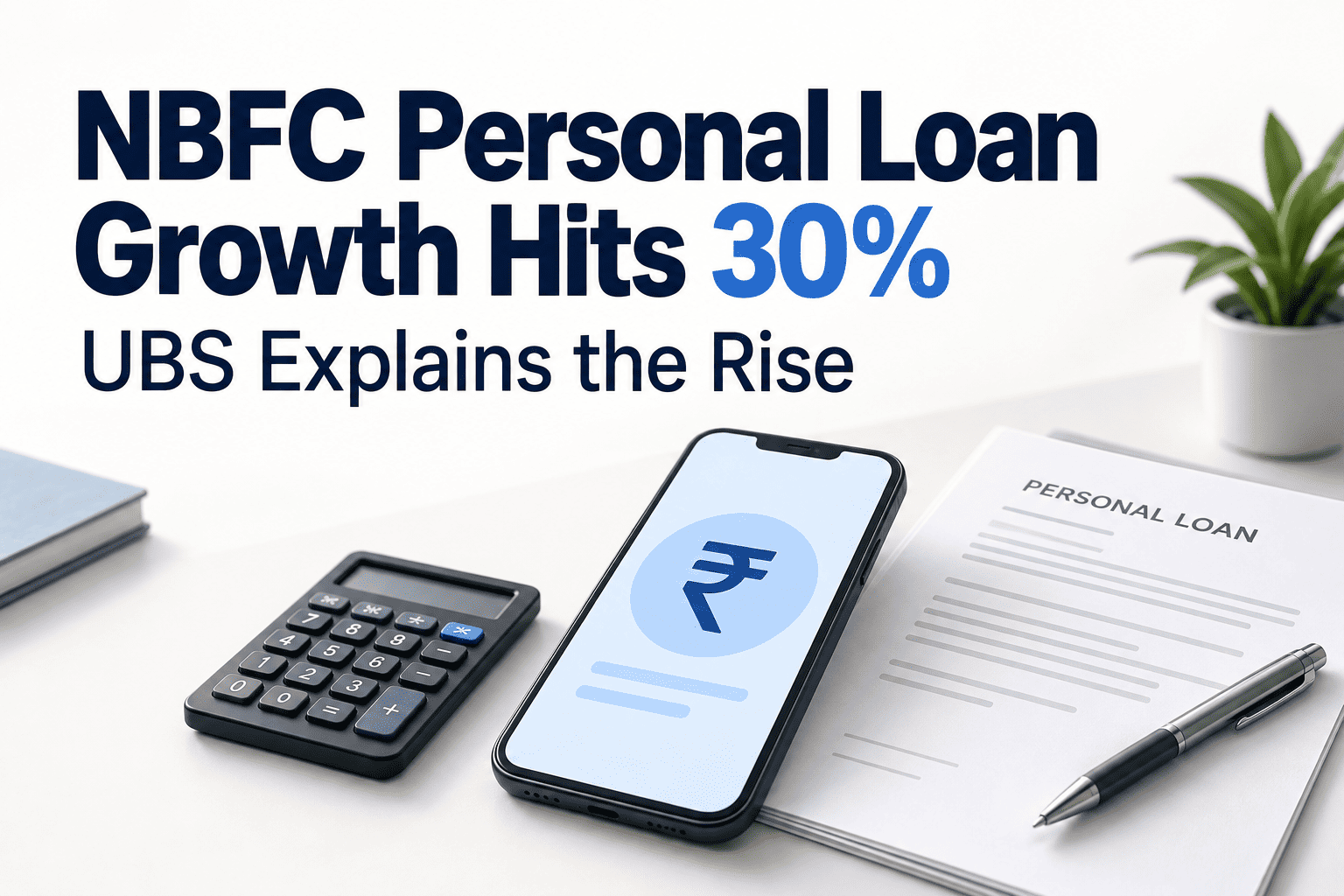
The digital-first non-banking financial companies (NBFCs) of India had their Personal Loan book grow by 28% to ₹1,54,195 crore at the end of June 2026, according to data released by the Fintech Association for Consumer Empowerment (FACE) and quoted in The Economic Times.
This growth was primarily attributable to higher loan balances and not higher level of loans. However, the amount of outstanding accounts actually decreased slightly from 5.69 crore in June 2025 to 5.64 crore by June 2026.
The data also reveals the changing trends in digital lending in India. Young borrowers are still significant, the average loan value is increasing, and the digital NBFCs are still targeting borrowers in cities, outside the main.
What happened?
The outstanding digital personal loan portfolio of digital-first NBFCs increased from ₹1,20,122 crore in June 2025 to ₹1,54,195 crore in June 2026 — a rise of about 28%.
At the same time, outstanding loan accounts fell from 5.69 crore to 5.64 crore. This means the growth in portfolio value came primarily from higher average outstanding balances, rather than simply more active loan accounts.
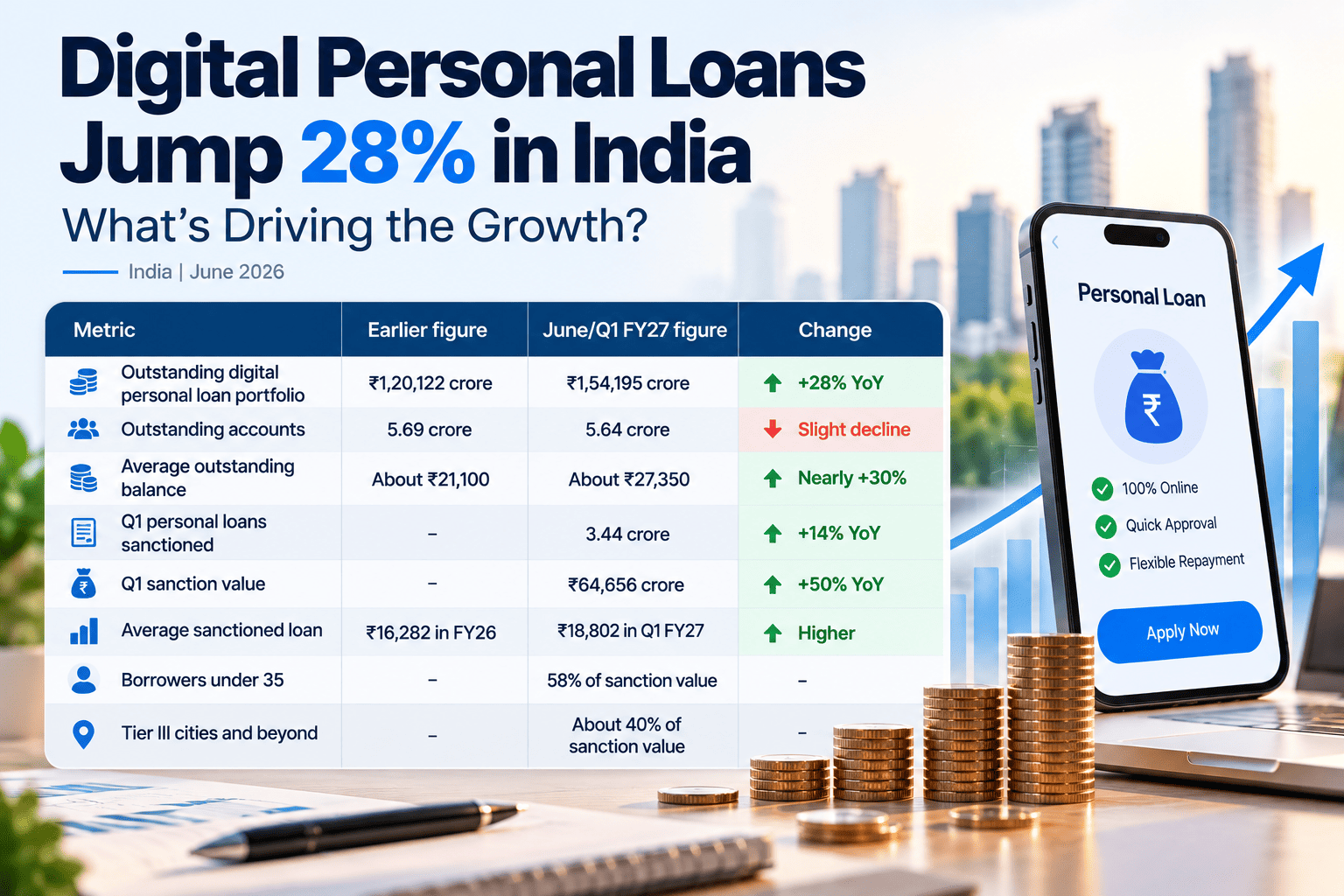
Digital personal loans: key numbers
|
Metric |
Earlier figure |
June/Q1 FY27 figure |
Change |
|
Outstanding digital personal loan portfolio |
₹1,20,122 crore |
₹1,54,195 crore |
+28% YoY |
|
Outstanding accounts |
5.69 crore |
5.64 crore |
Slight decline |
|
Average outstanding balance |
About ₹21,100 |
About ₹27,350 |
Nearly +30% |
|
Q1 personal loans sanctioned |
— |
3.44 crore |
+14% YoY |
|
Q1 sanction value |
— |
₹64,656 crore |
+50% YoY |
|
Average sanctioned loan |
₹16,282 in FY26 |
₹18,802 in Q1 FY27 |
Higher |
|
Borrowers under 35 |
— |
58% of sanction value |
— |
|
Tier III cities and beyond |
— |
About 40% of sanction value |
— |
Why are digital personal loans growing?
The numbers point to several changes happening at the same time.
1. Digital lenders are sanctioning larger loans
One of the clearest changes is loan size.
Digital NBFCs sanctioned personal loans worth ₹64,656 crore during the April-June 2026 quarter, up 50% year-on-year. But the number of loans sanctioned increased by a much smaller 14% to 3.44 crore.
That difference indicates that personal loan growth is increasingly being driven by higher ticket sizes.
The average sanctioned loan during the quarter was ₹18,802, compared with ₹16,282 for FY2025-26. Loans above ₹50,000 accounted for roughly 60% of total sanction value, according to the reported FACE data.
This is important because a 28% increase in the loan book should not be interpreted as 28% more people borrowing digitally.
2. Younger borrowers remain important to digital lending
Borrowers under 35 accounted for 58% of the value of loans sanctioned by digital NBFCs during the quarter.
For comparison, borrowers under 35 accounted for 37% of bank personal-loan sanction value in the data cited by The Economic Times.
Growth was particularly strong among borrowers below 25, whose sanction value increased 104% year-on-year.
Digital lending therefore continues to have a particularly strong presence among younger customers.
3. Credit is reaching beyond India's biggest cities
About 40% of digital NBFC sanction value during the quarter went to borrowers in Tier III cities and beyond, according to the FACE report.
A digital loan application can remove the need to repeatedly visit a physical branch for application and documentation processes.
That can make digital lending particularly relevant for eligible borrowers in places where physical lender networks are smaller.
However, easier digital access does not mean automatic eligibility or approval. Lenders still assess applications according to their credit policies and applicable regulatory requirements.
4. Borrowers with shorter credit histories are participating
Another notable change involves borrowers with relatively limited credit histories.
The value of loans sanctioned to customers with less than one year of credit-bureau history increased 178% year-on-year in Q1 FY27, according to The Economic Times' reporting of the FACE data.
These borrowers represented 7% of sanction value. By comparison, borrowers with more than five years of credit history accounted for 61%.
So established borrowers still account for most sanction value, even though lending to people with shorter credit histories is growing quickly.
Is digital lending becoming safer?
The FACE data indicates an improvement in one reported delinquency measure.
Loans in the 90-to-180-days-overdue category declined to 1.4% in June 2026 from 2.5% a year earlier, according to The Economic Times.
This is useful portfolio-quality information, but borrowers should not interpret it as proof that every digital loan app is safe.
The Reserve Bank of India has warned consumers to verify whether a digital lending app is associated with a regulated bank or NBFC. RBI has also created a public directory based on information submitted by regulated entities to help customers verify such associations.
What this means for borrowers
The 28% growth does not automatically mean personal loans have become cheaper, approvals are easier, or every borrower will qualify for a higher amount.
The data primarily tells us that digital-first NBFCs had a substantially larger outstanding personal-loan portfolio in June 2026 than one year earlier.
For borrowers, the practical takeaway is to focus on the actual terms of a loan rather than assuming that greater competition or market growth automatically produces a better offer.
Before accepting a digital personal loan, check:
-
the regulated lender providing the loan;
-
loan amount actually sanctioned;
-
applicable interest rate;
-
Annual Percentage Rate (APR);
-
processing and other applicable charges;
-
EMI or repayment schedule;
-
total amount payable;
-
repayment tenure;
-
late or penal charges where applicable;
-
Key Fact Statement and loan agreement;
-
grievance-redressal information.
A larger digital lending market gives consumers more ways to access credit, but comparing the cost and repayment obligation remains important.
Does the 28% growth mean interest rates will fall?
No direct connection can be established from this data.
The FACE figures describe changes in digital personal loan portfolios, sanctions, ticket sizes and borrower profiles. They do not announce an industry-wide reduction in personal loan interest rates.
The rate offered to an individual borrower can depend on the lender, borrower profile, credit assessment, loan amount, tenure and other underwriting factors.
Borrowers should therefore compare the APR and total repayment obligation rather than relying only on an advertised monthly rate or EMI.
Does this affect existing personal loan borrowers?
There is no new rule in this report that automatically changes an existing borrower's EMI, interest rate, tenure or repayment schedule.
This is an industry data report, not an RBI announcement changing personal-loan contracts.
Existing borrowers should continue to follow the repayment schedule and terms in their loan agreement unless their lender communicates an applicable change.
A simple way to understand the 28% increase
Suppose a digital lender had 100 borrowers with an average outstanding loan balance of ₹10,000.
Its outstanding loan portfolio would be ₹10 lakh.
Now imagine it has only 99 borrowers, but their average outstanding balance rises to ₹13,000.
The total portfolio becomes ₹12.87 lakh even though the number of borrowers has fallen.
That is broadly the type of pattern visible in the FACE data: the outstanding portfolio increased substantially while the number of outstanding accounts edged lower.
The example is illustrative only and does not represent Pocketly's pricing, portfolio or loan terms.
What borrowers should check before taking a digital personal loan
Growth in digital loans in India makes it increasingly important to understand who is actually providing the credit.
Do not judge a personal loan solely by how quickly an application can be completed.
Check the lender, APR, processing charges, repayment amount, tenure and Key Fact Statement before accepting an offer.
Pocketly provides personal loans through a digital process. According to Pocketly's loan amounts range from ₹1,000 to ₹50,000, with the applicable cost and terms depending on the loan offered to the borrower. Borrowers should review the actual terms presented before accepting a loan.
Speel Finance Company Private Limited is the RBI-registered NBFC providing personal loans through the Pocketly technology platform.
Key takeaways
-
Digital-first NBFCs' outstanding personal loan portfolio reached ₹1,54,195 crore in June 2026, up 28% year-on-year.
-
Outstanding accounts declined slightly from 5.69 crore to 5.64 crore.
-
Average outstanding balance increased to roughly ₹27,350.
-
Digital NBFCs sanctioned ₹64,656 crore of personal loans during April-June 2026, up 50% year-on-year.
-
Borrowers under 35 accounted for 58% of sanction value.
-
About 40% of sanction value went to Tier III cities and beyond.
-
The reported delinquency measure for loans 90 to 180 days overdue declined to 1.4%.
-
The figures do not mean personal loan rates have automatically fallen or approval has become easier.
FAQs
Are digital personal loans growing in India?
Yes. The outstanding personal loan portfolio of digital-first NBFCs increased 28% year-on-year to ₹1,54,195 crore at the end of June 2026, according to FACE data reported by The Economic Times. However, outstanding account numbers declined slightly, meaning larger balances were an important driver of the growth.
Why did digital personal loans grow 28%?
Larger loan balances were a major factor. Outstanding accounts fell slightly while the average outstanding balance rose nearly 30%. New sanction value also increased much faster than sanction volume during the April-June 2026 quarter.
Are young Indians taking more digital loans?
Young borrowers form a large part of the digital lending market. Borrowers under 35 received 58% of digital NBFC sanction value during Q1 FY27, while sanction value for borrowers below 25 increased 104% year-on-year, according to reported FACE data.
Are digital loans available in smaller Indian cities?
Digital NBFC lending extends well beyond large metropolitan areas. About 40% of sanction value during the quarter went to customers in Tier III cities and beyond, according to the FACE report.
Does digital loan growth mean lower interest rates?
No. Growth in outstanding loans does not automatically result in lower personal loan rates. The applicable rate and overall borrowing cost depend on the lender, loan terms and individual credit assessment.
Does the 28% increase mean 28% more people took loans?
No. Outstanding digital personal loan accounts actually declined slightly from 5.69 crore to 5.64 crore. The portfolio value increased mainly because average outstanding balances were higher.
What should I check before applying through a loan app?
Verify the regulated lender behind the app and review the loan's APR, interest rate, processing charges, repayment schedule, total repayment amount and Key Fact Statement. Do not assume an app itself is “RBI approved.”
Need a short-term personal loan?
Check your eligibility on Pocketly and review the applicable loan amount, interest rate, fees, tenure and repayment details before accepting an offer.
Borrow responsibly. Take only the amount you can comfortably repay.
Sources
The Economic Times — “Bigger loans lift digital lenders' books 28% as outstanding accounts decline” — September 30, 2026
Read The Economic Times report
ETBFSI — “India's digital NBFC personal loan book grows 28 pc as portfolio quality improves: Report” — September 30, 2026
Read ETBFSI report
Fintech Association for Consumer Empowerment (FACE) — Digital Personal Loans research
FACE Knowledge and Research
Reserve Bank of India — Digital Lending consumer/regulatory information
RBI digital lending information