

Most people do not lose control of their money because of one major expense. The problem usually starts when regular spending is not clearly tracked.
Monthly expenses may look manageable at a glance: rent, groceries, bills, transport, and a few personal spends. But when the month ends, the available balance often feels lower than expected.
That gap is usually not about income alone. It is about not having a clear view of how money is moving across the month. When spending is not tracked properly, it becomes harder to spot patterns, plan ahead, or correct small issues before they create pressure.
Expense tracking helps close that gap. It gives a more accurate picture of where money is going, which expenses are predictable, and where adjustments may be needed.
This blog explains how expense tracking works, the methods people commonly use, and how to choose an approach that fits everyday financial habits.
At a Glance
- Expense tracking improves financial control by showing where money actually goes, not where you assume it goes.
- The main benefit is not recording expenses, but spotting patterns early, before they turn into shortfalls or unnecessary debt.
- Different tracking methods work for different people, so the right system is the one you can actually maintain.
- Tracking becomes most useful when it leads to better decisions, such as cutting avoidable spending or planning fixed costs more clearly.
- When a short-term gap still shows up, the response should be proportionate, not a larger borrowing decision than the situation requires.
What Expense Tracking Actually Shows About Your Spending
Expense tracking is the process of recording where your money goes across daily, weekly, and monthly spending.
But the real value is not in writing down numbers. It is in understanding how your spending behaves over time.
Most people underestimate small, repeated expenses. Individually, they feel insignificant. Together, they can impact how much money is actually available by the end of the month.
Tracking changes by giving you clarity on:
- Where your money is actually going: Not just major expenses, but everyday spending that often goes unnoticed
- How consistent your spending is: Whether your expenses stay stable or fluctuate across weeks
- What can be adjusted without affecting essentials: Identifying areas where spending can be reduced without impacting necessary costs
This clarity is what turns tracking into control.
When you can see your spending clearly, you can make better decisions about where to reduce, where to maintain, and how to plan ahead without relying on guesswork.
Start tracking your expenses today. Download the Pocketly app to identify gaps early and manage short-term cash needs before they build up.
What Happens When You Don’t Track Expenses (Real Impact)
When expense tracking is missing, the issue is not overspending in a single moment. It is the absence of a clear reference point.
Without a record, spending decisions are made in isolation. Each purchase feels manageable on its own, but there is no way to measure how it fits into the overall monthly limit.
This creates a gap between perception and reality.
You may feel your spending is under control, but there is no structured way to confirm it. As a result, financial pressure often appears late, when most of the income has already been allocated.
Three patterns usually emerge:
- Spending decisions lack context: Without tracking, there is no visibility into how much has already been spent in a category. This makes it difficult to decide whether a new expense is reasonable or excessive.
- Planning becomes inconsistent: Fixed costs like rent and bills are predictable, but variable expenses fluctuate. Without past data, it becomes harder to estimate how much to allocate for the upcoming weeks.
- Adjustments happen too late: By the time a shortfall is noticed, most expenses have already occurred. This limits the ability to correct courses without cutting essentials or relying on external support.
The core issue is not income level or spending intent. It is the lack of a system that connects individual transactions to the overall financial picture.
Tracking solves this by turning scattered decisions into a structured view, making it easier to act before pressure builds.
If you’re noticing these gaps in your own spending, start tracking your expenses today and check if a short-term solution like Pocketly fits your needs.
Also Read: Real-Time Expense Tracking in 2025 | Why Manual Methods Fail
Expense Tracking Methods and Which One Actually Works for You
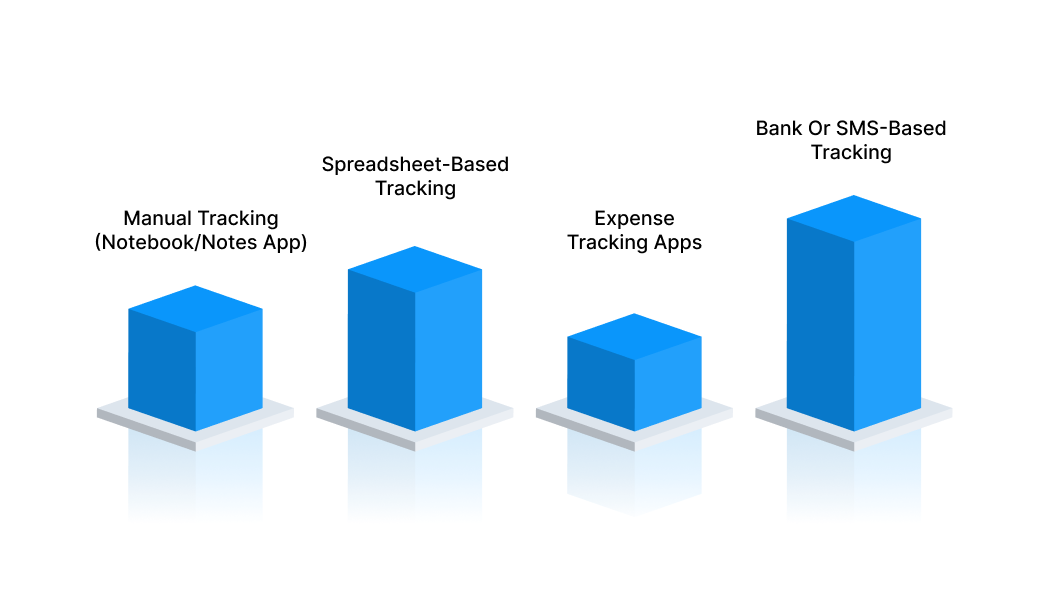
Expense tracking works best when the method fits how you already manage your daily routine. The goal is not to build a complex system, but to use one that can be maintained consistently.
Here are the most common approaches:
- Manual tracking (notebook or notes app): Expenses are recorded manually after each transaction or at the end of the day. This method gives full control and helps build awareness, but requires discipline to maintain regularly.
- Spreadsheet-based tracking: Tools like Excel or Google Sheets allow expenses to be organised into categories and reviewed over time. This approach is useful for analysing patterns and comparing monthly spending, but it involves manual entry.
- Expense tracking apps: Apps automate most of the process by categorising transactions, generating summaries, and showing spending trends. They reduce effort and are easier to use consistently for day-to-day tracking.
- Bank or SMS-based tracking: Some tools track expenses by reading transaction messages or linking with bank accounts. This reduces manual work but may miss cash spending or require permissions for access.
Each method has a different level of effort and control. The effectiveness depends less on the tool itself and more on how consistently it is used.
Also Read: Expense Tracking Categories for Budgeting
Best Expense Tracking Apps in India (Features, Pros, Cons)
Using an app can make expense tracking more consistent and easier to maintain. Instead of relying on memory or manual logs, these tools help organise spending, categorise expenses, and give you a clearer view of your financial habits.
The right app depends on how you prefer to track your money. Some focus on automation, while others give more control. A few also help when expense tracking reveals short-term financial gaps.
Here are some of the most useful options:
1. Pocketly
Pocketly is not a traditional expense tracking app, but it becomes relevant when tracking shows short-term gaps in your finances. It helps manage situations where your expenses temporarily exceed your available balance.
Key Features
- Supports short-term borrowing alongside expense awareness
- Quick access to small-ticket loans when needed
- Fully digital process with fast approvals
- Simple interface for managing short-term financial needs
Pros
- Useful when expense tracking highlights immediate cash gaps
- Loan amounts from ₹1,000 to ₹25,000 keep borrowing controlled
- Interest starts from around 2% per month
- Processing fee ranges from 1% to 8%, depending on profile
Cons
- Not designed for detailed expense categorisation
- More suited for managing gaps than long-term tracking
Download Pocketly to quickly check your eligibility and access a short-term loan when your expense tracking shows a gap.
2. Walnut
Walnut is an automated expense tracking app that reads SMS alerts to track spending without requiring manual input. It is useful for users who want passive tracking without daily effort.
Key Features
- Automatic expense tracking via SMS
- Categorises spending into different groups
- Bill reminders and spending insights
Pros
- Minimal effort required
- Good for tracking daily spending patterns
Cons
- Limited customisation
- Depends on SMS access for accuracy
3. Money Manager
Money Manager focuses on manual tracking with detailed categorisation and visual insights. It is suitable for users who want more control over how their expenses are recorded and analysed.
Key Features
- Manual expense entry with structured categories
- Visual charts and spending reports
- Budget planning tools
Pros
- High level of control and customisation
- Clear and detailed financial insights
Cons
- Requires consistent manual input
- Can feel time-consuming
4. Goodbudget
Goodbudget uses an envelope budgeting approach, where users allocate money to different categories in advance. It is more focused on planning spending rather than just tracking it.
Key Features
- Envelope-based budgeting system
- Sync across devices
- Focus on planned expense allocation
Pros
- Encourages disciplined spending habits
- Good for structured budgeting
Cons
- Requires manual tracking
- Less automation compared to other apps
The right tool is not just the one that tracks expenses, but the one that helps you act on what you discover and manage real financial situations better.
How to Choose the Right Expense Tracking Method for You
Choosing a tracking method is less about features and more about fit. The method should align with how you already manage your day, otherwise it becomes difficult to maintain.
A few simple considerations can help:
- If you prefer minimal setup, choose manual tracking: A notebook or notes app works when you want a straightforward way to record expenses without relying on tools.
- If you want structured analysis, use spreadsheets: Spreadsheets are useful when you want to categorise expenses, compare months, and review patterns in detail.
- If you want convenience, use apps: Apps reduce manual effort by organising transactions automatically and providing summaries that are easy to review.
- If most transactions are digital, consider bank or SMS-based tracking: This works well when a large part of your spending happens through cards or UPI, as most transactions can be captured automatically.
What matters most is usability. The method should be easy to update, simple to review, and practical enough to continue over time.
How Expense Tracking Helps You Reduce Debt Over Time
Expense tracking does not directly reduce financial pressure, but it changes how you respond to it.
With a clear record of spending, it becomes easier to identify where adjustments can be made without affecting essential expenses. This makes financial decisions more deliberate instead of reactive.
Here is how it helps:
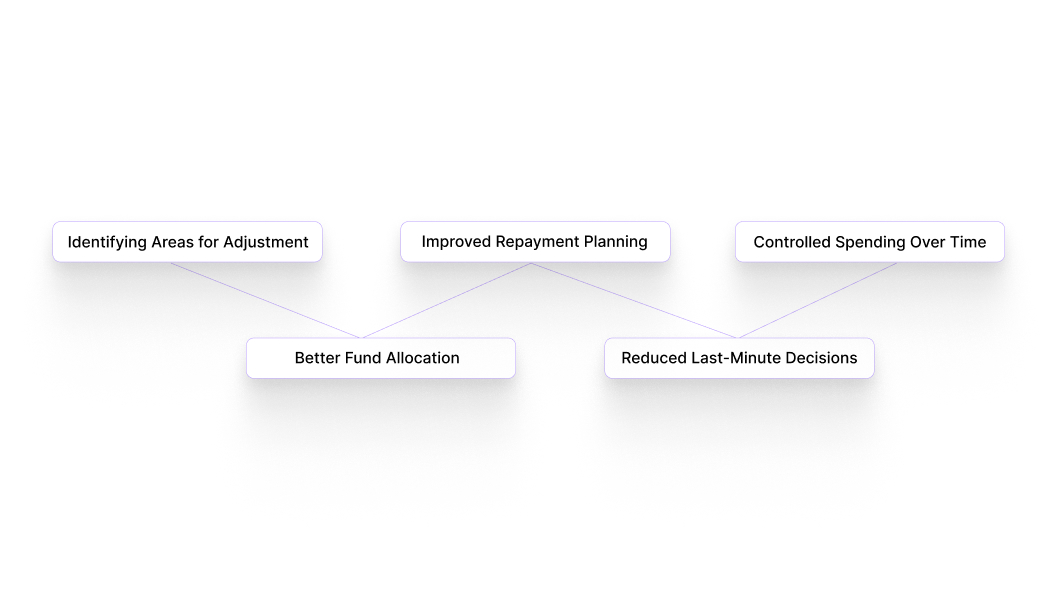
- Identifies areas for adjustment: When spending is categorised, it becomes easier to see which expenses can be reduced or delayed.
- Supports better allocation of funds: Clear visibility into regular and variable expenses helps in distributing income more effectively across the month.
- Improves repayment planning: Tracking helps identify how much can be set aside for EMIs or outstanding dues without disrupting necessary spending.
- Reduces dependence on last-minute decisions: When upcoming expenses are anticipated, there is less need to rely on urgent financial fixes.
- Over time, this leads to more controlled spending and fewer situations where financial pressure builds unexpectedly.
Manage Short-Term Cash Gaps Better with Pocketly
When a short-term gap appears, the goal is not to borrow more. It is to solve the mismatch without increasing long-term cost.
This is where choosing the right type of borrowing matters.
Pocketly is designed for situations where the need is immediate, the amount is limited, and the repayment is expected to be short-term.
Here is how it fits:
- Loan amounts aligned with actual need: Borrow between ₹1,000 and ₹25,000, so you avoid taking a larger loan than required
- Short-term repayment focus: Helps manage temporary gaps without extending repayment unnecessarily
- No collateral required: You do not need to pledge assets or arrange a guarantor
- Transparent cost visibility: Interest starts from around 2% per month, with processing fees between 1% and 8%, shown upfront
- Fully digital process: Application, KYC, approval, and disbursal happen online, reducing delays
This approach keeps borrowing proportionate to the situation instead of turning a short-term gap into a long-term financial commitment.
Take control of your spending today. Download Pocketly and manage short-term financial gaps with a solution designed for quick access and clear repayment.
FAQs
Q: How do I start tracking my expenses if I have never done it before?
Start with a simple method like a notes app or notebook. Track every expense for a few days first, then review where your money is going. Once the habit becomes easier, you can shift to a spreadsheet or app.
Q: What is the easiest way to track daily expenses?
An expense tracking app is usually the easiest because it reduces manual work. If you do not want to use an app, updating your expenses once at the end of the day is a practical alternative.
Q: How often should I review my expenses?
A weekly review is usually enough to stay aware of patterns and spot issues early. A monthly review helps you look at larger trends and plan upcoming fixed expenses better.
Q: What should I do if I still face a cash shortage after tracking expenses?
If a short-term gap appears despite tracking, it is better to choose a small, short-duration solution instead of a long-term loan. Platforms like Pocketly can help manage such gaps with controlled borrowing aligned to your actual need.
Q: Is expense tracking better than budgeting?
Expense tracking shows where your money goes, while budgeting plans where it should go. Both work best when used together.