

Home renovation often becomes urgent at the exact moment savings fall short. The challenge is not just accessing funds quickly, but finding credit that does not become expensive or difficult to repay later. Traditional home loans usually involve property evaluation, long approval timelines, and strict eligibility, which makes them unsuitable for small or mid-sized repair needs.
This gap is becoming more relevant as housing activity continues to grow. According to the National Housing Bank (NHB), residential property prices increased by 6.8% year-on-year in Q2 2024 across India, reflecting rising construction and renovation-related costs.
In simple terms, improving or maintaining a home is becoming more expensive, while access to suitable financing is not always straightforward.
This is where an unsecured home improvement loan becomes relevant, offering a faster, collateral-free way to fund repairs and upgrades. In this blog, we’ll break down what it means and how it works.
Key Takeaways
-
An unsecured home improvement loan is a collateral-free borrowing option used for repairs, renovation, or upgrades of an existing home.
-
It is approved based on income, credit score, and repayment capacity, not property ownership or valuation.
-
Compared to secured home loans, it offers faster approval but comes with higher interest rates and lower borrowing limits.
-
It is best suited for small to mid-scale renovation needs where speed and convenience matter more than long-term cost optimisation.
-
Choosing it wisely means balancing urgency, repayment affordability, and total interest cost—not just instant access to funds.
What is an Unsecured Home Improvement Loan?
In India, an unsecured home improvement loan is not a separate loan product by itself. It is usually a personal loan used specifically for renovating, repairing, or upgrading a home, without any collateral or property security.
This means you do not need to mortgage your house or pledge any asset to get the funds. Approval is based mainly on your income, credit score, and repayment capacity, and the loan is offered by banks, NBFCs, and digital lending platforms.
Key reality to understand
-
It works like a standard personal loan, not a specialised housing loan product
-
Loan amount is fixed and disbursed upfront
-
Repayment happens through monthly EMIs over a chosen tenure
-
Interest rates are usually higher than secured home loans due to no collateral risk
4 Types of Home Renovation Loans Indians Actually Use Today
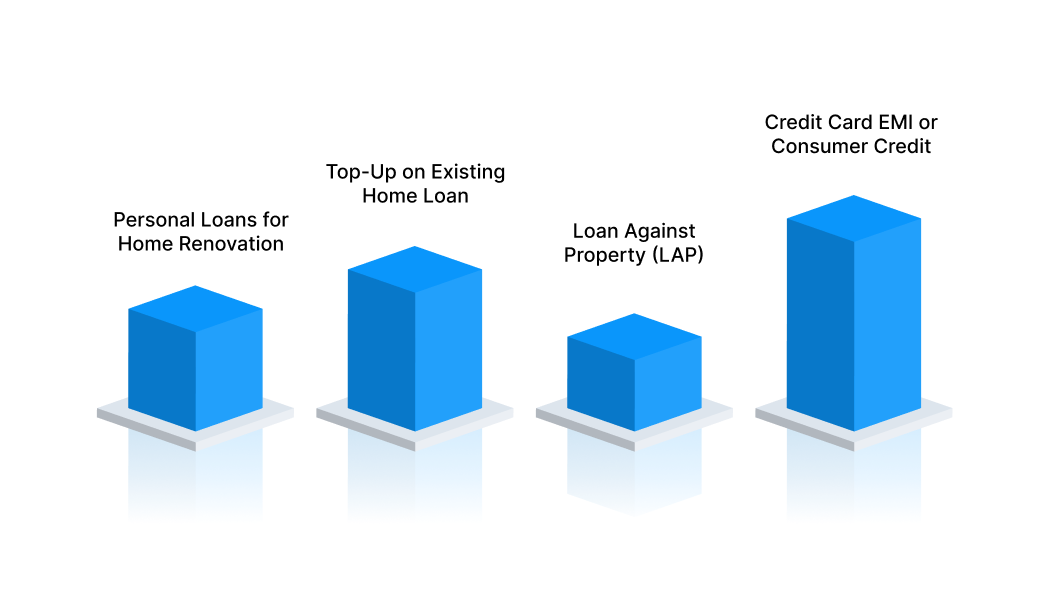
Home improvement financing does not come as a single dedicated product. Instead, borrowers use different loan structures depending on the size of the project, urgency, and repayment capacity. Most of these options are either unsecured or partially secured, depending on how the lender assesses risk.
Here are the most common ways people fund home renovation without pledging property:
1. Personal Loans for Home Renovation
Personal loans are the most commonly used option for small to mid-sized home improvement needs. They do not require any collateral, and approval is mainly based on income stability and credit score. This makes them faster to access compared to secured borrowing.
They are typically used for painting, repairs, furniture upgrades, or small renovation projects. However, the convenience comes at a cost, as interest rates are usually higher than those of secured loans. For many borrowers, this becomes the trade-off between speed and cost of borrowing.
2. Top-Up on Existing Home Loan
If you already have an active home loan, a top-up loan can be a more cost-efficient way to fund renovations. Since the property is already pledged, lenders offer lower interest rates compared to personal loans.
This option works well when renovation needs are larger, and repayment history is strong. However, approval depends on your existing loan performance and lender relationship.
3. Loan Against Property (LAP)
Loan Against Property is a secured borrowing option where your property is used as collateral. This allows lenders to offer higher loan amounts and lower interest rates.
It is usually preferred for major renovation or extension work that requires significant funding. The downside is longer processing time and higher documentation compared to unsecured options.
4. Credit Card EMI or Consumer Credit
For smaller and urgent renovation needs, credit card EMI options or consumer financing can be used. These are commonly used for appliances, fittings, or quick home upgrades.
While access is instant, the cost can vary significantly depending on the conversion scheme and repayment discipline. It works best for short-term, low-value expenses rather than large projects.
Quick Comparison of Home Improvement Loan Options (India)
|
Feature |
Personal Loan (Unsecured) |
Top-up Home Loan |
Loan Against Property (LAP) |
Credit Card EMI |
|
Collateral required |
No |
Existing home loan property |
Property required |
No |
|
Interest rate |
Higher |
Lower than a personal loan |
Lower than a personal loan |
Very high |
|
Loan amount |
Low to medium |
Medium |
High |
Low |
|
Approval speed |
Fast |
Moderate |
Slow |
Instant |
|
Tenure |
Short |
Medium to long |
Long |
Short |
|
Best for |
Small renovations |
Cost-efficient upgrades |
Large renovation projects |
Small urgent expenses |
|
Risk level |
High interest burden |
Moderate |
Property at risk |
High-cost debt |
Also read: Credit vs Loan in India: Key Differences & Smart Choice (2026)
When Does an Unsecured Home Improvement Loan Make Sense?
An unsecured home improvement loan is best suited for situations where you need quick funding for repairs or upgrades without pledging any assets. It works well when the renovation is important but not large enough to justify a secured or high-value home loan.
Since approval depends mainly on your income, credit score, and repayment capacity, it is commonly used for smaller, time-sensitive home expenses where speed matters more than cost optimisation.
It makes sense when
-
You need urgent repairs like plumbing, electrical work, or painting
-
The renovation cost is moderate and does not require large borrowing
-
You do not want to pledge your property or take long approval cycles
-
You prefer quick digital processing and fixed EMIs for repayment
-
You want short-term credit instead of a long-term financial commitment
Bridge small financial gaps instantly with Pocketly. Get ₹1,000–₹25,000 quickly and stay on top of urgent payments without delays. Apply in minutes for fast, hassle-free credit.
5 Limitations of Unsecured Home Improvement Loans
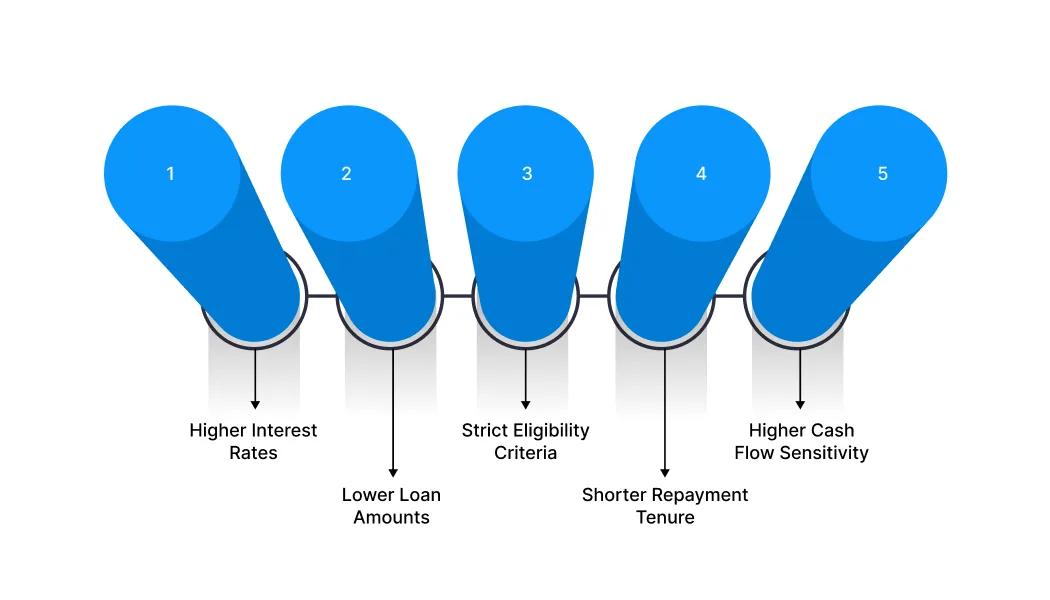
Unsecured home improvement loans offer speed and convenience, but they come with trade-offs that directly affect your long-term repayment cost and eligibility.
Since there is no collateral involved, lenders take on higher risk, which reflects in stricter approval norms and higher borrowing costs compared to secured loans.
1. Higher Interest Rates
Risk: Since no asset is pledged, lenders compensate for higher risk by charging higher interest rates. Over time, this increases the total repayment amount significantly, especially if the tenure is short or the loan amount is moderate.
Mitigation: Always compare the effective annual cost (APR) instead of just EMI. A slightly lower rate or shorter tenure can reduce total interest outgo more than it appears initially.
2. Lower Loan Amounts
Risk: Loan eligibility is capped based on income stability and credit profile, not on the actual renovation requirement. This often means the sanctioned amount may fall short for larger or phased home improvement work.
Mitigation: Plan renovation in stages or combine funding sources instead of relying on a single loan. This helps avoid over-borrowing or repeated applications.
3. Strict Eligibility Criteria
Risk: Since there is no collateral, lenders rely heavily on credit history, repayment behaviour, and income consistency. Even small inconsistencies in documentation or credit score can impact approval chances.
Mitigation: Maintain a strong credit profile by reducing existing debt, ensuring timely repayments, and avoiding multiple loan applications within a short period.
4. Shorter Repayment Tenure
Risk: To reduce lender exposure, unsecured loans are usually offered with shorter tenures. This leads to higher EMIs, which can feel financially tight even if the loan amount is small.
Mitigation: Choose a tenure that balances monthly comfort with total interest cost instead of opting for the shortest repayment cycle by default.
5. Higher Cash Flow Sensitivity
Risk: Fixed EMIs do not adjust to income fluctuations. If your monthly earnings vary or unexpected expenses arise, repayment can start to strain your cash flow quickly.
Mitigation: Keep EMIs within a safe percentage of income and maintain a buffer for emergencies so repayment remains stable even during low-income months.
Also read: Interest Rates in India 2026: How They Affect Loans & Savings
When Home Repairs Can’t Wait: Pocketly Credit Option
Not every home improvement need fits into a traditional loan structure. In India, many renovation expenses are small, urgent, and time-sensitive yet require immediate funding. This is where digital short-term credit becomes more relevant than long approval cycles or property-backed loans.
Pocketly is designed for exactly these situations, where the requirement is limited, and speed matters more than complex documentation or collateral.
Instead of going through rigid banking processes, Pocketly focuses on quick access, small-ticket borrowing, and short repayment cycles, making it suitable for everyday renovation needs.
Here is how it fits into this use case:
-
Offers loans starting from small amounts from ₹1,000 to ₹25,000, ideal for minor repairs or upgrades.
-
Provides instant digital approval with minimal documentation and fast disbursal directly to bank accounts.
-
Interest starts from around 2% per month, with transparent processing fees between 1%–8%, depending on profile and loan amount.
-
Fully digital process, removing the need for physical paperwork or branch visits.
Pocketly acts as a short-term financial buffer for small home improvement needs, especially when waiting for traditional loans is not practical or necessary.
Conclusion
Unsecured home improvement loans offer a simple way to manage small, urgent renovation expenses without needing to pledge any assets. They are useful when speed matters more than complex approval processes and when the requirement is limited in scope.
The key is to borrow with intent, not convenience. The loan amount, tenure, and repayment discipline together decide whether it stays manageable or becomes a long-term burden. When used carefully, it functions as a short-term financial bridge for planned or emergency repairs.
For small and immediate funding gaps, Pocketly provides a quick digital credit option. With loan amounts from ₹1,000 to ₹25,000, fast approvals, and short repayment cycles, it helps manage urgent needs without disrupting overall financial planning.
Download the Pocketly app on iOS or Android to access funds instantly and stay in control of your finances when it matters most.
FAQs
1. What is an unsecured home improvement loan?
An unsecured home improvement loan is a personal loan used for renovation or repair work that does not require any collateral or property security.
2. Can I get a home improvement loan without property collateral?
Yes, unsecured home improvement loans allow you to borrow for renovation or repairs without pledging your property or any asset as security.
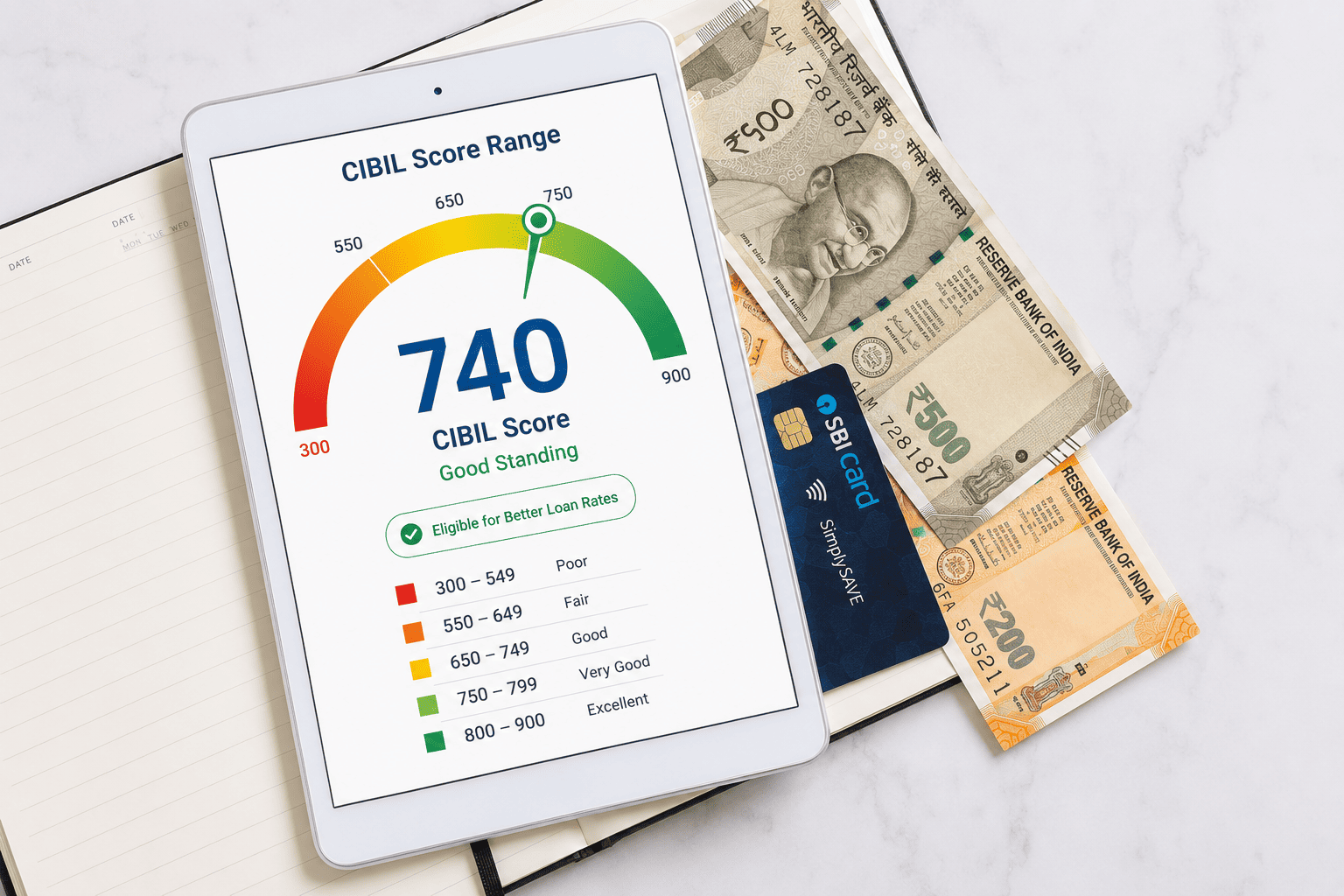
3. What credit score is required for an unsecured home improvement loan?
Most lenders require a credit score of 700 or above for approval, as unsecured loans depend heavily on creditworthiness.
4. What can I use an unsecured home improvement loan for?
You can use it for painting, interior design, repairs, modular kitchen upgrades, or any residential renovation needs.
5. Is an unsecured home improvement loan easy to get?
Yes, it is relatively easier to apply for compared to secured loans, but approval depends on income stability, credit score, and repayment capacity.
6. What is the interest rate on unsecured home improvement loans?
Interest rates are usually higher than secured loans and vary by lender, credit score, and loan amount.
7. How fast can I get an unsecured home improvement loan approved?
Many digital lenders offer quick approval and disbursal, sometimes within a few hours to a couple of days, depending on eligibility.