College life comes with regular expenses such as food, transport, mobile recharges, study materials, weekend plans, shopping and unexpected costs. Without a monthly budget, pocket money can disappear much faster than expected.
So, how much should a college student spend per month in India?
There is no fixed amount that works for every student. Your monthly expenses depend on your city, accommodation, food arrangements, transportation and lifestyle. A student living with family may spend much less than someone paying for a hostel or PG.
If you receive ₹10,000 as monthly pocket money, you can still create a realistic student monthly budget that covers everyday expenses, cabs, weekend outings and shopping while keeping some money aside for savings and emergencies.
This guide explains how to plan your student monthly budget and make your money last until the end of the month.
What Is a Student Monthly Budget?
A student monthly budget is a plan that shows how much money you have available each month and how you intend to use it for expenses, savings and personal spending.
Your available monthly money may come from:
-
Pocket money or an allowance from parents
-
Scholarships or stipends
-
Paid internships
-
Part-time jobs
-
Freelance work
-
Tutoring
-
Other side income
Student monthly income and pocket money are not exactly the same. Income generally refers to money you earn, while pocket money may be provided by your family. For budgeting purposes, however, you should consider all reliable sources of money available to you each month.
For example, if you regularly receive ₹10,000 in pocket money and occasionally earn ₹2,000 from freelance work, prepare your essential monthly budget around the reliable ₹10,000. Treat irregular income as additional money rather than depending on it for essential expenses.
₹10,000 Monthly Budget for a College Student
Suppose you're a college student receiving ₹10,000 in pocket money every month. You want to go out on weekends, occasionally take cabs, shop for personal items and still save some money.
Here's one way to divide ₹10,000:
|
Expense category |
Monthly budget |
|
Food, snacks & daily expenses |
₹2,500 |
|
Travel & cabs |
₹1,500 |
|
Weekend outings |
₹1,500 |
|
Shopping & personal expenses |
₹1,000 |
|
Mobile & subscriptions |
₹500 |
|
Academic expenses |
₹500 |
|
Emergency fund |
₹1,000 |
|
Savings |
₹1,500 |
|
Total |
₹10,000 |
In this example, ₹7,500 is allocated to planned expenses while ₹2,500 is reserved for savings and emergencies.
Your allocation can be different. If your family already pays for food and transportation, you may be able to save more. If you travel to college every day or regularly buy study materials, you may need to allocate more money to essential expenses.
The key is to decide where your ₹10,000 will go before you start spending it.
How to Make ₹10,000 Pocket Money Last Until Month-End
Receiving ₹10,000 at the beginning of the month can make it feel like you have plenty to spend. But frequent cab rides, food orders, shopping and weekend plans can quickly reduce your balance.
A better approach is to separate your money as soon as you receive it.
Using the example above, first move:
-
₹1,500 into savings
-
₹1,000 into your emergency fund
You now have ₹7,500 available for your planned monthly expenses.
Next, set separate limits for food, transportation, shopping and entertainment instead of treating the entire balance as available spending money.
You can also set a weekly discretionary spending limit. This makes it easier to notice overspending before you reach the final week of the month.
A simple process is:
Receive money → save first → cover essentials → set spending limits → review weekly
Check your UPI and bank transactions at least once a week. Small payments may look harmless individually, but repeated food orders, cab fares and impulse purchases can consume a large part of a student budget.
How Much Should a College Student Spend Per Month in India?
There is no single answer to how much a college student should spend per month in India.
A student's expenses depend heavily on whether accommodation and food are already covered.
For example:
|
Expense |
Example monthly range |
|
Hostel/PG/rent |
₹5,000–₹20,000+ |
|
Food & groceries |
₹3,000–₹8,000 |
|
Transportation |
₹500–₹2,500 |
|
Mobile & internet |
₹300–₹1,000 |
|
Books & study materials |
₹500–₹3,000 |
|
Personal expenses |
₹1,000–₹5,000+ |
These are illustrative ranges rather than fixed spending benchmarks. Costs can vary substantially by city, accommodation type and lifestyle.
If you live with your parents and they already cover accommodation and meals, your monthly personal expenses could be much lower.
If you're living independently in a PG or hostel, accommodation and food may become your largest expenses.
The best way to determine how much you should spend per month as a student is to review your previous two or three months of transactions.
Separate them into:
-
Accommodation
-
Food
-
Transportation
-
Education
-
Mobile and subscriptions
-
Shopping
-
Entertainment
-
Other expenses
You can then build your next monthly budget around your actual spending rather than an arbitrary number.
Also Read: How to Make Money Online as a Student Without Investment
What If Your Rent and Food Are Already Paid?
If your parents separately pay for your college fees, accommodation and food, your ₹10,000 pocket money doesn't need to cover the same expenses as a student living independently.
You may have more flexibility to divide the money between:
-
Transportation
-
Weekend outings
-
Personal purchases
-
Skill development
-
Savings
-
Emergency expenses
For example, you could increase monthly savings from ₹1,500 to ₹2,500 if your essential expenses are already covered.
Before creating your budget, identify exactly what your pocket money needs to pay for.
This prevents you from copying another student's budget even though your financial situation is different.
Half My Money Is Already Gone. How Do I Manage the Rest of the Month?
Suppose you receive ₹20,000 for the month but spend ₹10,000 on shopping, outings and other purchases during the first few days.
You now have ₹10,000 left.
Instead of continuing your normal spending pattern, calculate what you still need to pay before your next allowance or income payment.
Prioritize:
-
Food
-
Accommodation, if applicable
-
Transportation
-
College expenses
-
Mobile and essential bills
-
Emergency requirements
Temporarily reduce shopping, food delivery, entertainment and other non-essential purchases.
For example, if ₹10,000 needs to last another 20 days, don't automatically assume you can spend ₹500 every day.
First reserve money for upcoming fixed expenses. Then divide the remaining amount across the days or weeks left in the month.
This approach is especially useful if half your salary, pocket money or monthly allowance has already been spent on shopping.
How Should Students Pay for Monthly Expenses?
A simple priority system can make monthly expenses easier to manage.
1. Essential expenses first
Set aside money for food, accommodation, transportation, academic requirements and necessary bills.
2. Allocate savings
Choose an amount you can realistically save every month and separate it before discretionary spending begins.
3. Build an emergency fund
Keep some money available for unexpected essential expenses. Avoid using this amount for planned shopping or weekend activities.
4. Set limits for lifestyle expenses
Whatever remains can be allocated to shopping, eating out, entertainment and outings.
For example, if you want to buy something for ₹3,000 but only have ₹1,000 remaining in your shopping budget, consider postponing the purchase instead of taking money from savings or essential-expense categories.
How to Create a Student Monthly Budget That Actually Works
Creating a student's monthly budget is not about restricting every expense. It is about knowing where your money goes and making intentional decisions. Here is a simple step-by-step approach you can follow.
Calculate Your Total Monthly Income
A budget built on unclear income will fail quickly. Start by identifying all consistent and predictable money you receive each month. This includes allowance from parents, part-time job earnings, internships, stipends, scholarships, or recurring freelance work. Avoid counting one-time gifts or irregular income unless you are certain it will continue.
Prioritise Fixed Expenses First
Fixed expenses are commitments you cannot delay without consequences. Rent, hostel fees, mess charges, WiFi, electricity, subscriptions, and mobile bills should be allocated immediately after your income is credited.
Estimate Variable Expenses Realistically
Variable expenses are where most budgeting mistakes happen. Food delivery, transport, coffee runs, subscriptions, online shopping, and weekend outings can quietly exceed your expectations.
Set a Small but Non-Negotiable Savings Target
Even as a student, building a financial cushion is crucial. Unexpected expenses like medical needs, exam fees, travel, or device repairs can disrupt your entire month.
Track and Adjust Weekly
A budget is not something you create once and forget. It needs regular monitoring. Weekly reviews help you identify overspending early and course correct before the situation becomes stressful.
Separate Needs From Wants Clearly
One of the biggest budgeting mistakes students make is treating every expense as essential. Rent, groceries, transport, and academic materials are needs. Frequent food delivery, impulse shopping, and subscription upgrades are wants.
Create a Small Emergency Buffer Category
Even with savings, it helps to set aside a small monthly buffer specifically for unpredictable costs. College life is full of surprises, such as last-minute events, extra academic fees, travel plans, or minor medical expenses.
Use a Simple Tracking System You Will Actually Stick To
A complicated spreadsheet is useless if you stop updating it after two weeks. Choose a system that matches your habits.
Some students prefer a budgeting app, while others use a basic notes app or even a physical notebook.
The goal is consistency, not perfection.
Budgeting works best when tracking feels effortless, not overwhelming.
Track Your UPI Spending
Small UPI transactions can accumulate quickly. Review your payment history weekly and group transactions into categories such as food, transportation, shopping and entertainment.
Set a Separate Cab Budget
If you regularly use cabs or autos, decide how much you can spend on them each month. Once you approach that limit, consider public transport or other lower-cost options where practical.
Give Weekend Plans Their Own Budget
Instead of deciding how much to spend every weekend, create one monthly entertainment allowance.
If your monthly outing budget is ₹1,500, you can decide how to distribute that amount across the month.
Save Before Spending
Don't wait until the end of the month to see whether anything remains.
If your savings target is ₹1,500 from ₹10,000, separate the ₹1,500 when you receive your pocket money.
Plan Large Purchases
If you want to buy something costing ₹6,000, consider saving ₹2,000 for three months instead of spending ₹6,000 from one month's pocket money.
Also Read: Student Expenses in India: Living Costs and Budgeting
Common Student Budgeting Mistakes to Avoid
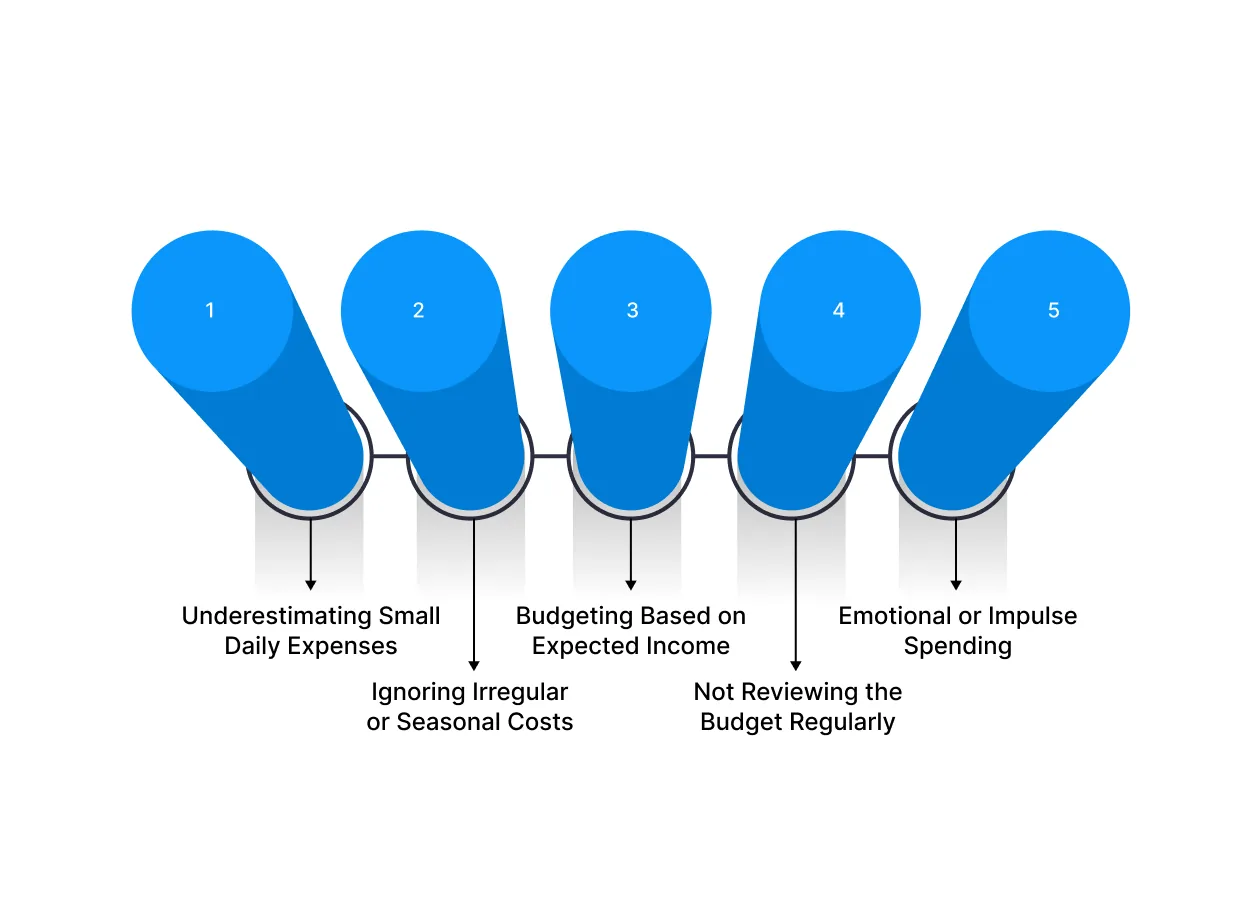 Even with the best intentions, many students struggle to stick to their monthly budget. The issue is rarely a lack of income. It is usually avoidable mistakes that quietly derail the plan.
1. Underestimating Small Daily Expenses
Risk: Small, frequent purchases like coffee, snacks, auto rides, or food delivery may feel insignificant individually, but together they can create a major gap between your planned and actual spending.
Mitigation: Track every expense, even the ₹50 and ₹100 ones. Review weekly totals to identify patterns. Setting a fixed cap for discretionary daily spending helps prevent these micro expenses from spiralling.
2. Ignoring Irregular or Seasonal Costs
Risk: Expenses such as exam fees, college trips, festival travel, annual subscriptions, or medical costs can disrupt your budget if they are not planned in advance.
Mitigation: Break large, occasional expenses into smaller monthly allocations. If you expect a ₹6,000 annual cost, set aside ₹500 per month so it does not feel overwhelming later.
3. Budgeting Based on Expected Income
Risk: Planning your expenses around income that is not guaranteed, such as freelance gigs or fluctuating part-time shifts, can lead to shortfalls during slower months.
Mitigation: Build your budget using your minimum assured income. Treat additional earnings as surplus and allocate them to savings rather than essentials.
4. Not Reviewing the Budget Regularly
Risk: Spending habits change over time. Without regular reviews, small deviations can turn into large financial gaps by the end of the month.
Mitigation: Schedule a weekly check-in to compare planned versus actual expenses. Early adjustments are easier than last-minute corrections.
5. Emotional or Impulse Spending
Risk: Stress, peer pressure, social media influence, and limited-time offers can lead to purchases that were never part of your plan.
Mitigation: Use a simple pause rule. Wait 24 hours before making non-essential purchases. This reduces emotional decisions and improves financial discipline.
What If Your Student Monthly Budget Falls Short?
If your monthly budget falls short, first identify the reason.
If you spent too much on shopping, food delivery, cabs or entertainment, reduce discretionary expenses before considering borrowing.
For an unexpected essential expense, check whether you can use:
-
Existing savings
-
Your emergency fund
-
Family support
-
Upcoming income
-
Other available financial resources
Borrowing creates a repayment obligation, so affordability should be considered before taking any loan.
For eligible users facing qualifying short-term financial requirements, Pocketly provides access to digital credit options through its platform. Before borrowing, review the applicable loan amount, interest, fees, tenure and total repayment obligation.
Avoid borrowing simply to maintain spending that your regular monthly budget cannot support.
Smart Saving Tips for Students on a Tight Budget
Saving money as a student may feel unrealistic, especially when income is limited. However, small, consistent actions can create meaningful financial stability over time. The goal is not drastic restriction but smarter spending decisions.
1. Pay Yourself First
The most effective way to save as a student is to remove the decision from your hands. Instead of saving whatever is left at the end of the month, set aside a fixed amount the moment you receive money.
When savings happen first, spending naturally adjusts to what remains.
For example, if you receive ₹12,000 monthly and immediately move ₹1,000 into a separate account, you train yourself to live on ₹11,000. Over a year, that becomes ₹12,000 saved without feeling like a sacrifice. This simple shift builds financial discipline faster than trying to save sporadically.
2. Optimise the Timing of Your Purchases
Strategic timing can stretch your budget significantly without changing your lifestyle. Many students overspend simply because they buy at the wrong time.
For instance, purchasing electronics during festive sales, buying winter clothing at the end of season clearance, or renewing subscriptions during discount offers can reduce costs by 20 to 50 per cent. Similarly, stocking up on non-perishable groceries during bulk discounts prevents higher last-minute spending.
Over an academic year, better timing alone can save several thousand rupees without restricting your needs.
3. Control High-Frequency Expenses
It is rarely one large purchase that breaks a student’s budget. It is repeated small spending. Daily food delivery, frequent cab rides, snacks between classes, and impulse online orders slowly drain cash flow.
Instead of eliminating these entirely, reduce frequency. Cooking at home four extra times a week or switching to public transport twice a week can lower your monthly expenses substantially.
For example, cutting ₹150 daily discretionary spending can free up ₹4,000 to ₹4,500 per month. Small daily discipline creates a large monthly impact.
4. Use Cost Sharing Strategically
Student life offers built-in opportunities to reduce expenses through sharing. Rent, groceries, OTT subscriptions, transport, and even study materials can be shared responsibly.
For example, splitting WiFi and electricity with roommates reduces fixed costs. Buying groceries together lowers per-unit costs. Sharing textbooks instead of buying new copies for each semester prevents duplicate spending.
Cost sharing does not reduce quality of life. It simply reduces individual burden.
5. Plan and Pre-Fund Bigger Expenses
Unexpected spending feels stressful. Planned spending feels controlled. If you know you will need money for travel, a college event, a certification course, or a gadget upgrade, start setting aside small amounts in advance.
For example, if you plan to spend ₹8,000 in four months, saving ₹2,000 per month spreads the load evenly. This prevents sudden budget shocks and keeps your monthly financial structure stable.
Planning ahead protects your student's monthly budget from disruption and reduces the need for emergency borrowing.
Conclusion
Managing a student monthly budget becomes easier when you decide how your money will be used before you start spending it. Separate essential expenses, savings and emergency money first, then set limits for cabs, shopping, food and weekend outings.
If you receive ₹10,000 in monthly pocket money, your exact allocation will depend on which expenses you pay yourself and which are already covered by your family. Review your spending each week and adjust your budget when necessary.
If an unexpected essential expense creates a genuine short-term cash requirement, evaluate your available savings and other resources first. If you consider borrowing, review the applicable interest, fees, repayment period and total repayment obligation before making a decision.
Ready to take control of your student finances? Download the Pocketly app today on [Android] or [iOS] and experience smarter, stress-free spending management.
₹10,000 Student Monthly Budget: Quick Answer
If you're a college student receiving ₹10,000 in monthly pocket money, one possible budget is:
-
₹2,500 – food and daily expenses
-
₹1,500 – travel and cabs
-
₹1,500 – weekend outings
-
₹1,000 – shopping
-
₹500 – mobile and subscriptions
-
₹500 – academic expenses
-
₹1,000 – emergency fund
-
₹1,500 – savings
Total: ₹10,000
This budget allows you to enjoy some discretionary spending while reserving 25% of the example budget for savings and emergencies.
Your actual allocation should depend on your essential expenses and which costs your family already covers.
FAQs
How much should a college student spend per month in India?
There is no fixed amount that every college student should spend. Monthly expenses depend on accommodation, food, transportation, city, college requirements and lifestyle. Students living with family may spend considerably less than students paying for a hostel or PG.
How should I manage ₹10,000 pocket money as a college student?
Start by allocating money for essential expenses, savings and emergencies. For example, you could use ₹2,500 for daily expenses, ₹1,500 for transport, ₹1,500 for outings, ₹1,000 for shopping, ₹1,000 for other planned expenses, ₹1,000 for emergencies and ₹1,500 for savings.
How much should a student save every month?
There is no mandatory amount or percentage. Choose a savings target that you can maintain after paying essential expenses. Even a smaller amount saved consistently can help build an emergency fund.
What is student monthly income?
Student monthly income can include money earned through internships, part-time jobs, freelance work, tutoring and stipends. Students may also receive pocket money or allowances from their families, although these are different from earned income.
How can I make ₹10,000 last the entire month?
Separate savings and emergency money first. Then set individual limits for food, transportation, shopping and outings. Review your UPI and bank transactions weekly so you can reduce discretionary spending if one category is being used too quickly.
What should I do if half my monthly money is already spent?
Calculate your remaining essential expenses first. Reserve money for food, transport, bills and college requirements, then divide the remaining balance across the days or weeks left. Temporarily reduce shopping, entertainment and other non-essential spending.
How should students pay for monthly expenses?
Prioritize essential expenses such as accommodation, food, transport and education. Next, allocate money for savings and emergencies. Use the remaining amount for shopping, entertainment and other discretionary expenses.
Main ₹10,000 Monthly Pocket Money Ko Kaise Manage Karun?
Agar aap college student hain aur aapko ₹10,000 monthly pocket money milti hai, pehle savings aur emergency expenses ke liye amount alag rakhein. Uske baad food, cabs, weekend outings aur shopping ke liye monthly limits set karein. For example, ₹1,500 savings aur ₹1,000 emergency fund ke liye rakhne ke baad remaining amount ko planned monthly expenses ke liye divide kiya ja sakta hai.
main college student hoon aur meri ₹10,000 ki pocket money weekend plans, cabs aur shopping ki wajah se month end tak almost khatam ho jaati hai. mujhe ek realistic budget plan bana do jisse main outings bhi enjoy kar sakun aur har mahine thodi savings bhi kar paun ?
Agar aapko har mahine ₹10,000 pocket money milti hai, toh aap outings aur shopping enjoy karte hue ₹1,500 save kar sakte hain. Yeh ek simple monthly budget hai:
| Monthly Expenses | Budget |
|---|---|
| Food aur daily expenses | ₹2,500 |
| Cabs aur travel | ₹1,500 |
| Weekend outings | ₹1,500 |
| Shopping | ₹1,000 |
| Mobile aur subscriptions | ₹500 |
| College expenses | ₹500 |
| Emergency fund | ₹1,000 |
| Savings | ₹1,500 |
| Total | ₹10,000 |
Pocket money milte hi ₹1,500 savings ke liye alag rakhein. Weekend outings par ₹375 per week ka target rakhein aur zaroorat na ho toh cab ki jagah public transport use karein. Shopping ke liye monthly limit follow karein.
Agar aap har mahine ₹1,500 save karte hain, toh ek saal mein ₹18,000 jama kar sakte hain, bina outings completely band kiye.