

A short-term cash shortage usually shows up without warning. A bill arrives early, a repair cannot wait, or expenses stretch beyond what is available before your next income cycle. The amount may be small, but the urgency makes it difficult to ignore.
In India, small-value transactions have become a daily habit, with government data showing that UPI recorded over 21.6 billion transactions in December 2025 alone, reflecting how frequently people rely on quick, accessible money movement for everyday needs.
This pattern highlights a simple reality. Financial gaps are often short-term, but they require immediate solutions. The challenge is not just finding money, but choosing the right short-term cash shortage solution that solves the problem without creating additional pressure later.
At a Glance
- Most cash shortages are caused by timing gaps, not low income. Expenses and income rarely align perfectly within a cycle.
- Immediate actions can often solve small shortages without borrowing. Prioritising payments and delaying non-essential spends can create quick relief.
- Borrowing should match the size and urgency of the gap. Taking more than required increases repayment pressure unnecessarily.
- Short-term solutions work best when repayment timing is clear. Knowing when income will arrive helps keep the gap temporary.
- The right solution solves the shortage without creating a new one. Poor choices can turn a small gap into a longer financial issue.
What Causes Short-Term Cash Shortages
Short-term cash shortages are rarely about long-term financial problems. In most cases, they happen because income and expenses do not align at a specific point in time.
- One of the most common reasons is a timing mismatch. Expenses like rent, EMIs, or bills may fall before salary or expected payments are received. Even when income is stable, this gap creates a temporary shortage.
- Unexpected costs also play a major role. Medical expenses, urgent travel, or device repairs often come without warning. These are not always large amounts, but they require immediate payment.
- For freelancers, small business owners, or individuals with variable income, the issue can be irregular cash flow. Payments may be delayed or uneven, making it difficult to manage short-term obligations.
- Another factor is poor expense distribution within the month. Spending a large portion of income early can leave very little for later commitments, even if overall income is sufficient.
For example, someone may spend heavily in the first two weeks of the month and then face a shortage when a utility bill or subscription payment is due before the next salary cycle.
Also Read: Cash Advances and Loans in India (2026): Key Differences
What Can You Do Immediately When You Have a Cash Shortage
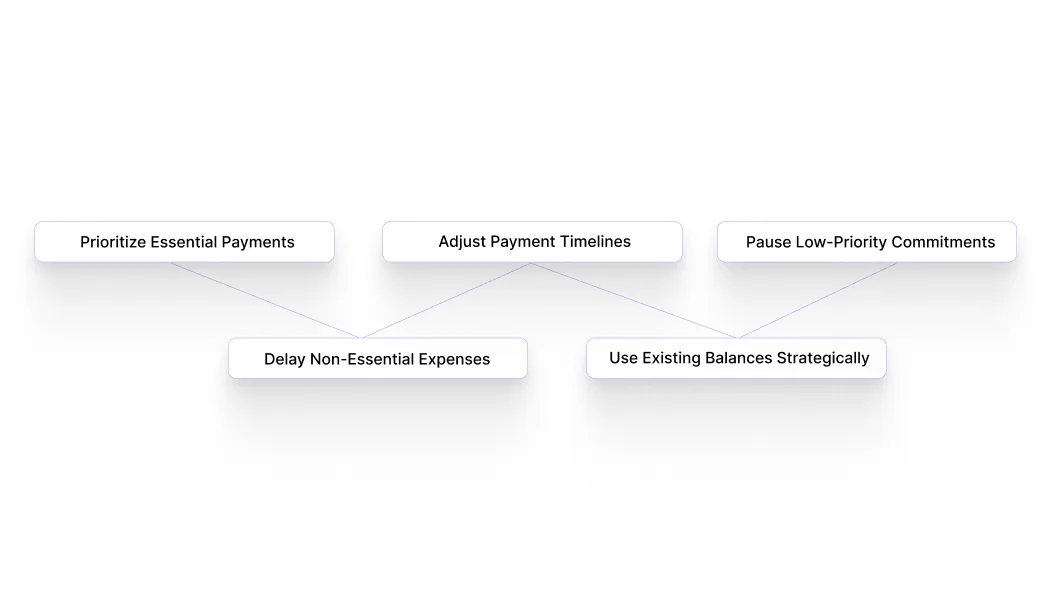
When a cash gap shows up, the first step is not to borrow right away. In many cases, small adjustments can help you manage the situation for a few days until funds are available.
These actions work best for very short-term gaps, typically within a few days.
Prioritise essential payments
Start by identifying which payments cannot be delayed. Rent, electricity, and urgent bills should take priority over discretionary expenses.
This helps you use the available balance where it matters most instead of spreading it across multiple smaller spends.
Delay non-essential expenses
Subscriptions, dining, shopping, or optional payments can usually be pushed to a later date. Even delaying a few small expenses can free up enough cash to handle urgent needs.
The goal here is not long-term budgeting, but creating immediate breathing space.
Adjust payment timelines where possible
Some payments allow flexibility if addressed early. Utility providers, service vendors, or even landlords may allow short extensions if informed in advance.
This works better when communicated before the due date rather than after a delay.
Use existing balances strategically
If you have money spread across multiple accounts or wallets, consolidating it can help manage the shortage more effectively.
Instead of treating each account separately, look at your total available balance and allocate it based on priority.
Pause low-priority commitments temporarily
Short-term commitments like auto-debits, optional services, or non-critical payments can sometimes be paused or rescheduled.
This prevents unnecessary deductions during a period when cash availability is already tight.
These steps can handle small gaps, but they may not always be enough when the expense is unavoidable or the amount required is higher. If the gap is small but urgent, you can check quick digital options like Pocketly to avoid delays from traditional processes. Apply now!
What Are Your Options If You Need Money for a Short-Term Cash Gap
When immediate adjustments are not enough, borrowing becomes the practical option. The key is to choose a solution that matches the size of the gap and your ability to repay it within a short time.
Different options work differently depending on access, urgency, and flexibility.
Borrowing from friends or family
This is often the quickest option when available. It usually does not involve formal checks or additional charges, which makes it easier to manage for small amounts.
However, it depends on availability and may not always be a reliable option, especially for repeated needs.
Salary advance from the employer
Some workplaces allow employees to take an advance on their salary. This can help cover short-term expenses without taking an external loan.
The limitation is that not all employers offer this, and the amount may be restricted based on company policies.
Using a credit card (if available)
Credit cards can help manage short-term gaps if used carefully. They allow immediate payment and offer a short interest-free period in some cases.
But this option requires discipline. If the amount is not repaid within the billing cycle, it can lead to high interest and additional charges.
Small-ticket digital loans
Digital lending platforms provide access to small amounts for short durations. These are designed for situations where the gap is immediate, and other options are not available.
They typically involve a quick application process and faster access compared to traditional bank loans, especially for smaller amounts.
Each of these options serves a different purpose. The right choice depends on how urgent the need is, how much is required, and how soon it can be repaid. For small-ticket needs, Pocketly lets you complete digital KYC and view available amounts without a long approval process. Apply now!
When Should You Take a Small Loan for a Short-Term Cash Shortage
Not every cash shortage needs borrowing. But there are situations where waiting or adjusting expenses is not enough, and delaying the payment can create bigger problems.
A small loan becomes relevant when the gap is immediate and unavoidable.
- When the expense cannot be postponed: Some payments have fixed timelines. Rent, medical bills, or urgent repairs often cannot be delayed without consequences. In such cases, managing the gap quickly becomes more important than avoiding borrowing.
- When delaying leads to additional costs: Late fees, penalties, or service disruptions can increase the overall financial burden. What starts as a small shortage can turn into a larger expense if not handled on time.
- When internal adjustments fall short: If cutting expenses or shifting payments does not fully cover the gap, borrowing the exact required amount can help close it without affecting other obligations.
- When the repayment timeline is clear: A short-term solution works best when you know when the next inflow is coming. Whether it is salary, a client payment, or expected income, clarity on repayment makes borrowing more manageable.
For example, if a ₹5,000 expense is due today but your salary is credited in three days, taking a small amount for that period may be more practical than missing the payment and facing penalties.
This stage is about making a decision based on urgency and clarity, not just the availability of options.
Also Read: Fast Cash vs Cash Withdrawal in India: Smart Ways to Get Quick Funds
How Do You Choose the Right Short-Term Cash Shortage Solution
Not every solution fits every situation. The right choice depends on how urgent the need is, how much is required, and how comfortably it can be repaid. Looking at these factors before acting helps avoid unnecessary pressure later.
- Start with urgency: If the expense needs to be handled the same day, options that provide immediate access become more relevant. If there is a short window of a few days, adjustments or delayed payments may still work.
- Match the amount to the solution: The size of the gap matters. Very small amounts may be managed through internal adjustments, while slightly larger gaps may require structured options. Taking more than what is needed increases the repayment burden unnecessarily.
- Check repayment clarity: Before choosing any option, it is important to know when the repayment will happen. A clear inflow, such as a salary date or expected payment, helps ensure that the solution remains short-term and does not extend further.
- Understand the total cost: Some options may appear quick but carry additional charges or interest if not managed properly. Being aware of the total cost helps avoid surprises after the immediate problem is solved.
- Avoid stacking multiple solutions: Using multiple options at the same time can make repayment difficult to track. It is better to choose one suitable solution instead of combining several smaller ones.
Making the right choice at this stage helps keep the situation controlled. The focus should remain on solving the immediate gap without creating a longer-term financial issue.
What Mistakes Make a Short-Term Cash Shortage Worse
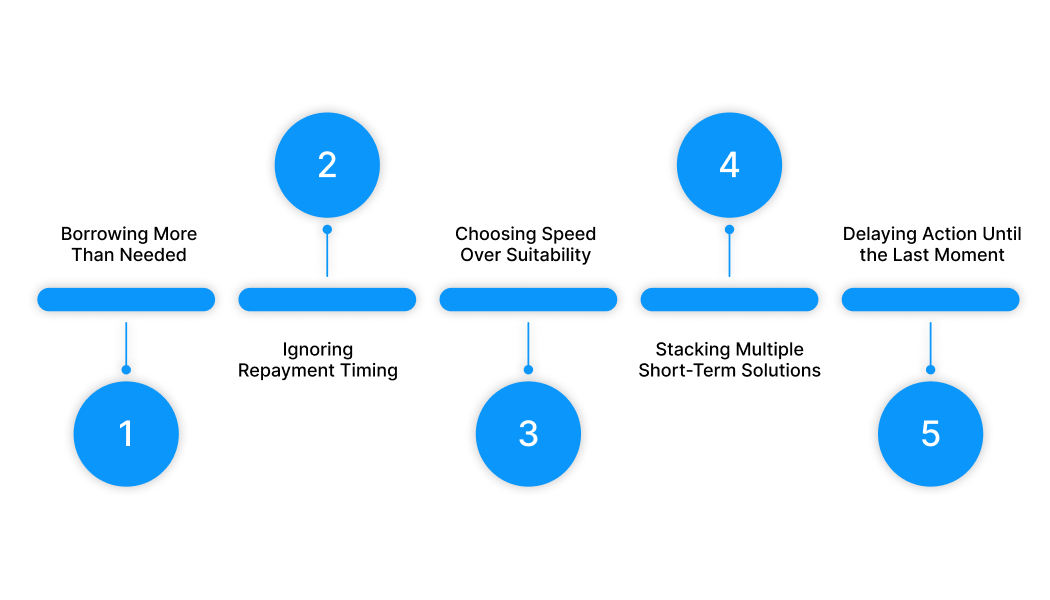
A short-term cash shortage is manageable in most cases. The problem usually grows when the response to it is not thought through. Small decisions made in urgency can increase the pressure instead of resolving it.
- Taking more money than required: Borrowing a higher amount than needed may feel safer at the moment, but it increases the repayment burden. This can extend the problem beyond the original gap.
- Ignoring repayment timing: Focusing only on immediate relief without considering when the repayment will happen can lead to another shortage soon after. This creates a cycle that is difficult to break.
- Choosing speed over suitability: Fast access is important, but not every quick option is the right one. Selecting a solution without understanding how it works can result in higher costs or tighter repayment conditions.
- Stacking multiple short-term solutions: Using more than one option at the same time can make it harder to track obligations. Multiple small repayments can combine into a larger financial strain.
- Delaying action until the last moment: Waiting until the due date to address the shortage limits available options. Acting earlier gives more flexibility to choose a better solution.
These mistakes do not usually look serious at the beginning, but they can turn a temporary gap into a recurring financial issue if repeated.
How Can You Avoid Short-Term Cash Shortages in the Future
Short-term cash gaps may happen occasionally, but repeated shortages usually point to gaps in how income and expenses are managed across the month. A few small changes can reduce how often these situations occur.
- Align expenses with income timing: Instead of treating all expenses equally, it helps to map them against when income is received. Moving flexible payments closer to salary or inflow dates can reduce the chances of running out of cash mid-cycle.
- Keep a small buffer for urgent needs: Setting aside even a small amount specifically for unexpected expenses can prevent immediate stress. This does not need to be a large fund, just enough to handle minor disruptions.
- Track fixed and variable spending separately: Knowing which expenses are fixed and which can change helps in making quick decisions when needed. Fixed costs remain non-negotiable, while variable spending can be adjusted more easily.
- Avoid early-cycle overspending: Spending a large portion of available funds early in the month often leads to shortages later. Distributing expenses more evenly helps maintain balance until the next income cycle.
- Review short-term patterns regularly: If shortages are happening frequently, it helps to look at patterns over a few months. Identifying where gaps are consistently occurring makes it easier to adjust spending or planning.
These steps do not eliminate unexpected expenses, but they reduce how often a temporary gap turns into an urgent situation.
How Pocketly Can Help With a Short-Term Cash Shortage in India
For a short-term cash shortage, that matters because the problem is usually not a large funding requirement. It is often a limited but urgent gap, such as rent due before salary, an unexpected repair, a medical expense, a travel need, or a payment that cannot be pushed further. Pocketly is closer to that use case than a conventional long-form loan journey.
Here is what makes it relevant in this context:
- Loan amounts from ₹1,000 to ₹25,000, which suit smaller temporary gaps rather than large borrowing needs.
- Interest starting from 2% per month, with the final rate depending on the applicant's profile and loan terms.
- 100% online flow with digital KYC, which helps reduce the waiting and paperwork involved in traditional applications.
- Access for students, young professionals, and self-employed users, which aligns closely with the kinds of borrowers most likely to face short-term liquidity gaps.
This kind of flow works best when the issue is immediate, and the borrower already knows the amount needed. It keeps the solution tied to the purpose: solving a temporary cash gap without turning it into a larger borrowing decision than necessary.
If you need a small amount for an urgent expense, you can download Pocketly on iOS or Android and check your eligibility in minutes.
FAQs
Q: What is the fastest way to fix a short-term cash shortage?
The fastest option depends on access. Immediate fixes include adjusting expenses or using available balances. If that is not enough, options that provide quick access to funds become more relevant.
Q: How do people manage money when they run out before payday?
Most people either delay non-essential expenses, shift payment timelines, or use short-term solutions to bridge the gap. The approach usually depends on how urgent the expense is and how soon income is expected.
Q: Is it okay to take a loan for a small cash shortage?
It can be practical if the amount is small and the repayment timeline is clear. The key is to borrow only what is needed and ensure it can be repaid without affecting upcoming expenses.
Q: What are some safe options for short-term cash needs in India?
Safe options usually include structured solutions where terms are clearly defined. It is important to understand the total cost, repayment schedule, and avoid options that lack transparency.
Q: Can I get a small amount quickly for an urgent expense in India?
For small-ticket needs, some digital lending platforms provide access to short-term funds through a fully online process. For example, Pocketly allows users to complete digital KYC and check available amounts based on eligibility for urgent cash requirements.
Q: What happens if I cannot repay a short-term loan on time?
Missing repayment can lead to additional charges or impact future borrowing options. It is important to choose a solution where the repayment timeline is realistic and manageable.