

Struggling to keep your finances on track can feel like constantly chasing shadows. Expenses spike unexpectedly, revenue projections miss the mark, and making strategic decisions without clarity becomes stressful. Many businesses rely on guesswork, which often leads to missed opportunities and unnecessary financial pressure.
Budgeting and forecasting offer a solution. They give you a clear picture of where your money is going and where it’s headed. With accurate forecasts and a well-structured budget, you can plan growth confidently, control cash flow, and prepare for unexpected challenges. These tools turn uncertainty into insight, helping you make smarter decisions and set realistic financial goals.
In this blog, we’ll explore how budgeting and forecasting work, share best practices, and show you how to implement strategies that make your business finances predictable, agile, and growth-ready.
TL;DR
- Budgeting plans your income and expenses, helping you control spending, fund priorities, and reduce financial stress.
- Forecasting predicts future revenue, costs, and cash flow, allowing smarter decisions and preparation for uncertainty.
- Budgeting is fixed and sets limits, while forecasting is flexible and adapts to market or business changes.
- Effective implementation requires clear goals, detailed budgets, realistic forecasts, and regular performance reviews.
- Tools like Pocketly can bridge cash flow gaps during unexpected expenses, keeping your financial plan on track.
What is Budgeting and Forecasting?
Running a business without a clear financial plan can quickly lead to missed opportunities and unexpected crises. Budgeting and forecasting are the twin pillars that give structure and predictability to your finances, helping you steer confidently toward your goals.
Budgeting
Budgeting is the process of planning your company’s income and expenses over a set period. It allocates resources, sets spending limits, and ensures that every rupee supports your business objectives.
Benefits of Budgeting:
- Helps control operational costs and avoid overspending
- Ensures funds are allocated to high-priority areas
- Supports better decision-making by providing a clear financial roadmap
- Reduces stress by anticipating cash flow needs
Forecasting
Forecasting uses historical data, market trends, and assumptions to predict future revenues, costs, and cash flow. It prepares your business for potential challenges and opportunities.
Benefits of Forecasting:
- Anticipates cash flow gaps before they become problems
- Guides strategic planning and investment decisions
- Helps adjust operations in response to market changes
- Provides a realistic view of future growth and risks
Together, budgeting manages today, while forecasting prepares you for tomorrow, creating a proactive approach to business finance.
Budgeting vs. Forecasting
While both budgeting and forecasting guide financial decisions, they serve different functions. Budgeting sets limits and allocates resources for a specific period, creating control over spending. Forecasting uses historical data and trends to anticipate future financial outcomes, helping businesses adjust plans proactively.
The table below compares their key differences.
| Aspect | Budgeting | Forecasting |
| Purpose | Plan how resources will be allocated over a period | Predict future financial outcomes based on trends and data |
| Approach | Static sets limits for spending and saving | Dynamic, adjusts as new information or trends emerge |
| Data Basis | Historical data and planned goals | Historical data, trends, and predictive analysis |
| Flexibility | Less flexible, follows a set plan | Highly flexible, updated regularly to reflect reality |
| Time Frame | Fixed, usually annual or quarterly | Flexible, can be short-term or long-term |
| Focus | Control and discipline over current finances | Anticipate changes and guide decision-making |
| Key Benefit | Ensures efficient allocation of resources | Helps make informed decisions and reduce financial risk |
Also read: 7 Best Budgeting Apps In India 2025
Steps to Implement Budgeting and Forecasting
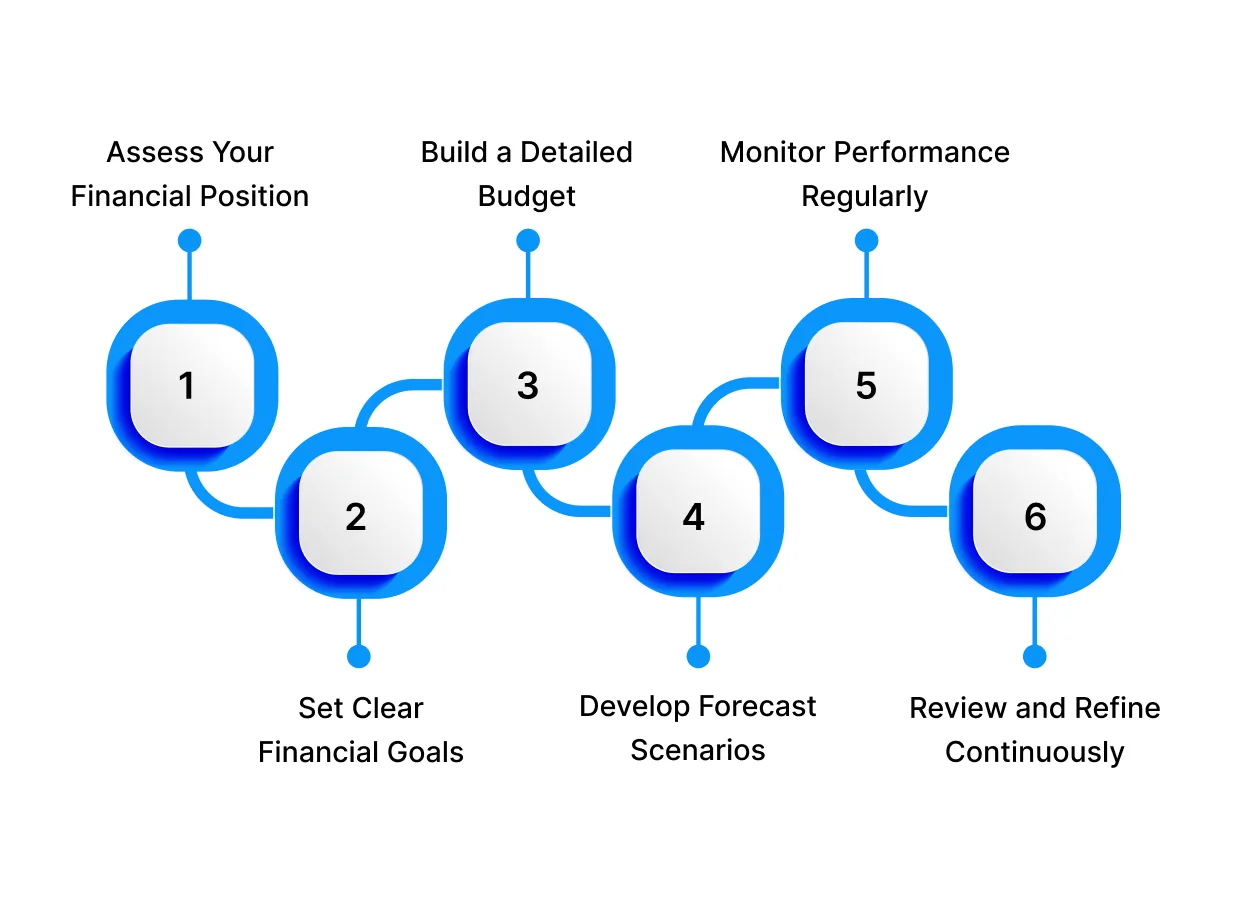
Implementing budgeting and forecasting effectively requires a structured approach. Following these steps ensures your business stays financially aligned and prepared for the future.
1. Assess Your Financial Position
Understanding your current finances is the foundation of both budgeting and forecasting. Collect data on all income streams, fixed and variable expenses, debts, and pending receivables. A clear snapshot of your financial position helps prevent overspending and identifies areas where cash can be better utilised.
For example, a small manufacturing unit may track monthly sales, raw material costs, salaries, and overheads to calculate net cash flow. Discovering that utility costs are unusually high could lead them to invest in energy-efficient equipment, immediately freeing up funds for growth.
2. Set Clear Financial Goals
Budgets and forecasts work best when aligned with measurable objectives. Decide what you want to achieve financially, whether it’s increasing revenue, reducing costs, or building reserves for unforeseen challenges. Goals provide direction for your planning.
For instance, an online education startup may target a 20% increase in subscriptions in the next quarter while keeping operational costs under 50% of revenue. These goals guide budgeting priorities, making it easier to allocate funds to high-impact areas.
3. Build a Detailed Budget
A budget organises your financial resources and assigns a purpose to each rupee. Break down expenses into categories such as operations, salaries, marketing, and contingency funds. Be realistic, budgeting based on past trends improves accuracy.
For example, a café may allocate ₹1 lakh for inventory, ₹50,000 for staff salaries, ₹20,000 for marketing, and ₹10,000 for unexpected repairs. With this clarity, the café avoids overspending while ensuring all critical areas are funded.
4. Develop Forecast Scenarios
Forecasting allows you to anticipate revenue, expenses, and cash flow under different conditions. Consider best-case, worst-case, and most-likely scenarios. This prepares your business for uncertainties and supports smarter financial decisions.
For example, a subscription box service may predict lower orders during the summer. They can plan promotions or adjust production schedules to maintain cash flow, ensuring stability despite seasonal fluctuations. Forecasting transforms financial guesswork into actionable insights.
5. Monitor Performance Regularly
Tracking actual results against your budget and forecasts is essential to identifying gaps and taking corrective action. Regular monitoring helps maintain financial control and reduces surprises.
For instance, if a boutique hotel notices that monthly utility bills exceed the budget, it can implement energy-saving measures or negotiate better rates with suppliers. Timely adjustments prevent small discrepancies from turning into larger financial problems.
6. Review and Refine Continuously
Budgets and forecasts are not one-time exercises; they need refinement as circumstances change. Analyse discrepancies, learn from patterns, and update allocations accordingly.
For example, a digital marketing agency may find recurring overspending on software subscriptions. By renegotiating pricing or switching providers, they can realign their budget and maintain financial discipline. Continuous refinement ensures your financial planning remains practical and responsive to real-world challenges.
Also read: How to Manage Monthly Expenses Smartly in 2025
Common Risks in Budgeting and Forecasting and How to Mitigate Them
Budgeting and forecasting are essential for financial clarity, but several risks can derail your plans. Understanding these risks and having mitigation strategies ensures your financial projections stay reliable.
1. Overestimating Revenue
Risk: Assuming revenue will be higher than reality can make your entire budget unrealistic. Businesses may plan for unnecessary expenses, overcommit to projects, or take on debt, thinking cash flow will cover it. This often leads to last-minute cuts or cash shortages that disrupt operations.
Mitigation: Base revenue forecasts on actual historical performance, seasonal trends, and conservative growth estimates. Instead of assuming the best-case scenario, consider multiple scenarios, including moderate and pessimistic projections. Regularly compare forecasts with real revenue to refine accuracy over time.
For example, a retail business might use the past three years’ sales during the same quarter to project realistic revenue, rather than expecting a sudden spike from marketing campaigns.
2. Underestimating Expenses
Risk: Overlooking variable costs or unexpected expenses can make your budget collapse. Fixed costs like salaries and rent are predictable, but operational surprises like supply chain delays, utility spikes, or emergency repairs can blow up cash flow.
Mitigation: Include a contingency buffer for unplanned costs, ideally 5 to 10 per cent of total monthly expenses. Track variable and discretionary expenses regularly to identify patterns and adjust allocations.
For instance, a startup may budget extra for software subscriptions, shipping fees, or equipment maintenance to avoid shortfalls during high-demand months.
3. Ignoring Market or Business Changes
Risk: Static budgets and forecasts fail when external factors shift. Competitor moves, regulatory changes, or market slowdowns can make previous assumptions invalid. Ignoring these shifts can result in missed opportunities or financial stress.
Mitigation: Treat budgets as living documents that evolve with your business. Conduct regular market scans, monitor competitor pricing, and adjust projections proactively.
A small e-commerce company, for example, might revise forecasts if a new competitor enters their niche or if supply chain delays affect delivery timelines.
4. Lack of Stakeholder Alignment
Risk: Departments working in silos can create conflicting forecasts, causing confusion and impractical budgets. Misaligned priorities often lead to over- or under-spending in certain areas.
Mitigation: Involve all relevant teams in budgeting discussions. Clearly communicate assumptions, share data across departments, and agree on common projections.
For example, the sales and operations teams should collaborate so that expected sales volumes match production capacity, ensuring neither oversupply nor stockouts.
5. Failing to Review and Adjust
Risk: Budgets that are never revisited become irrelevant. Businesses may continue following outdated assumptions, leading to poor decision-making and missed targets.
Mitigation: Schedule monthly or quarterly budget reviews. Compare actual performance with forecasts, identify gaps, and make adjustments.
For example, a SaaS company may notice mid-quarter that churn is higher than expected and revise spending on marketing campaigns accordingly.
Unexpected Expenses? Pocketly Keeps Your Budget on Track
 Even the most carefully planned budget can be thrown off by sudden costs like medical emergencies, urgent travel, or surprise bills. When your savings aren’t enough, Pocketly provides a fast, short-term solution to help you stay financially steady without affecting your overall budgeting and forecasting goals.
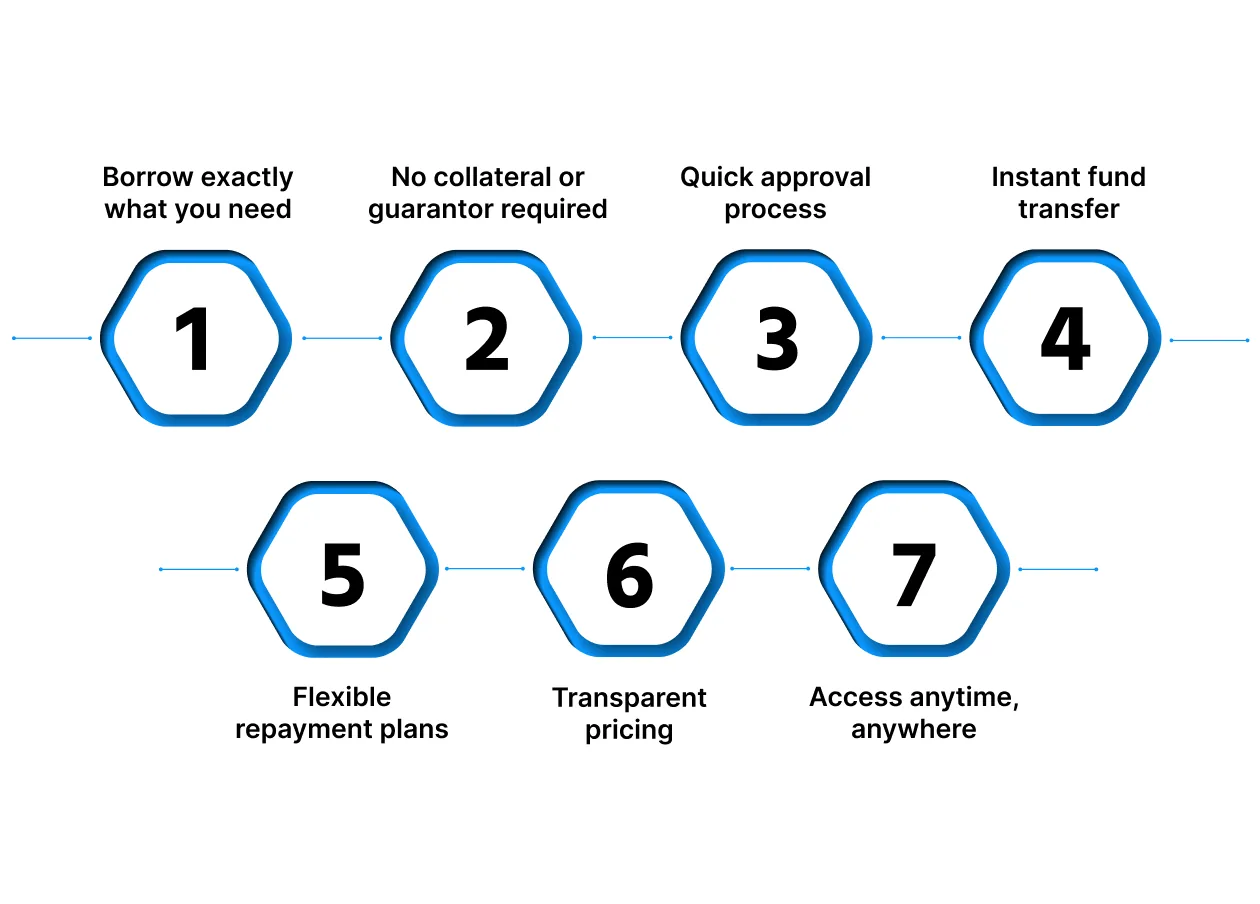
Why Pocketly can help you manage cash flow gaps effectively:
- Borrow exactly what you need: Loan amounts range from ₹1,000 to ₹25,000, so you only take what’s necessary, keeping repayments manageable.
- No collateral or guarantor required: Completely collateral-free, Pocketly is accessible even if you don’t own assets or have someone to co-sign.
- Quick approval process: A simple KYC verification lets you get a decision fast, without piles of paperwork or long bank visits.
- Instant fund transfer: Funds are credited directly to your bank account immediately after approval, perfect for urgent needs.
- Flexible repayment plans: Pick a repayment schedule that fits your cash flow, so EMIs don’t disrupt your monthly budget.
- Transparent pricing: Interest starts at 2% per month, with processing fees between 1% and 8%, depending on your loan and profile.
- Access anytime, anywhere: The Pocketly app lets you apply, track, and manage your loan 24/7, straight from your phone.
When used responsibly, Pocketly acts as a financial bridge, helping you cover unexpected expenses while keeping your broader budgeting and forecasting plans on track.
Conclusion
Budgeting and forecasting are essential tools for taking control of your finances. They help you plan your spending, anticipate future costs, and make informed decisions, so you can save consistently, reduce financial stress, and stay on track toward your goals.
The key is to stay consistent, review your plans regularly, and adjust as your income or lifestyle changes. When done right, budgeting and forecasting don’t restrict you, they give clarity, confidence, and the freedom to make smarter financial choices.
For moments when unexpected expenses arise, or cash flow gets tight, tools like Pocketly can provide quick, short-term support, ensuring your budget stays on track without disrupting your financial plans.
Download the Pocketly app today on [Android] or [iOS] to access funds instantly and keep your finances steady, no matter what comes your way.
FAQs
1. What is budgeting in simple terms?
Budgeting is the process of planning how your money will be spent and saved. It helps allocate income to different categories such as expenses, savings, and investments, so you have control over your finances instead of guessing where your money goes.
2. What is financial forecasting?
Financial forecasting uses historical data, trends, and assumptions to predict future revenues, expenses, and cash flows. It helps businesses and individuals anticipate financial outcomes and make informed decisions.
3. How is budgeting different from forecasting?
Budgeting is about planning your income and expenses for a fixed period, usually monthly or annually. Forecasting, on the other hand, predicts future financial outcomes based on trends and can change as circumstances evolve. Budgeting provides a fixed plan, while forecasting remains flexible.
4. Why are budgeting and forecasting important together?
When used together, budgeting sets a structured plan for your finances, and forecasting allows you to anticipate changes and adjust your plan accordingly. This combination helps manage cash flow, reduce financial risks, and make better strategic decisions.
5. Can small businesses benefit from budgeting and forecasting?
Yes, small businesses can greatly benefit from these practices. They can plan cash flow, allocate resources efficiently, predict revenues, prepare for seasonal fluctuations, and make informed strategic growth decisions.