

Finding cash as a student isn’t always simple. Projects, notes, outings, rent, travel, and food can stack up fast, and your monthly allowance rarely stretches far enough. The gap between what you need and what you have becomes clear the moment an unplanned bill pops up.
That’s where stress kicks in. You start cutting back on small joys, delaying purchases, or borrowing from friends. It chips away at confidence, adds pressure during exams, and makes you feel stuck because every decision depends on money you don’t have yet.
There’s a better way to handle this. Students today have more earning options than any previous generation, flexible, low-investment, and skill-friendly. In this blog, you’ll learn how to pick smart side income ideas, how to get started with minimal friction, and how to earn without compromising your studies or mental bandwidth.
TL;DR
- Student expenses are monthly and varied, while allowances are fixed, so side income offers stability and independence.
- The most suitable work is flexible, low-cost to start, and aligned with basic skills, so it fits around academics.
- Viable options include online services (writing, design, editing), academic support (tutoring, notes), digital services (websites, automation), offline gigs, and content creation.
- Common setbacks include no portfolio, jumping between ideas, underpricing, vanishing during exams, and chasing “fast money” instead of skills.
- Light structure helps prevent overload, and for short-term cash gaps, small ticket credit from platforms like Pocketly can bridge timing issues without derailing essentials.
Why Students Seek Side Income Today?
The student economy has changed. Allowances haven’t kept pace with rising living costs, and academic life now requires more spending than just textbooks and tuition. From laptops and software tools to commute, hostel rent, data plans, food delivery, exam prep courses, and group outings, expenses spread across the month rather than appearing once per semester.
On top of that, financial independence matters more today. Students don’t want to ask for money for every need, especially for things that feel small or personal. The ability to buy a course, upgrade a laptop, or attend a workshop without waiting for approval creates a real sense of control.
Side income also bridges the experience gap. Companies expect internships, projects, or demonstrable skills, yet internships are often unpaid or low-paying. Students who freelance, tutor, or run micro-services gain:
- Portfolio proof: Something tangible to show recruiters.
- Industry awareness: Exposure to how work gets done outside the campus bubble.
- Communication skills: Handling clients, deadlines, and revisions.
- Network effects: Meeting people who can refer opportunities later.
There’s also a mental pressure factor. Money-related stress can impact focus, exam performance, and social life. A small income stream reduces that tension and makes day-to-day planning easier.
In short, students seek side income not just for “extra money” but for financial stability, confidence, and career use in an environment where traditional allowances and part-time jobs no longer fully support modern academic life.
To learn more about applying for a personal loan, check out our guide on Instant 1000 Personal Loan Online Approval.
How to Choose the Right Side Income as a Student
Not every earning opportunity fits a student's schedule. Some require fixed hours, some demand upfront investment, and some don’t align with your skills at all. Before jumping into any gig, it helps to evaluate options systematically so you don’t burn time on work that drains energy without a meaningful payoff.
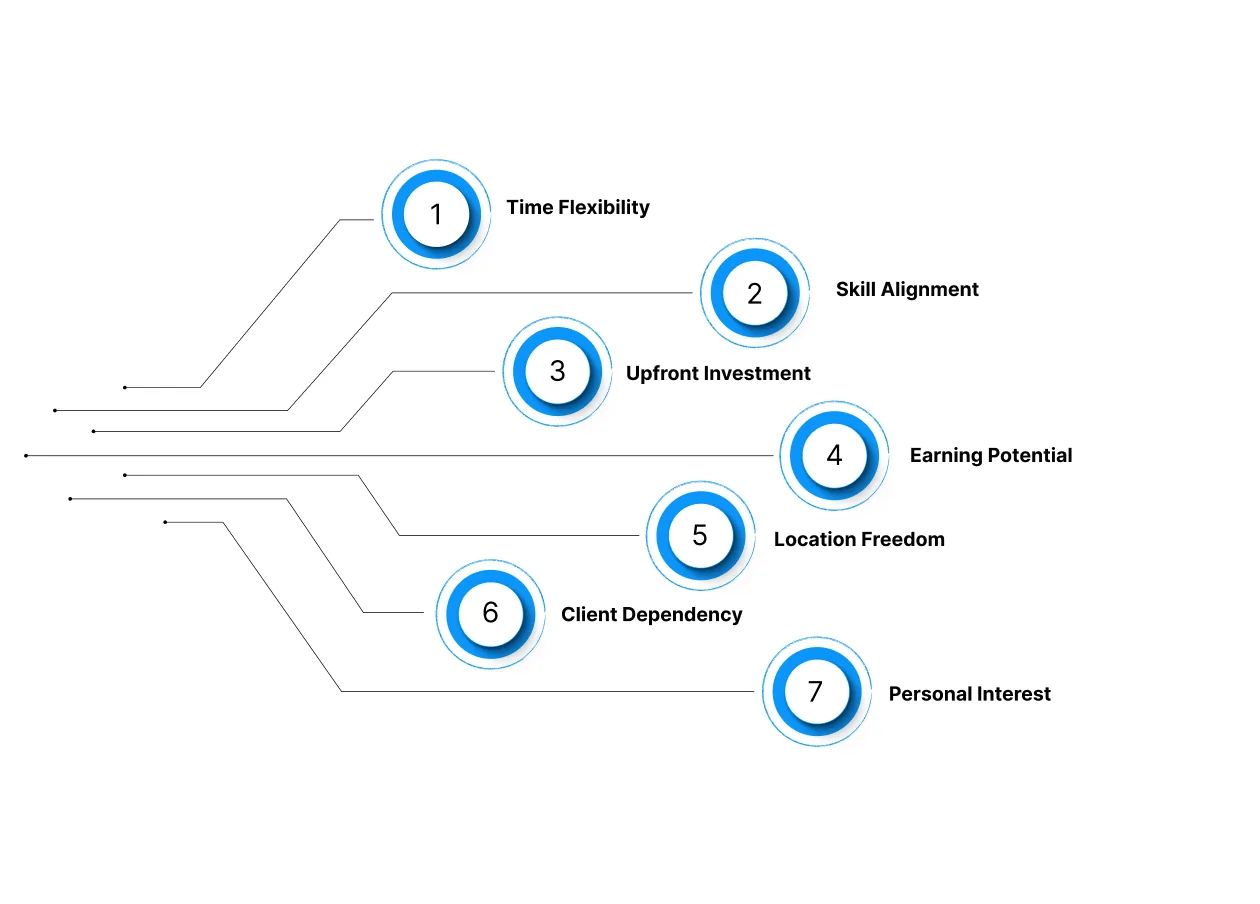
Here are the factors that matter most when choosing:
1. Time Flexibility
Side income has to coexist with college life, not compete with it. Students deal with shifting schedules, surprise submissions, mid-semester evaluations, and irregular study hours. A rigid job structure creates conflict and burnout, not financial stability. Flexible work lets you redistribute effort—do more when the academic load is light and pull back when exams arrive.
Example: Freelance social media management lets you plan posts or replies in advance, whereas a fixed retail job locks you into hours even during peak academic weeks.
2. Skill Alignment
Earning early is valuable, but earning while developing relevant skills is transformative. The right side income creates compounding benefits; today’s small freelancing brief becomes tomorrow’s internship case study and later, a resume headline. Skill-aligned income also makes it easier to justify the time investment because the payoff isn’t just financial; it’s experiential and career-oriented.
Example: A student interested in UX design can take small UI redesign gigs for indie founders, earning money while building a portfolio that hiring managers respect.
3. Upfront Investment
Students operate with limited resources: budget caps, shared devices, hostel setups, and slow Wi-Fi. Choosing work that demands minimal upfront tools reduces risk and makes it easier to start. The barrier isn’t just money; it’s infrastructure, learning curve, and time spent setting up. Strategic choices avoid sunk costs and allow experimentation before committing.
Example: Selling digital notes online requires only a phone camera and basic formatting, while starting a custom merchandise shop requires inventory, shipping, and branding expenses.
4. Earning Potential
Income models vary dramatically across channels. Some pay immediately but cap out fast, others start slow but scale well as expertise builds. Understanding earning curves prevents frustration. Most students quit high-potential paths because the early phase feels unrewarding. Knowing what to expect makes it easier to choose intentionally rather than reactively.
Example: Tutoring yields predictable weekly payouts but doesn’t scale easily; editing Reels for creators may start low but grows fast once you build a client base.
5. Location Freedom
Travel is a silent tax, money spent on cabs, time wasted in transit, and energy lost in crowds. Location-independent work removes those frictions and extends productive hours. For students with hostel restrictions, long commutes, or safety concerns, on-campus or remote gigs are game-changers.
Example: Offering résumé reviews on LinkedIn or Discord servers can be done from a laptop, no travel needed; distributing flyers requires being physically present across campus or the city.
6. Client Dependency
Some income streams rely on direct client acquisition, negotiation, and feedback loops. Others plug into existing platforms where demand already exists. The difference matters when you’re just starting out; client acquisition is a skill on its own and takes time to master. A balanced mix ensures steady cash flow while you learn outreach and negotiation at your own pace.
Example: Freelancing requires pitching and closing deals; selling templates on Gumroad relies on platform traffic and marketing but doesn’t require direct client interaction.
7. Personal Interest
Students juggle academics, friendships, and personal growth. If the work is misaligned with genuine interest, it becomes the first thing abandoned during stressful periods. Interest builds endurance, and endurance builds skill, which is what unlocks higher pay. This isn’t about passion; it’s about finding something you don’t resent doing on a repeated basis.
Example: A student who enjoys fitness might run online workout sessions for peers; someone indifferent to fitness would burn out quickly offering the same service.
Best Side Income Ideas for Students
Students don’t just need names of side income ideas. They need to know how the work actually generates money, what skills are required, what tools they need to start, and how long it takes before the effort turns into real income. The goal here is clarity, not hype.
Below are structured earning pathways that match student constraints: flexible hours, low capital, growth potential, and portfolio value.
1. Online Skill-Based Earning
Online earning works when a student converts a marketable skill into deliverables. These aren’t “fast cash” schemes; they are entry points into creative, technical, and communication-driven work.
Freelance Writing and Editing
Writing sits at the centre of content-heavy industries. Brands, startups, and solo founders publish blogs, LinkedIn posts, newsletters, emails, and captions, and every piece needs clarity and tone. Students with strong language skills can enter with minimal friction.
- How it makes money: Project-based billing for articles, captions, product descriptions, or proofreading.
- Entry point: Write three sample pieces in different formats (blog, caption, email) and publish them as portfolio links. Clients care more about samples than degrees.
- Growth path: Blogs → SEO content → long-form content → content strategy.
Graphic and Social Media Design
Digital design earns well because it solves visual communication problems for businesses. Students who know Canva, Figma, or Illustrator have an advantage. This isn’t about “being artistic”, it’s about producing usable marketing assets.
- How it makes money: Designing posters, banners, thumbnails, menus, pitch decks, and brand kits.
- Entry point: Start with college clubs or fest committees; they have recurring design needs and tight deadlines.
- Growth path: Posters → Instagram creatives → brand identity → UI/UX assets.
Video Editing and Short-Form Content
Creators, coaches, and brands depend on Reels, Shorts, and TikTok-style edits to grow. This category pays because it drives attention and revenue for clients.
- How it makes money: Editing vlogs, Reels, podcast clips, product demos, and event trailers.
- Entry point: Offer trial edits to local creators or student societies to build a reel portfolio.
- Growth path: Basic clipping → motion design → retainer-based editing.
2. Education & Academic Support
Students underestimate how valuable their existing academic knowledge is. If you scored well or know a subject deeply, there is demand.
Tutoring and Subject Coaching
Families prefer tutors who are relatable, affordable, and competent—students tick all three boxes.
- How it makes money: Hourly or monthly coaching for school-level subjects, coding basics, spoken English, or exam prep.
- Entry point: Start with neighbours, younger batchmates, or referrals from parents’ WhatsApp groups.
- Growth path: One-to-one → small groups → online cohorts.
Assignment, Notes, and Study Material
Well-organised notes, cheat-sheets, diagrams, and summaries save time for others. That convenience has monetary value.
- How it makes money: Selling PDF notes, mind maps, solved papers, flashcards, or formula sheets.
- Entry point: Turn your own study material into structured resources and share sample pages before selling full packs.
- Growth path: Notes → digital bundles → institutional partnerships.
3. Tech and Digital Services
These ideas require learning time but offer high use and long-term payoff.
Basic Web Development for Local Businesses
Small shops, coaching institutes, and freelancers need simple landing pages. They don’t ask for advanced systems; they ask for “a website that looks legit”.
- How it makes money: Fixed-fee builds using WordPress, Wix, Webflow, or basic HTML/CSS.
- Entry point: Build 2–3 demo websites and share them as examples. Business owners choose who looks reliable, not who has the fanciest skill.
- Growth path: Websites → maintenance retainers → automation → analytics.
Automation & Data Help
Many small businesses use Excel or Sheets inefficiently. Students who understand formulas, dashboards, or basic automation can improve workflows.
- How it makes money: Creating templates, dashboards, reporting sheets, or automating repetitive tasks.
- Entry point: Convert common campus workflows (attendance, lab marks, budgets) into automated templates to demonstrate capability.
- Growth path: Templates → dashboards → analytics services.
4. Physical & Offline Earning
Offline income still matters for students who need predictable payouts or prefer human-facing roles.
Event & Campus Promotion
Brands require ground presence for college penetration. Students are the bridge between companies and campus communities.
- How it makes money: Task-based payouts for registrations, installations, sampling, surveys, or event support.
- Entry point: Join student committees or ambassador programs; they attract external sponsorships.
- Growth path: Field execution → team coordination → sponsored event management.
Part-Time Retail or Café Jobs
Predictable weekly income without portfolio needs. Works better in cities with flexible shifts.
- How it makes money: Hourly or shift-based wages for customer service roles.
- Entry point: Target restaurants, cafes, theatre chains, and bookstores around campus.
- Growth path: Staff → supervisor → host → cashier.
5. Content & Community Monetisation
These income paths are slower initially but compound strongly.
YouTube / Shorts / Reels Creation
This is not about going viral; it’s about niche content. Students who educate, review, or document campus life attract loyal audiences.
- How it makes money: Ads, sponsorships, affiliate links, or selling digital resources.
- Entry point: Pick a format that doesn’t require complex editing (reviews, commentary, tutorials).
- Growth path: Niche → consistency → community → monetisation.
Affiliate Recommendations
If you use tools, books, or gadgets, affiliate links convert over time. This works because students trust peer recommendations more than ads.
- How it makes money: Percentage commissions when someone buys through your link.
- Entry point: Start with products you actually use, not random links.
- Growth path: Links → content → niche resources pages.
Common Mistakes Students Make When Trying to Earn
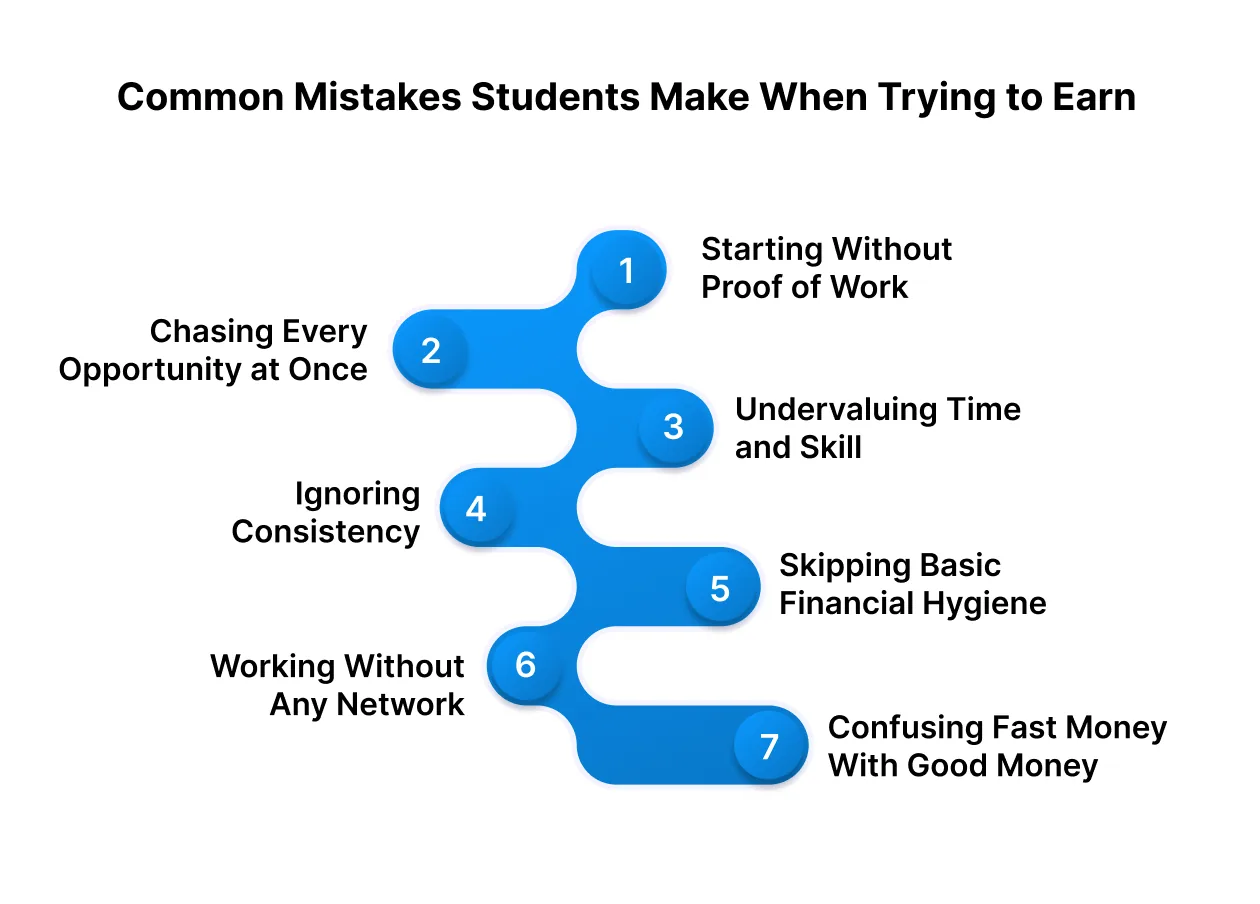
Most students don’t fail because the idea was bad. They fail because the approach was rushed, scattered, or unrealistic. Over time, certain patterns show up across campuses, Discord groups, and freelancer communities. Understanding these traps early saves months of frustration.
1. Starting Without Proof of Work
Students often try to land clients or gigs without showing what they can actually do. Clients don’t hire based on potential; they hire based on evidence. Proof doesn’t have to come from paid projects. Three well-structured samples can outperform a long résumé.
Fix: Create small demo projects and publish them as portfolio links. If you tutor math, record one mini-lesson. If you design, recreate a restaurant poster. If you write, produce a blog post. Proof lowers friction.
2. Chasing Every Opportunity at Once
When 10 different income ideas sound promising, students try all 10 and drop all 10. Switching ideas too often resets momentum and prevents compounding. Every income path has an “unpaid learning phase” before money shows up.
Fix: Pick one path and commit for 6–8 weeks. Evaluate using simple signals: improvement, interest, and a clearer sense of what clients want.
3. Undervaluing Time and Skill
The quickest way to burn out is by pricing yourself too low. Low rates attract difficult clients, delay improvement, and create resentment. Students undervalue themselves due to inexperience, but inexperience doesn’t mean zero value.
Fix: Start with learning rates, not desperation rates. Once you deliver 3–5 projects, raise pricing modestly. Clients respect clarity more than cheapness.
4. Ignoring Consistency During Peak Academic Periods
Students start strong, then disappear during exams or deadlines. From the client’s perspective, this feels unreliable. Losing one client due to inconsistency resets progress.
Fix: Choose income models that survive academic cycles. Remote, async, or batching-friendly work makes this easier. Communicate availability before busy periods instead of vanishing.
5. Skipping Basic Financial Hygiene
Many students earn a little money and spend it instantly. No tracking, no separation, no budgeting. As a result, work never leads to stability, just transactions.
Fix: Maintain a simple system. One UPI account for income, one for expenses. Track monthly inflows and outflows. The goal isn’t austerity; it’s awareness.
6. Working Without Any Network
Most first assignments, referrals, or gigs come from people within one or two degrees of separation. Students who work in isolation miss this network effect.
Fix: Hang out where opportunities surface: LinkedIn groups, Discord servers, college clubs, hackathons, fest committees, and alumni groups. Visibility matters.
7. Confusing Fast Money With Good Money
Tasks like dropshipping, crypto speculation, or random surveys look attractive because they promise speed. They rarely build skill, credibility, or long-term value.
Fix: Optimise for skill-building first. Small earnings today + strong skills tomorrow compound into real income later.
How to Balance Side Income With Studies Without Burning Out?
Earning as a student is productive until it becomes overwhelming. The core challenge isn’t finding income opportunities, it’s managing capacity without sacrificing academics, health, or relationships. Burnout often happens silently: you take on a bit too much, deadlines collide, and suddenly both work and studies suffer.
Balancing both requires structure, not hustle slogans. Here's how:
Design a Work Rhythm Around Academic Cycles
Student schedules are seasonal. Midterms, finals, project submissions, and internships create waves of intensity. Trying to maintain a flat workload throughout the year is unrealistic.
A better approach is to shape your earning model around academic calendars:
- Low-intensity months → onboarding clients, learning skills, building portfolios
- High-intensity months → deliverables only, no outreach, no expansion
This way, academic peaks don’t crush your client work, and clients don’t feel ghosted.
Choose Work With Asynchronous Delivery
Some side income ideas require you to be present at fixed times. Others let you work whenever energy and time align. Asynchronous work fits student life better because you can batch tasks after classes or on weekends.
Examples of asynchronous formats:
- Editing videos or designs
- Writing content
- Preparing tutoring lesson plans
- Building portfolios or templates
Control over timing reduces stress dramatically.
Use Simple Tools to Track Commitments
Students underestimate how much cognitive load comes from remembering tasks. Even small freelancing or tutoring gigs introduce deadlines, revisions, lesson plans, or client communication.
Basic tools reduce mental clutter:
- Google Calendar for scheduling
- Notion or Trello for tasks
- Sheets for earnings tracking
- Email labels to organise conversations
The point isn’t to be “productive”, it’s to keep commitments visible so nothing slips.
Set Clear Boundaries With Clients or Students
Many students overextend themselves because they don’t communicate availability. When you don’t set boundaries, others assume you’re always on.
Healthy boundaries include:
- Stating available days and hours upfront
- Explaining turnaround times realistically
- Communicating exam weeks in advance
- Declining tasks that don’t fit timelines
Clients appreciate clarity more than speed. Boundaries protect your GPA and your sleep.
Reflect on Why You're Earning in the First Place
Students often chase side income without knowing the purpose. If the goal isn’t clear, work expands unnecessarily and resentment grows.
Common goals include:
- Paying for essentials (rent, food, travel)
- Funding learning resources (courses, software, books)
- Saving for future opportunities (exchange programs, new laptop)
- Supporting family financially
When the purpose is clear, boundaries and priorities become easier to enforce.
You can also check our guide on Financial Planning Tips for Young Adults to understand financial planning in detail.
When Short-Term Expenses Outrun Your Budget, Pocketly Covers the Gap
Even with side income, students face timing problems. Rent, travel, books, exams, data plans, and food don’t always wait for payday. Sometimes a refund is delayed, a part-time client pays late, or a fest trip appears out of nowhere. In those moments, the issue isn’t affordability; it’s timing. Borrowing from friends feels awkward, and traditional credit options are either slow or unavailable for young earners.
This is where Pocketly is useful. Pocketly offers small personal loans designed for short-term needs, especially for young Indians who don’t have decades of credit history. Students can borrow only what they need, instead of being forced into large loan amounts. The process is quick, paperless, and built around digital verification rather than long forms or collateral.
Key points that help during tight weeks:
- Flexible loan amounts from ₹1,000 to ₹25,000, so you don’t over-borrow
- No collateral or guarantors
- Fast approval after basic digital checks
- Funds sent directly to your bank account
- Repayments structured to match cash flow
- Transparent pricing with interest starting at 2 per cent per month and processing fees between 1 per cent and 8 per cent
Pocketly partners with regulated NBFCs, which means loan disbursement follows proper compliance and standards. For students, the value isn’t in “financing everything” but in clearing sudden expenses without disturbing rent, groceries, or exam prep.
Conclusion
Side income during student life isn’t only about boosting your wallet. It’s a way to build skills, confidence, and a sense of independence. Trying out small projects like tutoring, design, or part-time work can teach you how to manage time, communicate with others, and deliver results. These are habits that stay with you long after college.
Pick options that fit your schedule and energy levels, and avoid comparing yourself to others. The goal is steady progress, not overnight success. Some months will feel busy and others light, and that’s normal. What matters is that you’re learning and earning at your own pace.
When tight weeks or short-term expenses appear, address them early instead of letting things pile up. If a temporary cash gap shows up, support options exist. Pocketly offers quick, small-ticket loans for students and young professionals facing short-term cash crunches, giving you breathing room without slowing down your goals. Download the Pocketly app on iOS or Android to get support when needed.
FAQs
1. What are the best side income options for students?
Popular options include freelance writing, tutoring, graphic design, content creation, virtual assistance, part-time retail work, and selling study notes or digital templates.
2. Can students earn online without investment?
Yes. Many online platforms allow students to earn through skills like writing, designing, coding, or teaching without any upfront payment.
3. How many hours per week should a student work on a side income?
Most students manage well with 8–12 hours per week, keeping weekends for higher concentration work and weekdays for lighter tasks.
4. Do students need special qualifications to earn online?
No formal qualifications are needed for most freelance or part-time roles. Basic skills, reliability, and communication are more important.
5. Is it possible to balance studies and side income without burning out?
Yes. Using time blocks, prioritising deadlines, and choosing flexible, remote-friendly work helps maintain balance.
6. Can side income activities help with future internships or jobs?
Definitely, side work builds portfolios, soft skills, financial responsibility, and real client experience that employers value.