

Checking Your Personal Loan Statement? Don't Miss These 8 Details
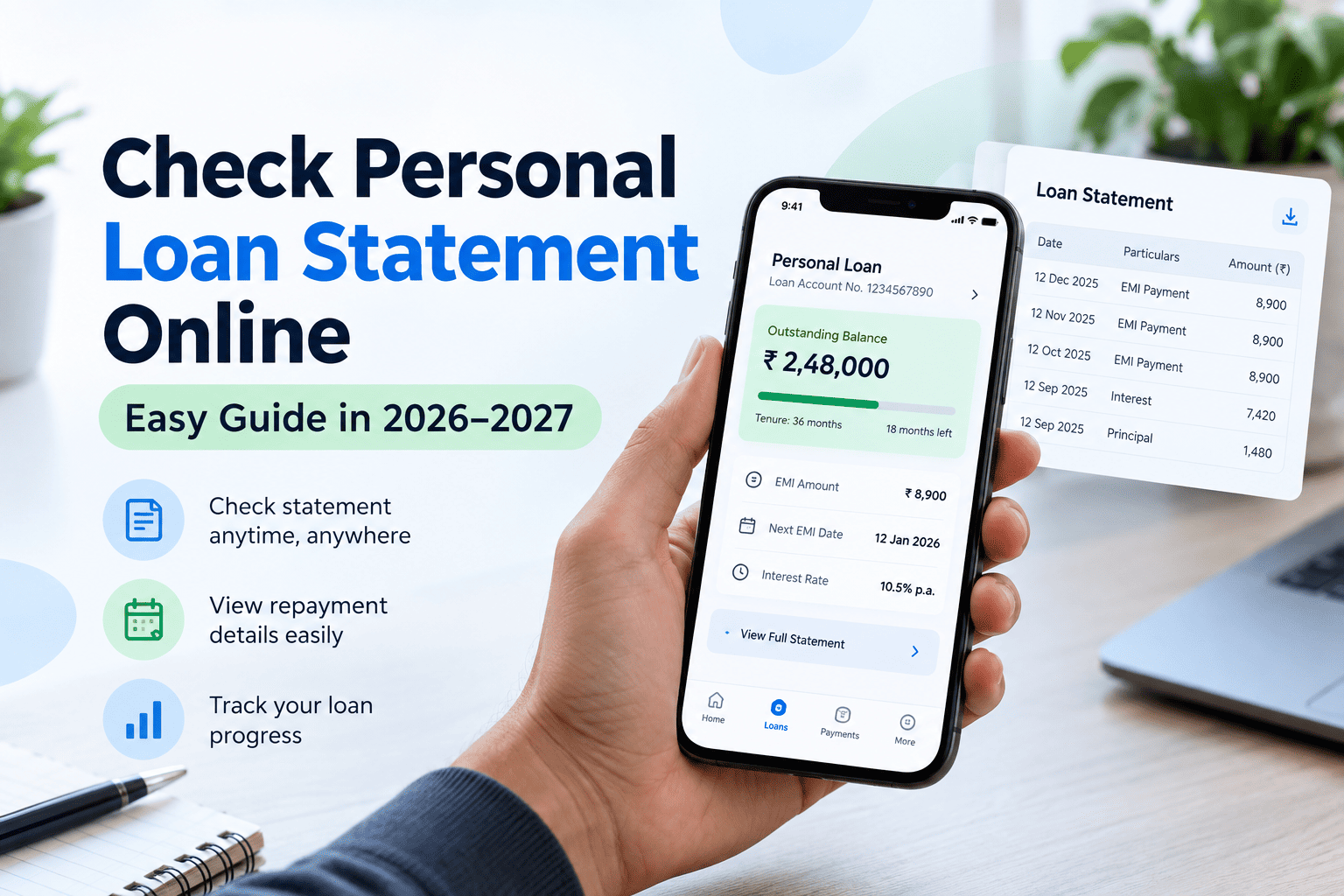
A personal loan statement will assist you understand what is occurring with the loan after it has been disbursed. It can display your loan amount, repayments made, outstanding balance, EMI or instalment info, interest and other transaction information.
For Pocketly borrowers, the digital loan journey allows them to check out the loan rules and repayments that apply to their loan. Do not use an old screen shot or payment message as a reference if you can't locate a particular document or if you need clarification on a particular account.
A loan statement is also different from your Key Fact Statement (KFS). The KFS is primarily designed to help you understand important loan terms and costs before entering into the loan agreement. RBI requires regulated entities to provide a KFS for applicable retail and MSME term loans, including information such as APR and the repayment schedule.
Quick Answer: What Does a Personal Loan Statement Tell You?
|
Detail |
What it helps you check |
|
Loan account details |
Identifies the relevant loan |
|
Original loan amount |
Amount sanctioned/disbursed as applicable |
|
Repayment history |
Payments already recorded |
|
Outstanding amount |
Amount that may still remain payable |
|
Instalment/EMI information |
Helps track scheduled repayments |
|
Due dates |
Shows when applicable payments are expected |
|
Interest details |
Helps understand borrowing cost |
|
Fees or charges |
Helps identify applicable charges |
|
Loan status |
Helps determine whether the loan is active or closed |
The exact format varies between lenders, so not every loan account statement will use the same headings.
What Is a Personal Loan Statement?
A personal loan statement is a record containing important information about your personal loan account and repayment activity.
Think of it as a financial record of the loan.
Instead of remembering how much you borrowed, what you have already repaid and what may still be outstanding, you can refer to your loan information in one place.
Depending on the lender and product, your statement or loan-account view may include:
-
Loan account number or loan ID
-
Borrower's details
-
Original loan amount
-
Disbursal date
-
Applicable interest information
-
Repayment tenure
-
Instalment or EMI amount
-
Payment dates
-
Repayments received
-
Outstanding principal or balance
-
Applicable charges
-
Overdue amount, where applicable
-
Loan closure information
Checking these personal loan details periodically can help you spot payment discrepancies early and plan upcoming repayments.
Personal Loan Statement vs KFS vs Repayment Schedule
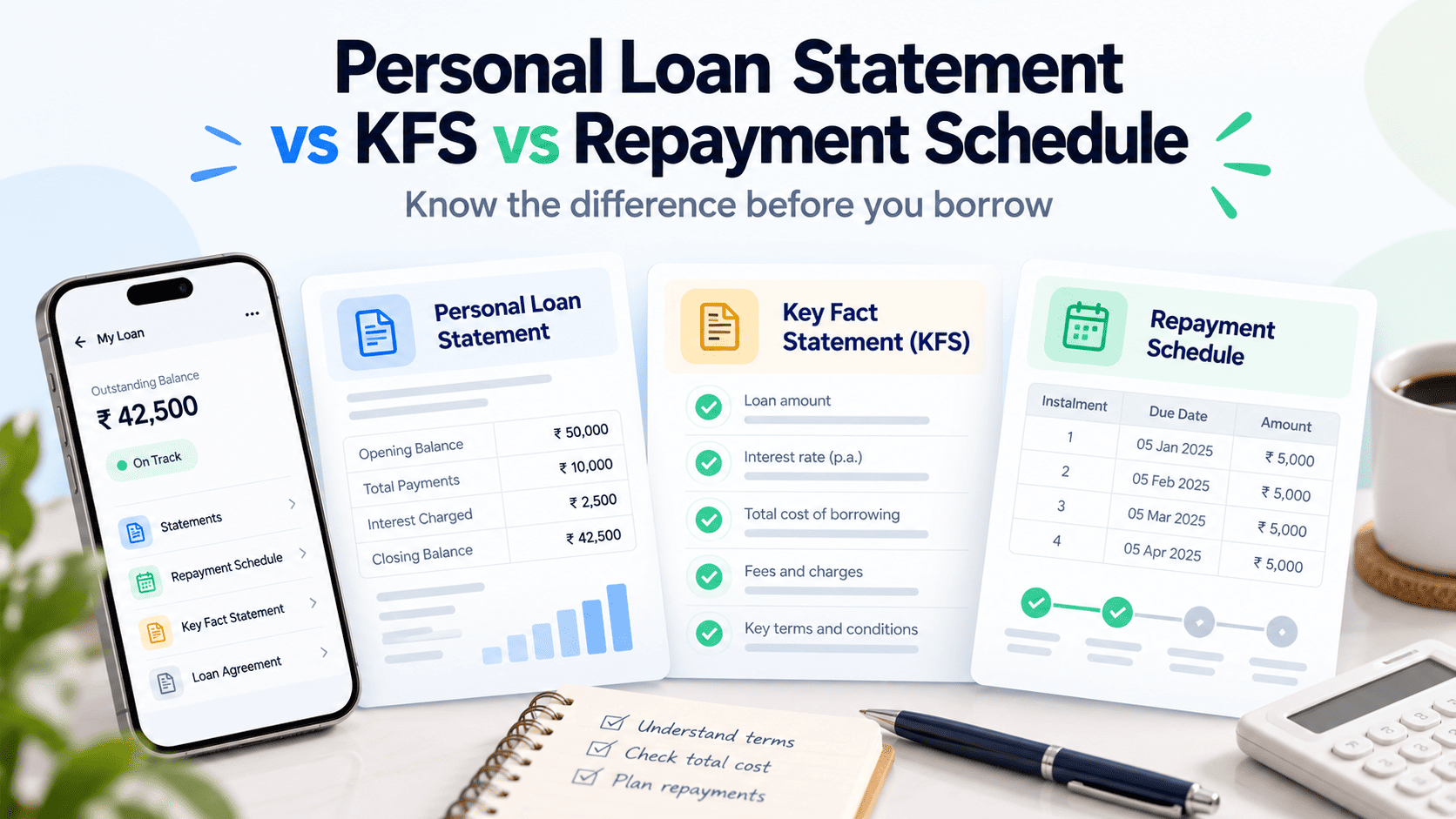
These documents serve different purposes.
|
Document |
Main purpose |
When it is useful |
|
Personal loan statement |
Tracks your loan account and transactions |
During and after repayment |
|
Key Fact Statement (KFS) |
Summarises important loan terms and overall borrowing cost |
Before accepting a loan |
|
Repayment schedule |
Shows scheduled instalments and repayment timeline |
For budgeting and payment planning |
|
Loan agreement |
Contains contractual terms between borrower and lender |
Throughout the loan relationship |
RBI's KFS framework requires key information to be presented in a simple format and includes an APR computation sheet and amortisation schedule for applicable loans. Charges that are not disclosed in the KFS generally cannot simply be added later without the required borrower consent under the applicable framework.
That is why you should keep your loan account statement, KFS, repayment schedule and loan agreement rather than treating them as interchangeable documents.
How to Check a Personal Loan Statement Online
For most digital loans, checking your loan information online is straightforward.
The exact screen names vary between lenders, but the process generally works like this:
1. Open the lender's official app or website
Always use the official application or website.
Avoid loan-account links received through unknown SMS messages, Telegram accounts, WhatsApp numbers or unofficial APK websites.
2. Sign in using your registered details
Log in using the mobile number, email or authentication method associated with your loan account.
Never share your OTP, password or other authentication credentials with another person.
3. Open your active loan
Look for a section such as:
-
My Loan
-
Active Loan
-
Loan Details
-
Repayment
-
Loan Account
-
Transactions
Terminology differs by platform.
4. Review your loan information
Check important my loan details, including the amount, repayment information, outstanding amount and applicable due dates.
5. Look for a statement or transaction record
Where your lender provides the facility, you may be able to view or download the relevant statement or repayment history.
6. Contact support if the information does not match
Do not ignore a mismatch simply because the difference looks small.
If a repayment you made is not reflected or you cannot locate the required account information, contact the lender/platform through its official support channel.
For Pocketly-related repayment or account queries, our current FAQ directs users to our support channels, including care@support.pocketly.in.
What Should You Check in Your Personal Loan Statement?
Do not look only at the outstanding balance.
Review the statement line by line.
Loan amount
Confirm that the loan amount corresponds with your applicable loan records.
You should distinguish between:
Sanctioned loan amount → applicable deductions/charges → net amount received
These numbers may not always be identical.
Repayments made
Check that repayments already completed have been correctly recorded.
Compare them against:
-
Bank-account transactions
-
UPI records
-
Payment acknowledgements
-
Loan-app payment history
Outstanding balance
The outstanding balance tells you how much remains payable according to the applicable loan account information.
Do not assume that subtracting the EMIs paid from the original loan amount will always produce the correct outstanding balance because interest and other applicable components may affect the calculation.
Upcoming payment
Check your next applicable repayment date and amount.
This helps you maintain enough funds before the due date instead of checking the loan only after receiving a reminder.
Interest and charges
Review the charges appearing against your loan and compare them with your contractual documents and KFS where applicable.
RBI describes APR as the annual cost of credit incorporating interest and other associated charges within the applicable regulatory framework.
How to Check Personal Loan Status Online
A personal loan status is different from a loan statement.
Your status normally tells you where a personal loan application or active loan currently stands.
For example, depending on the lender, you may see statuses associated with:
-
Application submitted
-
Verification
-
Assessment
-
Approved or declined
-
Agreement/acceptance
-
Disbursal
-
Active repayment
-
Closed
A submitted application does not mean the loan has been approved.
Similarly:
Application speed ≠ approval speed ≠ disbursal speed.
If you're applying with us, complete the information requested accurately and review the final offer and repayment obligation before accepting it.
Why Should You Check Your Loan Statement Regularly?
Your statement is useful for more than simply knowing how many payments are left.
1. Track repayments
You can check whether payments are being recorded correctly.
2. Plan your monthly budget
Knowing the next repayment date helps you account for the instalment alongside rent, food, transport and other expenses.
3. Identify payment errors
If you have paid but the transaction is missing, you can raise the issue sooner.
4. Understand your outstanding loan
A current record helps you understand how much of the obligation remains.
5. Keep financial records organised
Statements can be useful when reconciling personal finances or discussing an account-related issue with the lender.
6. Prepare for loan closure
Before assuming your loan is completely closed, verify the applicable account status and any remaining obligations.
What If Your Loan Statement Shows the Wrong Amount?
If the amount shown does not match your records, first compare the statement with your bank transactions and applicable loan documents.
Use this checklist:
-
Check the transaction date.
-
Confirm the correct loan account.
-
Check whether the payment was successfully completed.
-
Compare the amount debited from your bank.
-
Keep the UPI or bank transaction reference number.
-
Review applicable fees or charges.
-
Check the KFS and loan agreement.
-
Take a screenshot or save the relevant transaction record.
-
Contact official customer support.
Do not make a second payment simply because the first transaction has not appeared immediately without first checking whether it actually failed.
Pocketly's FAQ also addresses failed or duplicate repayment situations and advises users regarding the handling of such transactions.
What Loan Details Should You Check Before Applying?
The best time to understand a loan is before you accept it.
Your personal loan procedure should include reviewing:
|
Check |
Why it matters |
|
Loan amount |
Avoid borrowing more than required |
|
Net disbursal |
Understand what actually reaches your account |
|
Interest rate |
Understand the stated interest cost |
|
APR |
Compare broader borrowing cost |
|
Processing fee |
Identify applicable upfront cost |
|
Repayment period |
Understand how long you will repay |
|
Instalment amount |
Check affordability |
|
Total repayment |
Understand your total obligation |
|
Late-payment terms |
Know the consequence of missing payments |
|
Foreclosure terms |
Understand early-closure conditions |
At Pocketly, our current published loan range is ₹1,000 to ₹50,000, subject to eligibility. Our website currently displays repayment periods from 61 days to 9 months, interest of 2%–3% per month and a maximum APR of 99.73% per annum inclusive of the stated applicable costs. Your actual offer and KFS determine the terms applicable to your loan.
Speel Finance Company Private Limited is identified as the RBI-registered NBFC behind the Pocketly digital lending platform.
Check Your Eligibility With Pocketly
Use an EMI Calculator Before Starting the Personal Loan Process
A loan statement helps you manage an existing loan. A personal loan EMI calculator helps you plan before borrowing.
With our calculator, you can enter:
-
Loan amount
-
Interest rate
-
Loan tenure
The tool then estimates your monthly EMI, total interest and total repayment based on the figures entered. Calculator results are estimates; your actual offer depends on the applicable loan terms.
This can be particularly useful before completing your personal loan process, because a loan amount that looks manageable initially may create an uncomfortable repayment obligation once interest and tenure are considered.
Personal Loan Options for Different Borrowers
Your income profile can affect which loan information is relevant to you.
Salaried applicants
If you receive a regular salary, you can explore our personal loan for salaried applicants. Review your repayment date against your salary cycle and existing monthly commitments.
Self-employed applicants
Freelancers, business owners and independent professionals can explore our personal loan for self employed applicants, subject to applicable verification and eligibility criteria.
Non-salaried applicants
If you earn income but do not receive a conventional monthly salary, explore our personal loan for non salaried applicants and check the applicable requirements.
These categories help you find the appropriate application route; they do not guarantee approval.
Can You Get an Instant Personal Loan Online in 2 Minutes?
You may encounter searches such as instant personal loan online in 2 minutes, but the phrase should not be interpreted as a guarantee that every borrower will receive an approved and disbursed loan within two minutes.
A digital application can be completed quickly, but application, verification, underwriting, approval and disbursal are separate stages.
If you're comparing options to find the best loan app in India for your needs, do not judge an app only by its advertised speed.
Check:
-
Who the regulated lender is
-
APR
-
Interest
-
Processing fee
-
Net disbursal
-
Repayment period
-
Total repayment
-
KFS
-
Customer-support channels
-
Privacy and data-security practices
Borrow only when the repayment obligation fits your budget.
Common Mistakes When Checking My Loan Details
Avoid these common errors:
Checking only the EMI
Your EMI or instalment is only one part of the loan.
Look at total repayment and applicable costs too.
Confusing the statement with the KFS
Your loan statement records account activity. Your KFS explains important contractual and cost information associated with the applicable loan.
Ignoring failed payments
If money has left your bank account but your loan information does not show the payment, keep the transaction reference and contact support.
Assuming application means personal loan approval
A personal loan application must still go through applicable eligibility, verification and underwriting processes.
Using unofficial links
Always access your account through the official lender/platform channel.
Final Takeaway
Your personal loan statement is one of the simplest tools for keeping track of your borrowing.
Use it to check your repayments, outstanding amount, upcoming payment information and overall personal loan details. Keep it together with your KFS, repayment schedule and loan agreement so you have a clearer record of your obligations.
If you're considering a new personal loan with us, first estimate your repayment using our personal loan EMI calculator, review the applicable KFS and understand the amount you will actually receive and repay.
A quick personal loan process is useful, but understanding the loan is more important than completing an application quickly.
Explore Our Personal Loan Options
Frequently Asked Questions
1. How can I check my personal loan statement online?
Log in to your lender's official app or website, select the relevant loan and review the available loan-account or repayment details. Where a downloadable statement is provided, save a copy for your records.
2. What information is included in a personal loan statement?
A personal loan statement may include your loan account information, loan amount, payments made, outstanding balance, repayment dates, interest information and applicable charges. Exact formats vary by lender.
3. How can I check my loan details?
Open your lender's official digital platform and locate your active loan. Your my loan details section may show the loan amount, repayment schedule, outstanding amount and transaction information.
4. How can I check my personal loan status?
Your personal loan status can generally be checked through the lender's app, website or official support channel. Application status and active-loan status are different, so check the correct account or application.
5. What is a loan account statement?
A loan account statement is a record of information and transactions related to your loan. It can help you reconcile repayments and understand the amount that may remain outstanding.
6. Is a personal loan statement the same as a KFS?
No. A loan statement generally tracks an existing loan account, while the KFS summarises key contractual and cost information to help a borrower make an informed decision before entering into the applicable loan contract. RBI's KFS framework includes APR and repayment-schedule information.
7. How do I know whether my personal loan approval is complete?
Do not treat application submission as personal loan approval. Check the official status shown by your lender and complete any outstanding verification or acceptance requirements.
8. Can salaried applicants apply for a personal loan with Pocketly?
Yes. If you're salaried, you can explore our personal loan for salaried applicants, subject to applicable eligibility, verification and underwriting criteria.
9. Can self-employed applicants apply with Pocketly?
Yes. Self-employed applicants can explore our personal loan for self employed option. Approval and the amount offered depend on applicable assessment and verification criteria.
10. Can non-salaried applicants apply for a personal loan?
Applicants with an eligible source of income who do not receive a conventional salary can explore our personal loan for non salaried option, subject to applicable requirements.
11. Does an instant personal loan online in 2 minutes mean guaranteed approval?
No. Instant personal loan online in 2 minutes may describe a fast digital experience, but it should not be interpreted as guaranteed approval or guaranteed disbursal within two minutes.
12. What should I check before choosing the best loan app in India?
If you're looking for the best loan app in India for your needs, compare the regulated lender, APR, applicable fees, repayment period, KFS, total repayment obligation, customer support and data-security practices rather than relying only on speed or promotional claims.