

Investment banking is becoming more complex than ever. Rising deal volumes, tighter regulations, volatile markets, and massive data flows are putting pressure on traditional processes. Relying on manual financial models, spreadsheet analysis, and time-intensive due diligence slows execution and increases the risk of costly errors. In an industry where speed and precision determine success, inefficiency can mean lost deals and weakened client trust.
This growing complexity creates a serious challenge. How can investment banks analyse vast datasets, assess risk accurately, and execute transactions faster without compromising quality?
AI in investment banking offers the solution. By using machine learning, predictive analytics, and natural language processing, firms can automate document review, enhance valuation models, detect risks earlier, and uncover strategic insights in real time. Instead of replacing bankers, AI strengthens their decision-making power.
In this blog, we’ll explore how artificial intelligence is transforming investment banking and why firms that adopt it now will lead the future of capital markets.
TL;DR
- AI is transforming investment banking by automating financial modelling, due diligence, and risk assessment, making deal execution faster and more accurate.
- Machine learning and NLP help identify M&A targets, analyse legal documents, and forecast market trends in real time.
- Predictive analytics enhances risk management by detecting potential credit or market issues before they escalate.
- AI reduces operational costs and shortens deal cycles while allowing bankers to focus on strategy and client advisory.
- Firms embedding AI into core workflows gain a competitive edge with faster decisions, improved compliance, and better investment outcomes.
What Is AI in Investment Banking?
AI in investment banking refers to the use of artificial intelligence to improve financial analysis, automate workflows, and support data-driven decision-making. As markets generate massive volumes of structured and unstructured data, intelligent systems help banks extract insights faster and with greater accuracy than traditional manual methods.
Key technologies include machine learning, natural language processing (NLP), robotic process automation (RPA), and predictive analytics. These tools streamline tasks such as financial modelling, risk evaluation, M&A target screening, document review, and compliance monitoring.
For instance, machine learning models can analyse historical deal data to identify potential acquisition targets, while NLP tools can review legal documents during due diligence in a fraction of the usual time. Predictive analytics strengthens market forecasting and credit risk assessment.
By handling data-intensive processes efficiently, AI enables investment bankers to focus on strategic advisory, client engagement, and high-impact financial decisions.
Why AI Is Transforming Investment Banking in 2026
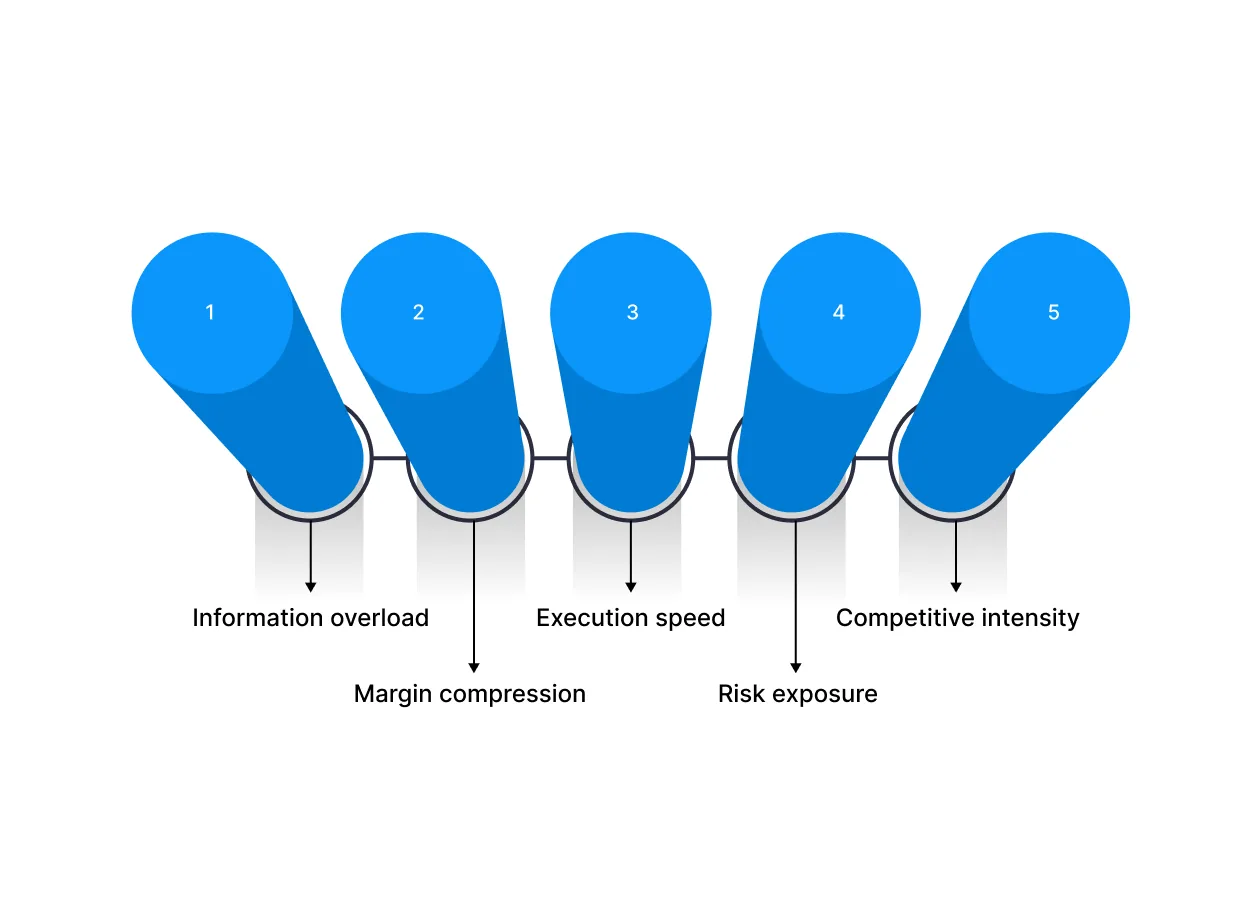 AI is transforming investment banking because it directly improves speed, accuracy, profitability, and risk control. The shift is not theoretical; it is operational and measurable.
- Information overload: Investment banks process earnings reports, deal data, market signals, and regulatory updates daily. AI converts this complexity into structured insights within seconds.
- Margin compression: Fee pressure and competition demand leaner operations. Automation reduces manual analyst workload and lowers cost per transaction.
- Execution speed: Clients expect faster turnarounds. AI accelerates valuation models, due diligence, and scenario analysis, shortening deal cycles.
- Risk exposure: Market volatility and regulatory scrutiny are increasing. Predictive models strengthen credit risk assessment, fraud detection, and compliance monitoring.
- Competitive intensity: Tech-enabled firms deliver sharper insights and data-backed advisory. Banks using AI gain stronger positioning in M&A, capital markets, and strategic advisory.
In 2026, AI is no longer an innovation layer. It is a structural advantage separating high-performing investment banks from the rest.
Also Read: Can Paying Bills Help Build a Credit Score?
Key Applications of AI in Investment Banking
AI creates impact across distinct functional areas within investment banking. Below is a structured breakdown of major application areas and their business outcomes:
1. Mergers and Acquisitions (M&A)
AI strengthens the entire M&A lifecycle, from origination to post-deal evaluation. Advanced algorithms scan financial statements, earnings calls, industry data, patent filings, and news sentiment to identify acquisition targets that align with strategic criteria. Machine learning models evaluate historical deal outcomes to estimate the probability of success, synergy realisation, and integration risks.
This allows deal teams to prioritise high-value opportunities, refine valuation assumptions, and move faster in competitive bidding environments.
2. Financial Modelling and Valuation
AI enhances analytical rigour by automating complex modelling tasks and enabling dynamic scenario simulations. Instead of manually adjusting spreadsheets, bankers can run multi-variable sensitivity analyses in seconds, stress-test assumptions, and model macroeconomic impacts with greater precision.
Intelligent systems also detect anomalies in inputs, improving data integrity and reducing modelling risk during negotiations and capital raises.
3. Risk Management
Predictive analytics improves early risk detection by analysing transactional behaviour, counterparty exposure, market volatility indicators, and credit histories. AI-driven models continuously learn from new data, refining risk scores and identifying emerging vulnerabilities before they escalate. This supports stronger capital allocation decisions and more resilient portfolio management.
4. Due Diligence and Compliance
Natural language processing tools extract key clauses from contracts, flag regulatory inconsistencies, and identify unusual terms across thousands of documents. AI accelerates compliance checks, improves audit trails, and reduces the likelihood of overlooked liabilities during transactions, particularly in cross-border deals with complex regulatory frameworks.
5. Trading and Market Intelligence
AI processes structured market data alongside unstructured sources such as news feeds, research reports, and social sentiment. By identifying pattern shifts and leading indicators, intelligent systems enhance market timing, liquidity assessment, and pricing strategies. This strengthens both proprietary trading functions and client advisory recommendations.
Also Read: Should You Save for an Emergency Fund or Pay Off Debt?
Challenges and Risks of AI in Investment Banking
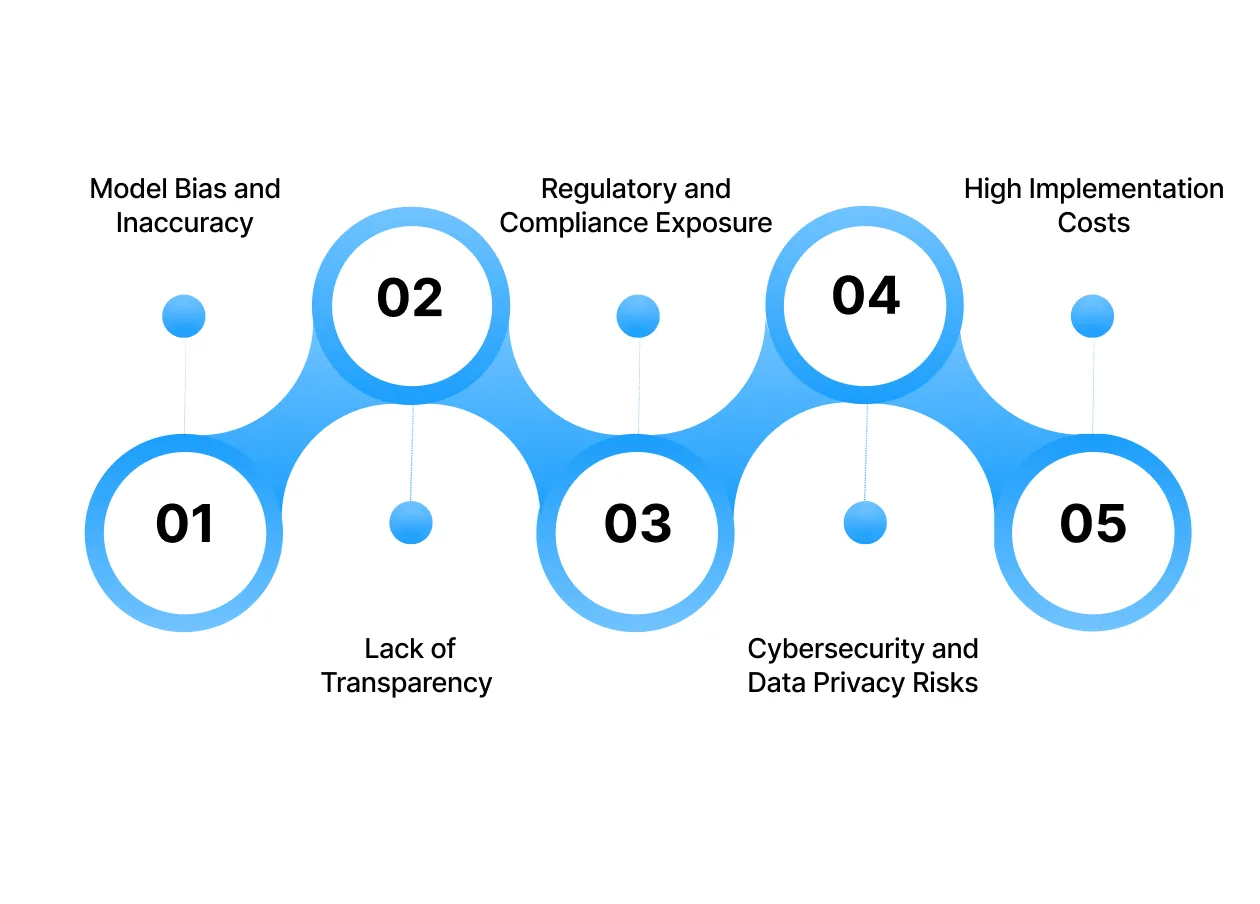 AI adoption introduces meaningful risks that must be managed through structured controls and governance. Below are the key risks and their mitigation logic:
1. Model Bias and Inaccuracy
AI systems depend heavily on historical datasets. If the training data is incomplete, outdated, or biased, outputs can distort valuations, misprice risk, or generate flawed credit assessments.
Mitigation: Establish continuous model validation frameworks, conduct independent audits, and retrain models regularly using diverse and updated datasets.
2. Lack of Transparency
Complex machine learning algorithms can make it difficult to explain how specific decisions were reached, creating challenges in regulatory reporting and client communication.
Mitigation: Adopt explainable AI frameworks, maintain detailed documentation, and integrate human oversight in high-impact financial decisions.
3. Regulatory and Compliance Exposure
Financial regulations are evolving, particularly around algorithmic trading and automated credit decisions. Misalignment between AI systems and regulatory requirements can result in penalties or operational restrictions.
Mitigation: Involve compliance teams during AI deployment, conduct regulatory impact assessments, and maintain comprehensive audit trails.
4. Cybersecurity and Data Privacy Risks
AI platforms require access to sensitive financial and client data, expanding potential attack surfaces. Any breach can lead to reputational and financial damage.
Mitigation: Strengthen encryption standards, implement strict access controls, and deploy continuous threat monitoring systems.
5. High Implementation Costs and Integration Complexity
Deploying AI requires robust data infrastructure, skilled talent, and integration with legacy systems, which can strain budgets and slow adoption.
Mitigation: Begin with focused pilot programs, prioritise high-ROI use cases, and scale gradually after validating performance improvements.
From Automation to Intelligence: The Future of Investment Banking
The future of AI in investment banking will not be defined by isolated tools, but by structural transformation. Below is a strategic evolution model outlining how AI will reshape the industry over the next decade.
1. Intelligent Automation at Scale
Basic automation will evolve into fully integrated intelligent workflows. Financial modelling, reconciliation, document review, and compliance checks will run through AI-driven systems embedded directly into core banking platforms.
Strategic impact: Reduced deal cycle times, lower cost per transaction, and improved operational consistency across global teams.
2. Decision Augmentation for Senior Bankers
AI will increasingly act as a strategic co-pilot. Systems will surface risk flags, simulate valuation adjustments under multiple macroeconomic conditions, and recommend optimal deal structures.
Strategic impact: Enhanced advisory quality, more data-backed negotiations, and improved client confidence in recommendations.
3. Predictive Deal and Market Intelligence
Future AI systems will combine macroeconomic indicators, sector performance data, capital flows, and sentiment analysis to forecast market windows and deal viability.
Strategic impact: Better timing of IPOs, debt issuances, and M&A activity, increasing success rates and fee realisation.
4. Continuous Risk and Compliance Monitoring
Rather than periodic reviews, AI will enable real-time surveillance of credit exposure, counterparty risk, liquidity stress, and regulatory compliance.
Strategic impact: Early risk detection, reduced capital volatility, and stronger regulatory positioning.
5. AI-Native Operating Models
The most advanced institutions will redesign their operating models around AI-first infrastructure. Data pipelines, analytics engines, and client reporting systems will be fully integrated.
Strategic impact: Leaner organisational structures, scalable global operations, and sustainable competitive differentiation.
Facing a Short-Term Cash Crunch? Pocketly Helps You Stay Financially Steady
Even with careful planning, short-term cash gaps can arise due to unexpected expenses, delayed payments, or urgent commitments. When savings alone are not enough, Pocketly offers quick financial support to help you stay on track without disturbing your larger financial plans.
Here’s how Pocketly helps you manage temporary cash flow gaps effectively:
- Borrow only what you need: Loan amounts range from ₹1,000 to ₹25,000, ensuring you take a manageable amount and avoid unnecessary debt.
- No collateral or guarantor required: The loan process is completely collateral-free, so you don’t need to pledge assets or arrange a co-signer.
- Fast approval process: A simple KYC-based verification enables quick eligibility checks and faster decisions without complicated paperwork.
- Instant bank transfer: Once approved, funds are transferred directly to your bank account, making it useful for urgent financial needs.
- Flexible repayment options: Choose a repayment tenure that fits your monthly budget, keeping EMIs predictable and manageable.
- Transparent pricing structure: Interest rates start from 2% per month, with processing fees typically between 1% and 8%, depending on your loan amount and profile.
- Available 24/7 through the app: Apply, track repayments, and manage your loan anytime through the Pocketly mobile app.
When used responsibly, Pocketly works as a short-term financial bridge, helping you handle immediate needs while keeping your long-term plans intact.
Conclusion
AI is no longer just an experimental layer in investment banking; it’s actively transforming how firms source deals, conduct due diligence, price assets, manage risk, and ensure compliance. From automating M&A document reviews to enhancing real-time risk modelling and fraud detection, AI speeds up execution while deepening analysis.
However, competitive advantage comes not from using AI tools alone but from integrating them into core workflows. Banks that embed AI into deal teams, compliance frameworks, and data infrastructure see tangible gains in speed, accuracy, and cost efficiency. Those treating it as a side experiment rarely see meaningful results.
In a market of tightening margins and increasing regulatory pressure, decision intelligence is the differentiator. Firms that combine advanced AI with experienced bankers execute faster, assess opportunities more precisely, and navigate market volatility confidently.
When unexpected expenses arise or cash flow gets tight, tools like Pocketly provide quick, short-term support to keep your budget steady. Download the Pocketly app today on [Android] or [iOS] for instant funds and financial flexibility, no matter what comes your way.
FAQs
1. What is AI in investment banking, and how does it work?
AI in investment banking refers to the use of technologies like machine learning, natural language processing, and predictive analytics to automate tasks, analyse data, and support decision-making in areas such as trading, M&A, risk management, and financial modelling.
2. Can AI replace human investment bankers?
AI is designed to assist rather than replace human bankers. It handles repetitive, data-intensive tasks, improves accuracy, and speeds up analysis, allowing bankers to focus on strategy, client relationships, and complex decision-making.
3. What are the main benefits of AI for investment banks?
The primary benefits include faster and more accurate financial analysis, improved risk management, enhanced deal sourcing, reduced operational costs, and the ability to make data-driven strategic decisions.
4. What challenges do investment banks face when adopting AI?
Challenges include high implementation costs, data privacy and cybersecurity concerns, regulatory compliance, model bias, and the need for skilled personnel to manage and interpret AI systems effectively.
5. Which AI technologies are most commonly used in investment banking?
Machine learning for predictive analytics, natural language processing for document review, robotic process automation for operational tasks, and generative AI for research and reporting are the most widely adopted AI technologies in investment banking today.