

Banks today face a growing pressure to improve customer service, reduce operational costs, and stay ahead of the competition. With increasing digitalisation, customers expect fast, personalised services, while banks must manage vast amounts of data and ensure security. This leaves many financial institutions struggling to keep up with the demand for efficiency and innovation.
The challenge is clear: traditional systems can’t meet the evolving needs of customers, nor can they handle the complexities of modern banking. Inefficiencies, slow processes, and outdated security measures not only hinder customer satisfaction but also leave banks vulnerable to fraud and operational errors. As the demand for smarter, faster banking intensifies, the consequences of falling behind become more severe.
Enter artificial intelligence (AI). By using AI, banks can simplify operations, enhance security, and provide hyper‑personalised experiences for customers. In this blog, we’ll explore how AI is transforming the banking industry, covering key use cases that are reshaping everything from fraud detection to customer support.
TL;DR
- AI in banking is used for fraud detection, customer support, credit decisioning, and personalised banking services.
- Fraud prevention is enhanced through real‑time transaction analysis to quickly identify suspicious activities.
- AI-powered chatbots and virtual assistants improve customer experience by handling queries and transactions 24/7.
- Credit risk models built with AI analyse more data points for smarter and fairer loan approvals.
- The future of AI in banking will focus on deeper automation, predictive analytics, and better customer personalisation.
What Is AI in Banking?
Artificial intelligence (AI) refers to systems and machines that can gain knowledge from data and perform tasks that typically require human intelligence. These systems are designed to automate decision-making, recognise patterns, and even improve over time through machine learning algorithms. In banking, AI is applied to process large amounts of data, identify trends, and predict outcomes, all of which improve efficiency and accuracy.
In essence, AI in banking allows institutions to be more efficient, secure, and customer-centric, enabling faster operations and better services.
Benefits of AI in Banking
AI brings several advantages to the banking sector, enhancing both operational efficiency and customer experience. Here’s how AI is transforming the industry:
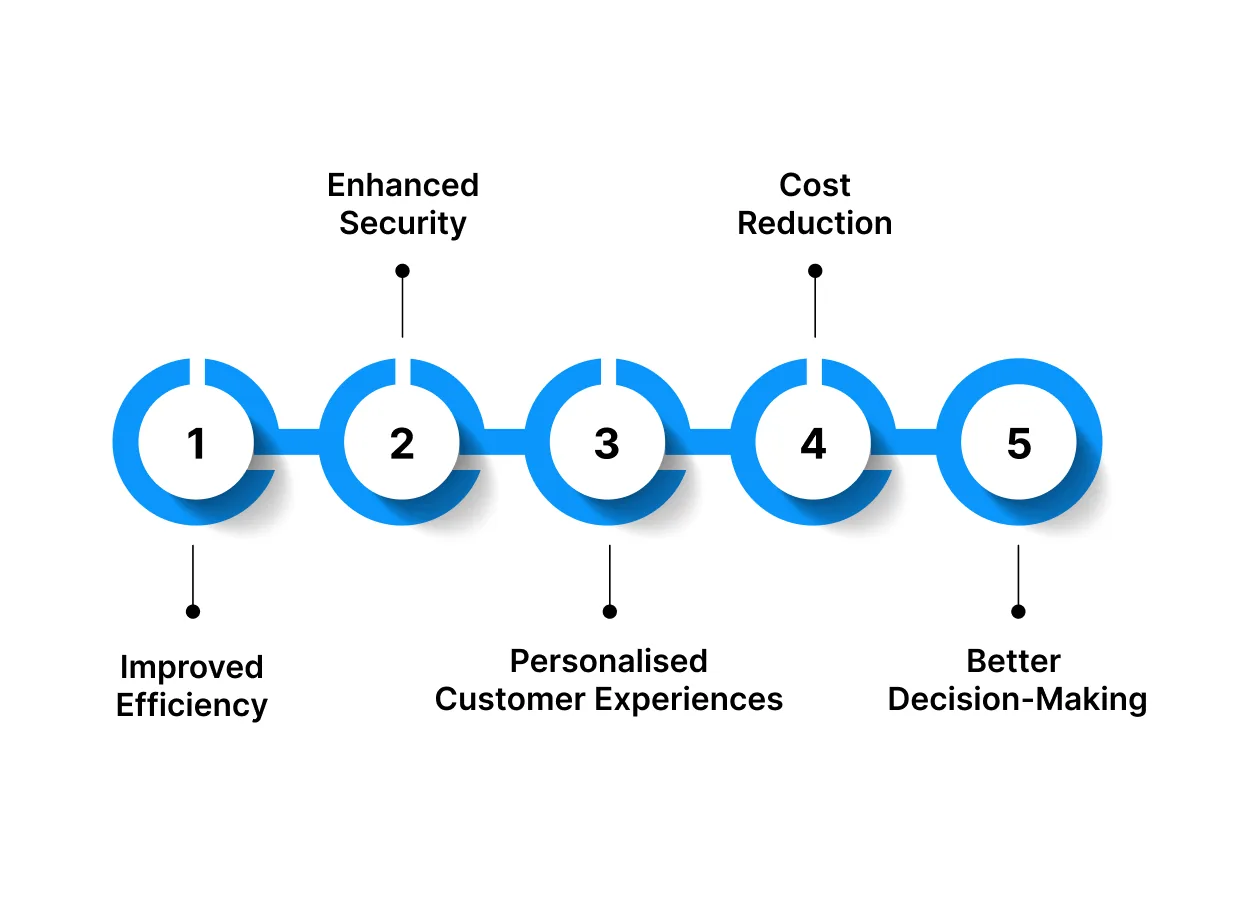
- Improved Efficiency: AI automates time-consuming tasks like data entry, fraud checks, and document verification, allowing employees to focus on more complex tasks. This results in faster decision-making and operational processes.
- Enhanced Security: AI-driven systems continuously monitor transactions for unusual patterns, flagging potential fraud instantly. Machine learning models learn from past incidents, improving the detection and prevention of future fraud attempts.
- Personalised Customer Experiences: By analysing customer data, AI offers personalised banking recommendations, tailored loan products, and smart budgeting advice, making each customer’s banking experience unique and relevant.
- Cost Reduction: By automating manual processes and improving operational efficiency, AI helps banks save costs, which can be reinvested into enhancing services or passed on to customers in the form of lower fees or better interest rates.
- Better Decision-Making: AI’s predictive analytics and data insights enable banks to make more informed decisions, from offering the right loan to assessing risk levels more accurately, ultimately leading to smarter business choices.
Also Read: Understanding Cash Flow: Definition, Types, and Analysis
Core AI Use Cases in Banking
AI is transforming various aspects of banking, from customer service to risk management. Here are some of the key use cases where AI is making a significant impact:
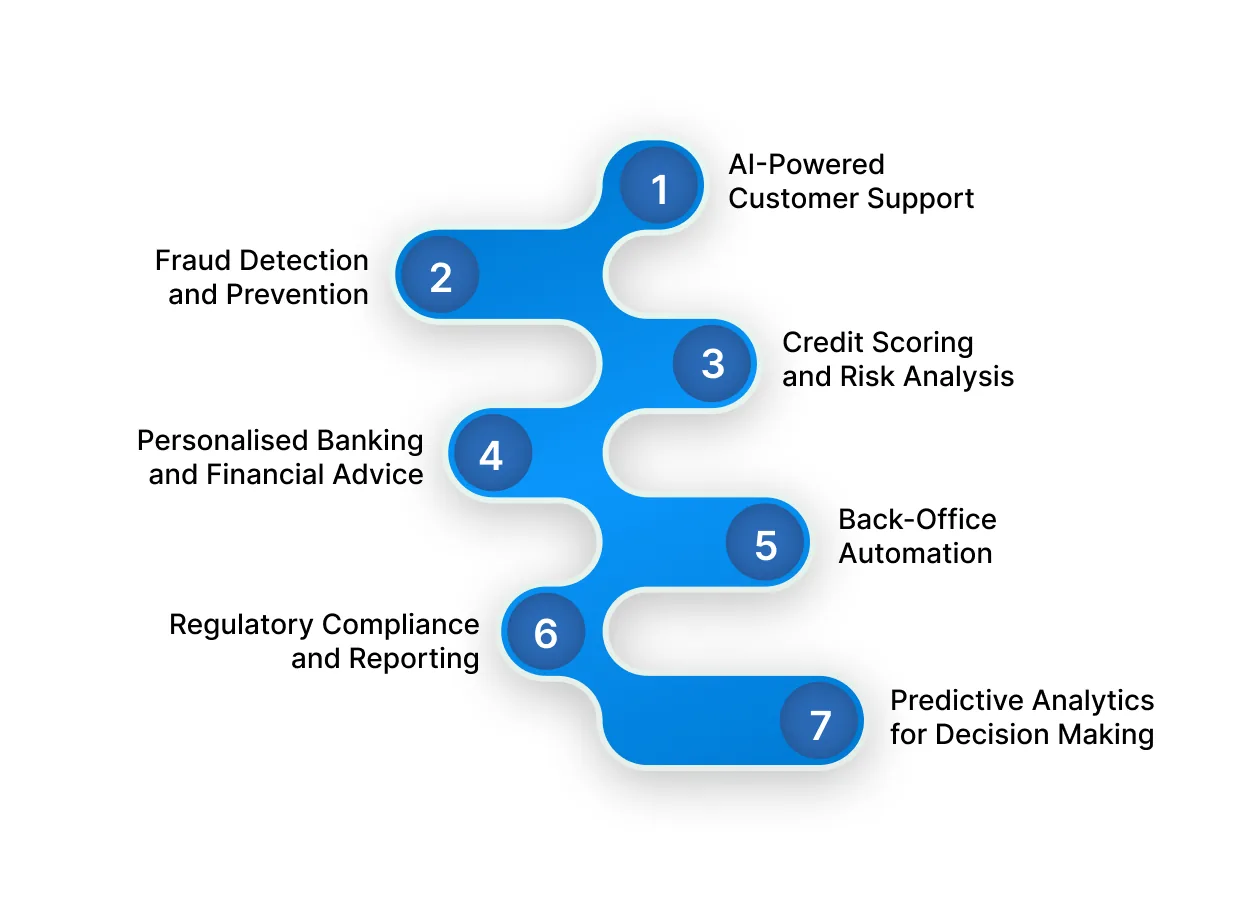
AI-Powered Customer Support
AI-powered customer support is revolutionising the way banks interact with their clients. With the help of intelligent chatbots and virtual assistants, customers can get instant responses to their queries, perform transactions, or even resolve issues without waiting in long queues. The goal is to provide seamless service, available 24/7, ensuring customers have access to assistance whenever they need it.
For example, many banks now use AI chatbots to handle routine inquiries like balance checks, bill payments, or locating nearby ATMs. By integrating AI, these banks improve customer satisfaction while reducing the need for human customer service agents to handle repetitive tasks.
Fraud Detection and Prevention
Fraud detection and prevention are one of the most critical areas where AI excels in banking. Machine learning models can analyse huge amounts of transaction data in real time, identifying patterns that indicate fraudulent activity. By learning from historical data, AI becomes more accurate at predicting and preventing fraud, allowing banks to take immediate action before a financial loss occurs.
For instance, AI models can detect unusual spending patterns, such as large transactions from a new location or rapid withdrawals, and flag them for review. This proactive approach helps banks safeguard their customers’ money and prevent major security breaches.
Credit Scoring and Risk Analysis
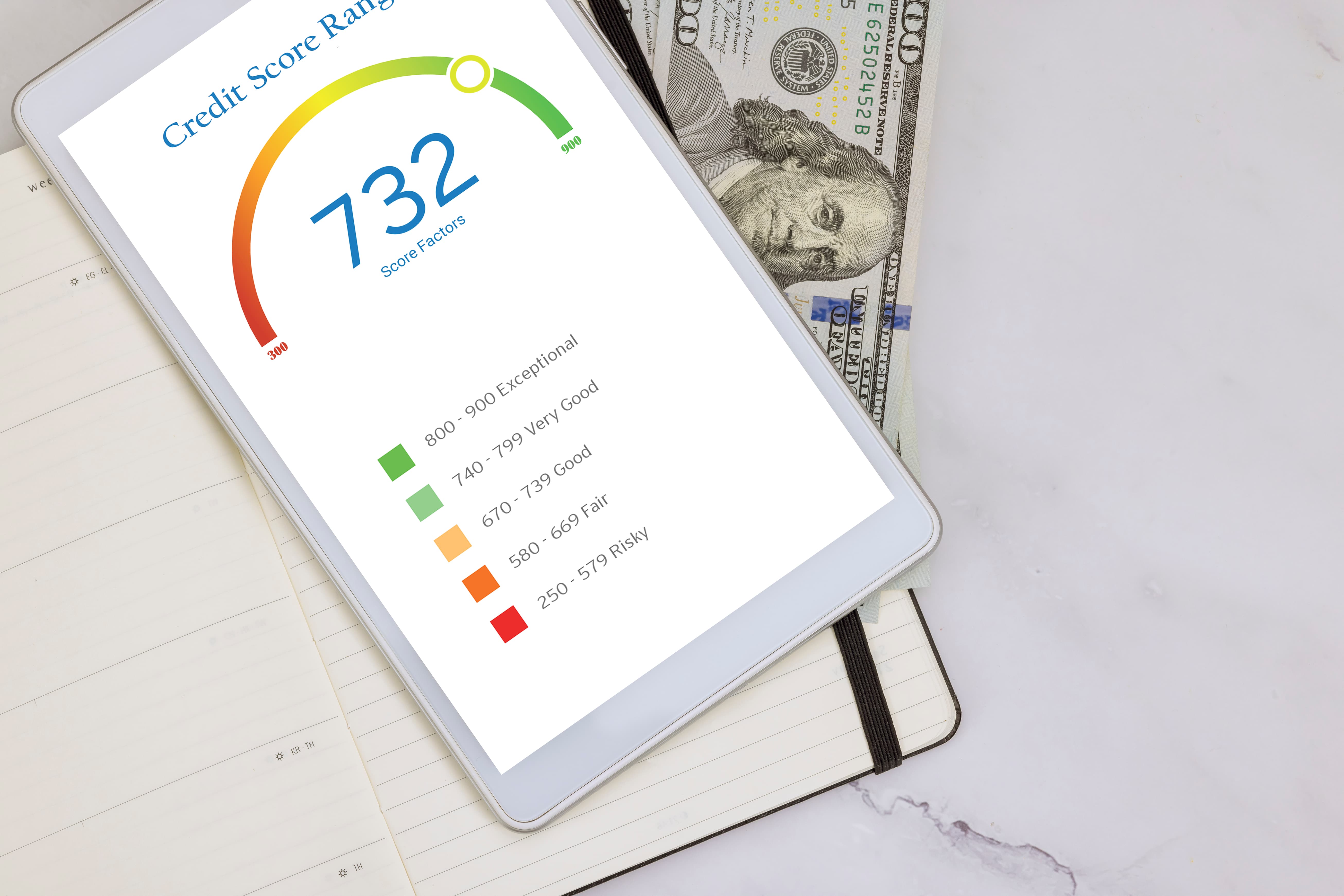
AI is evolving the way banks assess credit risk and determine creditworthiness. Traditional credit scoring methods rely heavily on limited financial data, such as credit history and income. However, AI models can take into account a broader set of factors, including transaction behaviour, social data, and payment patterns, to provide a more comprehensive and accurate picture of a customer’s financial situation.
For example, banks can use AI to assess loan applicants who may not have a traditional credit history but demonstrate good financial habits. By leveraging alternative data, AI ensures that more individuals are able to access credit while maintaining responsible lending practices.
Personalised Banking and Financial Advice
Personalised banking and financial advice are becoming more accessible to customers, thanks to AI. By analysing a customer’s financial history, spending habits, and long-term goals, AI can offer tailored recommendations on how to manage finances, save, and invest. These insights enable customers to make informed decisions about their financial future.
For instance, an AI-driven banking app might suggest setting up an automatic savings plan or recommend a personalised investment portfolio based on the user’s financial goals. This level of tailored advice was once only available to high-net-worth individuals but is now accessible to the broader population.
Back-Office Automation
In the back office, AI is transforming the efficiency of banking operations. Tasks such as loan processing, document verification, and compliance checks were traditionally manual and time-consuming. With AI, these tasks are automated, reducing human error and speeding up processes, which allows banks to operate more efficiently.
For example, AI can automatically verify customer details during the loan application process, cross-checking documents and ensuring that all the data is accurate before moving forward. This automation not only saves time but also enhances accuracy and compliance.
Regulatory Compliance and Reporting
Regulatory compliance is a complex and critical function in the banking sector. AI helps streamline the process by automating compliance checks and generating necessary reports. By continuously monitoring changes in regulations, AI ensures that banks stay up to date with the latest requirements without manually reviewing every detail.
For instance, AI-powered systems can automatically update policies and procedures in response to regulatory changes, ensuring that banks remain compliant and reduce the risk of penalties. This makes compliance more efficient and less prone to errors.
Predictive Analytics for Decision Making
Predictive analytics powered by AI allows banks to make smarter decisions based on data-driven forecasts. By analysing customer data and historical trends, AI can predict future behaviours, such as spending patterns or potential loan defaults. This helps banks to anticipate market changes and adjust their strategies accordingly.
For example, a bank might use predictive analytics to optimise interest rates on loans or predict the likelihood of loan repayments, allowing them to tailor their offerings and reduce financial risk. AI-driven insights enable proactive decision-making, rather than just reacting to data after it’s already happened.
Also Read: Simple Money Management Tips for Personal Finances
Risks of AI in Banking and How to Mitigate Them
Implementing AI in banking offers numerous advantages but also comes with potential risks. Here’s a breakdown of these risks and strategies to mitigate them:
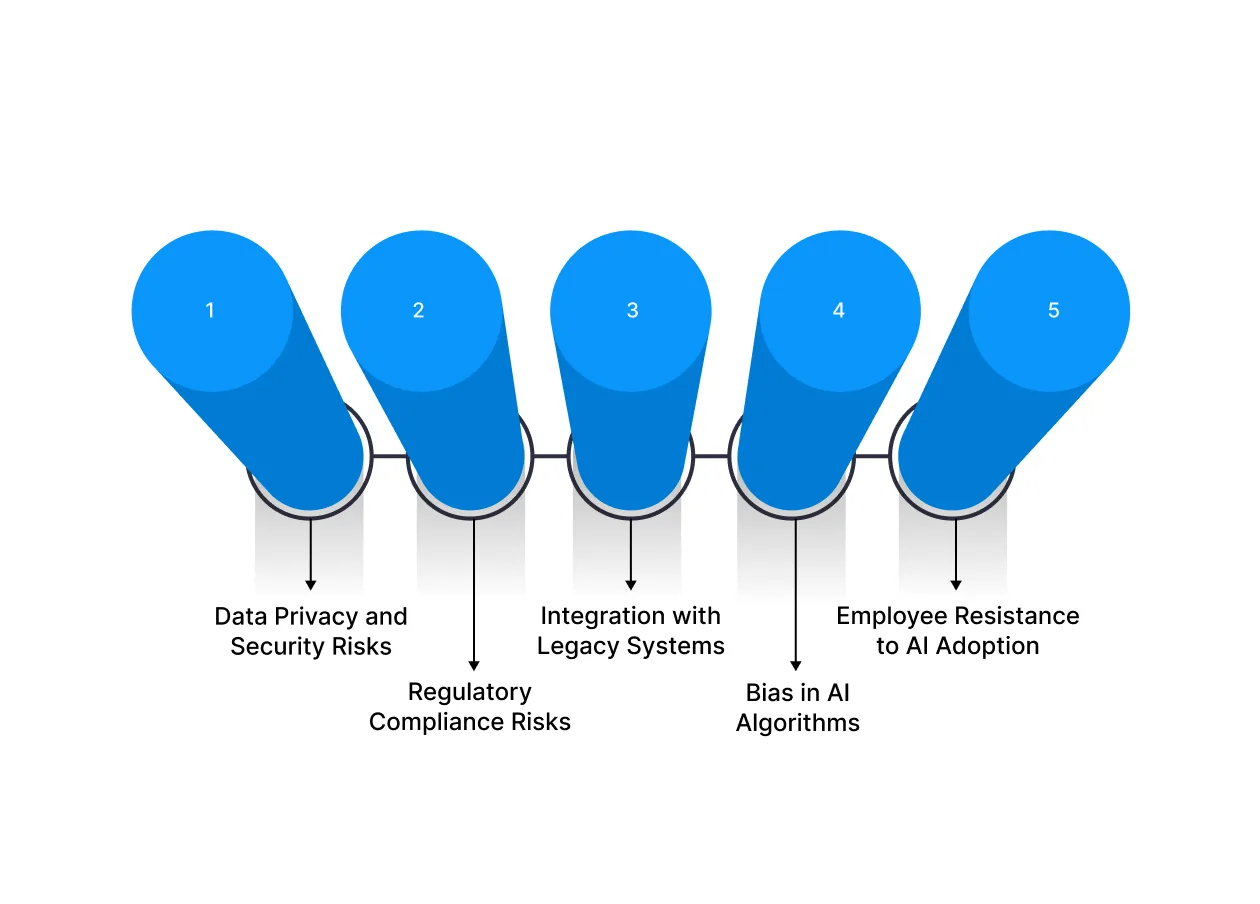
Data Privacy and Security Risks
Risk: AI requires access to large volumes of sensitive personal and financial data, increasing the risk of data breaches.
Mitigation: Implement robust encryption, multi-layered security protocols, and adhere to data protection laws like GDPR. Regular audits and compliance checks ensure customer data remains secure.
Regulatory Compliance Risks
Risk: Banks must comply with diverse, region-specific regulations related to AI, data use, and financial transactions.
Mitigation: Stay updated with the latest regulations, collaborate with legal experts, and ensure that AI systems are built to comply with financial and data protection standards.
Integration with Legacy Systems
Risk: Integrating AI into existing banking systems may cause disruptions or inefficiencies due to incompatibility with outdated technology.
Mitigation: Adopt a phased implementation approach, invest in modernising legacy systems, and test AI solutions in controlled environments before full deployment.
Bias in AI Algorithms
Risk: AI systems may inherit biases from the data used to train them, potentially resulting in unfair decision-making, especially in credit scoring and loan approvals.
Mitigation: Regularly audit AI models for bias, use diverse datasets, and ensure transparency in decision-making processes to promote fairness and equity.
Employee Resistance to AI Adoption
Risk: Employees may fear job displacement or struggle to adapt to new AI tools, leading to resistance or a lack of engagement.
Mitigation: Provide training programs to upskill staff, emphasise the role of AI in augmenting human capabilities rather than replacing them, and involve employees in the implementation process to foster acceptance.
How Pocketly Can Assist You in Managing Unforeseen Financial Needs
No matter how well you budget, life’s unpredictability can still bring financial surprises. Whether it’s an urgent medical bill, emergency repairs, or an unplanned charge, these unforeseen costs can disrupt your finances. Having a reliable financial solution during such times is essential for maintaining peace of mind.
Pocketly is designed to provide that support. As a digital lending platform, we offer fast, straightforward access to funds without the complexity of traditional loans. Whether you’re a student, a professional, or self-employed, Pocketly ensures that you can handle short-term financial challenges effortlessly.
- Quick and Easy Loans: Borrow between ₹1,000 and ₹25,000, ideal for covering sudden expenses.
- Reasonable and Transparent Rates: Starting at just 2% interest per month, with processing fees between 1% and 8%, ensuring clear and fair terms.
- Fully Digital Process: Skip the paperwork! Complete your KYC entirely online, and get the funds you need fast and securely.
- Flexible Repayment Terms: Whether you're employed or studying, go with a repayment plan that works with your budget, whether you prefer a lump sum or instalments.
Steps to Apply for a Pocketly Loan:
1. Download the App: Available on both Google Play and the Apple App Store.
2. Complete the KYC: Fill out a quick and easy digital KYC with your basic details.
3. Select the Loan Amount: Choose the amount that fits your needs, up to ₹25,000.
4. Get Funded: Once approved, the money is directly transferred to your bank account instantly.
With Pocketly, managing surprise expenses is simple and hassle-free.
Conclusion
Adopting AI in banking isn't an overnight process, but the benefits are undeniable. The use cases we've explored, from automating customer support to fraud detection and advanced credit scoring, are transforming the industry, streamlining operations, and enhancing customer satisfaction.
With AI, banks can make smarter, faster decisions, reduce costs, and offer more personalised experiences. It’s not just about staying competitive; it’s about staying ahead in an increasingly digital landscape.
As banks continue to integrate AI into their processes, the focus will shift towards maintaining transparency, securing data, and ensuring ethical use. However, the potential of AI to transform banking operations is clear, and those who embrace it will lead the way.
Looking to manage your finances with ease while embracing smarter solutions? Pocketly offers quick, secure, and transparent personal loans, designed to support you through short-term needs. Download the Pocketly app on iOS or Android and keep your financial momentum going with ease.
FAQs
1. What are AI use cases in banking?
AI in banking is applied in various ways, including customer support chatbots, fraud detection, credit risk analysis, personalised banking services, and automating operational processes.
2. How does AI improve fraud detection in banks?
AI uses machine learning models to analyse real-time transaction data, identify unusual patterns, and detect fraudulent activities faster than traditional methods, helping to reduce financial losses.
3. Can AI personalise banking services for customers?
Yes, AI can analyse customer behaviour, preferences, and financial goals to offer personalised recommendations, such as tailored savings plans or investment suggestions, enhancing customer experience.
4. How does AI assist in credit decisioning in banking?
AI evaluates a broader set of data points, beyond just credit scores, to assess the creditworthiness of borrowers. This helps banks make more accurate and fair lending decisions.
5. What is the future of AI in banking?
The future of AI in banking will see deeper integration of generative AI, enhanced predictive analytics for customer insights, and the automation of more complex tasks, improving efficiency and customer satisfaction.