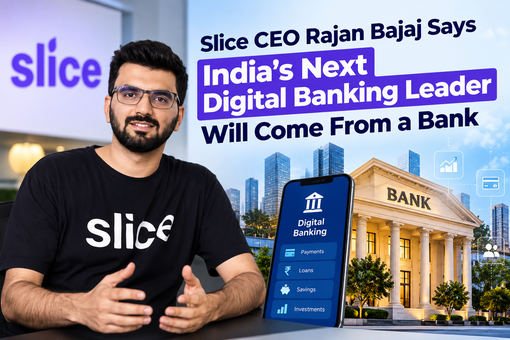


India's next major digital banking platform could emerge from a licensed bank rather than a fintech company that distributes financial products, according to Rajan Bajaj, managing director and CEO of Slice Small Finance Bank.
In an interview published by Mint on October 18, 2026, Bajaj said a banking licence would be central to building an Indian equivalent of global digital finance platforms such as Revolut and Nubank.
His comments come as Slice expands its savings, payments and lending operations after merging with North East Small Finance Bank in October 2024. The company is working towards becoming a primary banking platform for individual customers and small businesses.
The statement reflects Slice's business strategy. It does not mean that fintech companies or NBFCs need banking licences to offer legally permitted digital lending services.
Why does Slice CEO Rajan Bajaj favour a banking licence?
Bajaj believes that operating as a licensed bank gives a digital financial platform greater control over the services it provides.
A fintech company may work with banks and NBFCs to distribute loans, payment services or other financial products. A licensed bank can provide permitted banking services directly, including deposit accounts, payment facilities and lending.
For Slice, the goal is to bring more customer activities into one banking platform.
The company is concentrating on:
-
Savings and current accounts for customers and businesses.
-
Digital payments and merchant payment services.
-
Personal and business lending.
-
Technology-based customer verification and credit assessment.
-
Additional financial products, including insurance distribution and wealth-related services.
Bajaj also pointed to the operating costs of traditional banking, including branches and customer acquisition, as areas where technology could improve efficiency.
Slice Bank deposits reach ₹5,132.6 crore in FY26
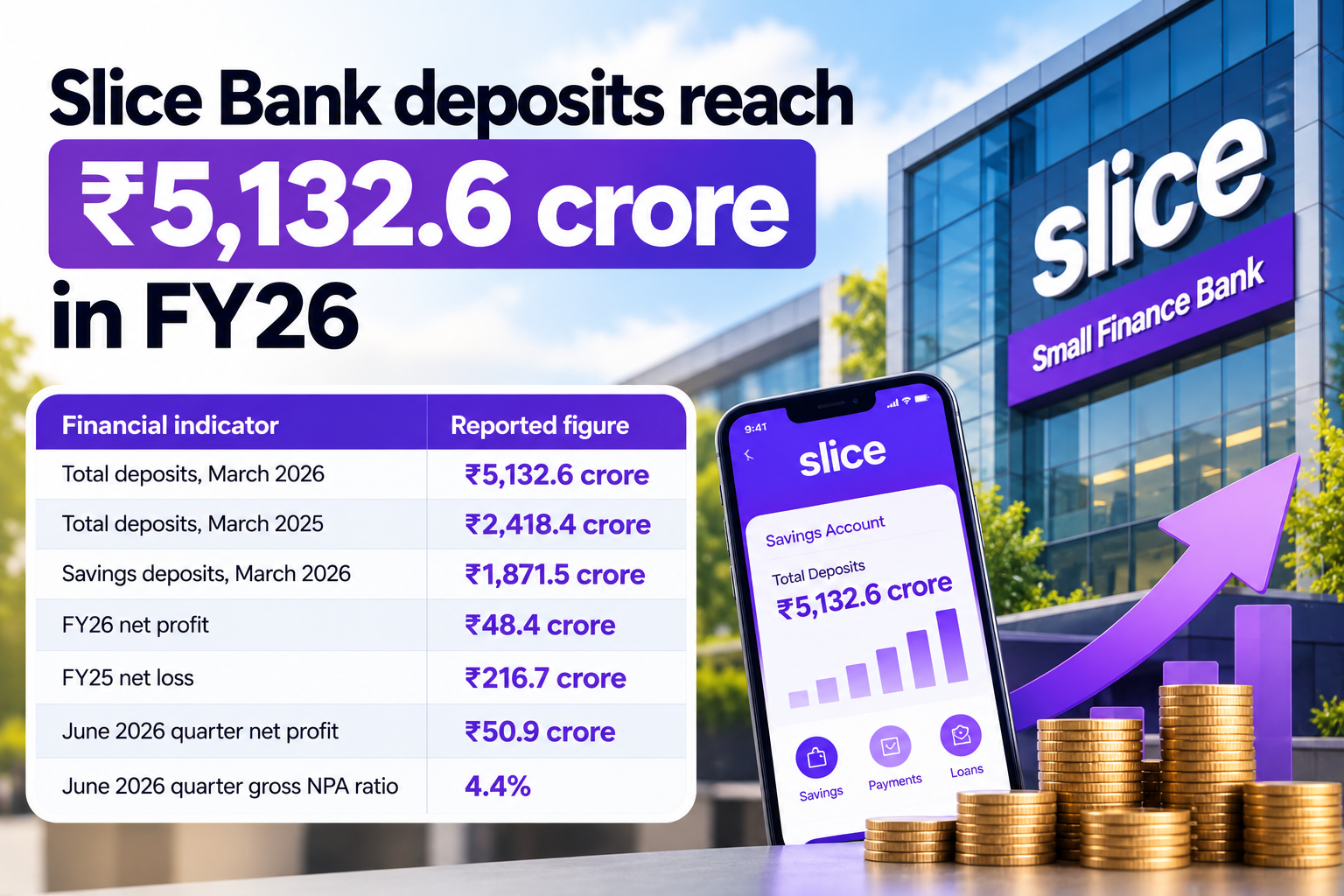
Slice's financial results provide a clearer picture of its transition from a lending-focused fintech to a small finance bank.
According to the figures reported by Mint, deposits more than doubled during FY26.
|
Financial indicator |
Reported figure |
|
Total deposits, March 2026 |
₹5,132.6 crore |
|
Total deposits, March 2025 |
₹2,418.4 crore |
|
Savings deposits, March 2026 |
₹1,871.5 crore |
|
FY26 net profit |
₹48.4 crore |
|
FY25 net loss |
₹216.7 crore |
|
June 2026 quarter net profit |
₹50.9 crore |
|
June 2026 quarter gross NPA ratio |
4.4% |
Source: Mint, October 18, 2026, citing Slice's financial disclosures. FY25 and FY26 results are not directly comparable because FY25 includes only part of the merged bank's operations.
The growth in deposits is significant for Slice because customer deposits can support its lending operations and reduce dependence on other borrowings.
However, deposit growth alone does not establish that a bank can offer cheaper loans. Funding costs, operating expenses, credit risk and regulatory requirements also influence lending rates.
How is Slice using technology to expand digital banking?
Slice has invested in its own core banking technology rather than relying entirely on external technology providers.
Bajaj told Mint that the bank spent three years developing its core banking system. The company has also developed video-based customer verification technology that uses AI tools to identify potentially suspicious account applications.
According to Bajaj, Slice is opening approximately 5 lakh accounts every month.
The bank is also expanding services for small businesses. Its merchant platform provides current accounts, QR-code payments, soundboxes and eligible business loans.
Slice reported that merchants processed ₹6,000 crore in payments through its business platform between its launch in November 2025 and March 2026.
These developments show how digital banking platforms are using payment activity and customer information to develop financial services.
Does digital lending in India require a banking licence?
No. A banking licence is not mandatory for every company involved in digital lending.
Banks and eligible RBI-regulated NBFCs can provide loans within their permitted activities. Technology companies may also operate digital lending platforms in partnership with regulated lenders, subject to applicable requirements.
The distinction is important because borrowers sometimes assume that every loan app is itself a bank or an NBFC.
Here is how the models differ:
|
Feature |
Licensed bank |
NBFC |
Digital lending platform |
|
Savings accounts |
Can offer |
Cannot offer bank-style demand deposits |
Cannot independently offer |
|
Can provide |
Eligible NBFCs can provide |
Can facilitate through regulated lenders |
|
|
RBI regulation |
Direct |
Direct, as applicable |
Depends on role and applicable rules |
|
Banking licence |
Required |
Not required |
Not required merely to act as a lending platform |
Borrowers who want to understand these differences can read Pocketly's guide on the difference between NBFCs and banks.
What does this development mean for personal loan borrowers?
Bajaj's comments raise a practical question for people who use mobile apps to borrow money: does the type of financial institution affect the loan experience?
It can, but borrowers should compare the actual loan terms rather than relying only on whether the provider is a bank or an NBFC.
For example, someone borrowing ₹10,000 for an unexpected expense should check the annual percentage rate, processing fee, repayment period and total repayment amount before accepting an offer.
A digital application may reduce paperwork or travel, but it does not automatically mean lower interest rates or guaranteed approval.
Borrowers can also explore Pocketly's guides on how to get a personal loan online and what a credit score means before applying.
Where does Pocketly fit into India's digital lending market?
Pocketly operates as a digital lending technology platform, with personal loans provided through Speel Finance Company Private Limited, an RBI-registered NBFC.
Pocketly offers eligible borrowers personal loans ranging from ₹1,000 to ₹50,000, subject to verification and underwriting.
The platform serves people looking for smaller personal loans through an online application process.
While Slice is pursuing a broader banking model, digital lending platforms such as Pocketly operate within a different part of India's financial services market.
People considering digital borrowing should identify the actual lender, review the Key Facts Statement and understand the repayment obligations before proceeding.
Pocketly's existing resources on NBFC personal loans for bad credit and digital lending safety explain some of these considerations.
What comes next for Slice Small Finance Bank?
Slice is aiming for an initial public offering by 2028, according to Bajaj's interview with Mint.
Its future growth will depend partly on expanding customer deposits, controlling operating expenses and maintaining loan quality as its lending business grows.
The bank's reported gross non-performing asset ratio declined from 4.8% in March 2026 to 4.4% in June 2026. However, the absolute value of gross bad loans increased during the same period.
For India's fintech sector, Slice's strategy offers one example of how a digital-first financial business can expand into licensed banking. Other companies may continue operating successfully through regulated lending partnerships without pursuing the same model.
The broader question is how each model can provide transparent, affordable and reliable financial services to customers.
Frequently asked questions
1. Who is Rajan Bajaj?
Rajan Bajaj is the managing director and CEO of Slice Small Finance Bank. He founded Slice as a fintech business before its transition into banking.
2. Is Slice a bank or an NBFC?
Slice operates as Slice Small Finance Bank following its merger with North East Small Finance Bank in October 2024.
3. Does a fintech company need a banking licence in India?
A fintech company does not automatically need a banking licence. Requirements depend on the financial activities it performs. Accepting bank-style deposits and operating as a bank require appropriate authorisation.
4. Can NBFCs provide personal loans in India?
Yes. Eligible RBI-regulated NBFCs can provide personal loans under applicable rules. Borrowers should verify the lender and compare borrowing costs.
5. Is Slice planning an IPO?
According to Rajan Bajaj's October 18, 2026 interview with Mint, Slice is targeting an IPO by 2028. This is a company plan, not a confirmed listing date.
Sources
Primary reporting: Mint — India's Revolut or Nubank will emerge from a bank, not a fintech: Slice CEO Rajan Bajaj (18 October 2026).
Company disclosures: Slice Small Finance Bank — Regulatory disclosures and financial reports.
Editorial note: This article reports and explains statements made in an interview with Mint. The comments represent Rajan Bajaj's views and should not be interpreted as a new RBI policy announcement.