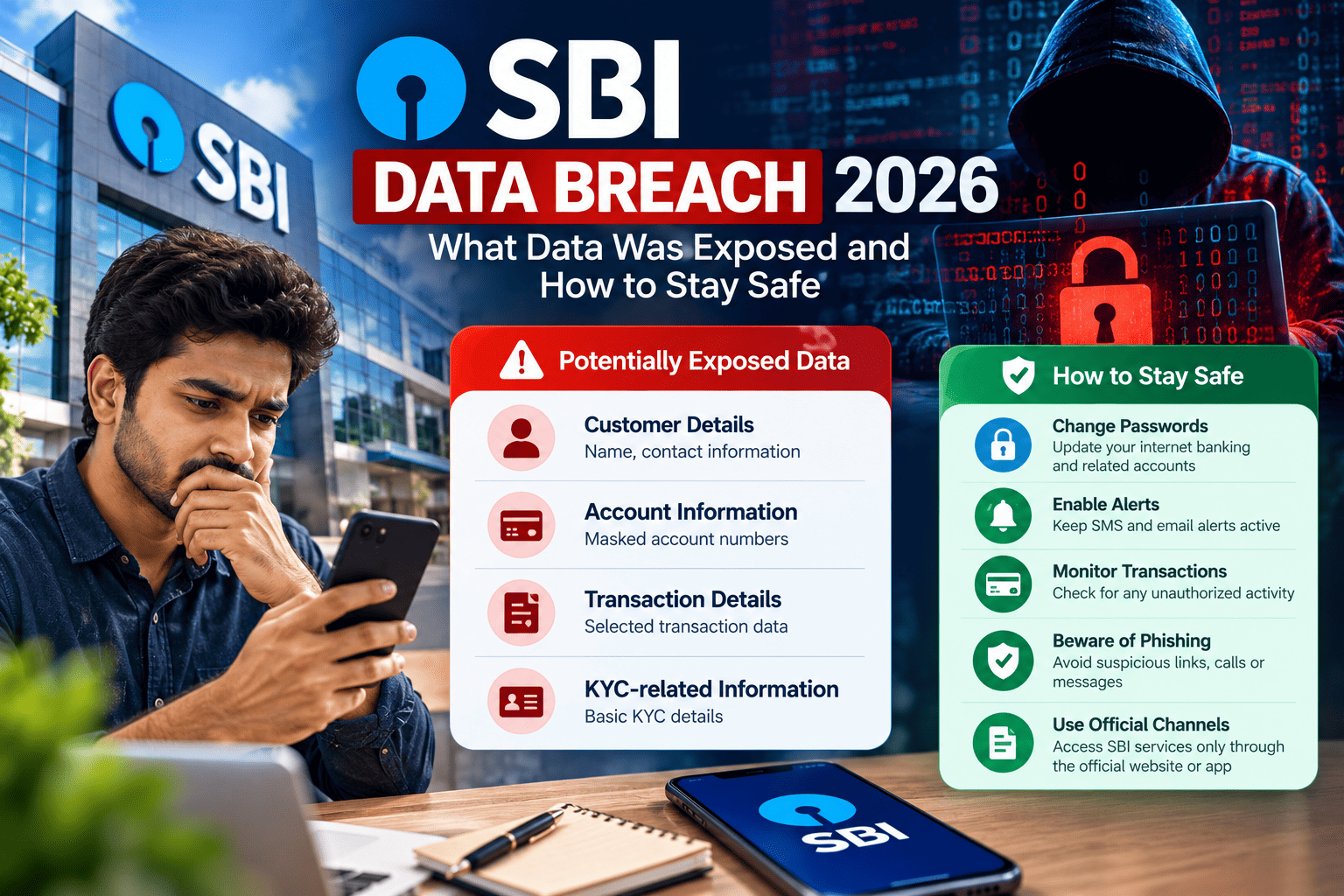


The State Bank of India (SBI) is probing through a suspected leak of data when around 3.75 lakh records were found on the dark web. The initial review found 3,897 customer records with personally identifiable information (PII).
The incident, which occurred on October 21, 2026, has sparked worries regarding banking security, customer personal privacy and online monetary fraud. SBI has said its core business continues to be unaffected. A source and exposure assessment is still underway, however.
The incident has been a reminder to individuals engaging in digital banking and applying for online loans of the need to ensure the protection of personal information.
SBI Data Breach: Key Details at a Glance
|
Detail |
Information |
|
Bank involved |
State Bank of India (SBI) |
|
Reported date |
October 21, 2026 |
|
Records reportedly found online |
Approximately 3.75 lakh |
|
Records containing PII identified in preliminary review |
3,897 |
|
Where records reportedly surfaced |
Dark web |
|
Investigation status |
Ongoing, according to the latest reports |
|
Impact on core operations |
SBI said no material impact had occurred |
Important: The 3.75 lakh figure refers to records reportedly found online, not confirmed affected customers. The preliminary review identified 3,897 records containing personally identifiable information.
What Information Was Reportedly Exposed?
SBI's preliminary review reportedly identified records containing the following information:
|
Data category |
Examples |
|
Personal details |
Names, dates of birth and gender |
|
Contact details |
Mobile numbers and email addresses |
|
Address details |
Residential addresses |
|
Banking identifiers |
Branch details and CIF identifiers |
|
Lending-related information |
Lead IDs and related metadata |
The available reports do not establish that every record contained all these details. They also do not confirm that all banking credentials were exposed.
Why Is the SBI Data Leak a Concern?
Exposed personal information can potentially help scammers make fraudulent messages or calls appear genuine.
The main risks include:
-
Fake bank calls: Scammers may impersonate bank employees and request confidential information.
-
Fraudulent loan offers: Criminals may send fake personal loan approval messages and demand advance payments.
-
Phishing links: Fake websites may attempt to collect banking credentials or personal details.
-
Identity misuse: Personal information may be combined with other data to support fraudulent activity.
-
Repayment scams: Fraudsters may send false messages about overdue EMIs or loan penalties.
People exploring digital lending platforms in India should remember that an unsolicited message containing accurate personal information is not necessarily genuine.
Does the SBI Data Breach Mean Bank Accounts Have Been Hacked?
No—not based on the information currently reported.
A data exposure does not automatically mean that bank accounts were accessed or funds were stolen.
SBI has stated that its core operations were not materially affected. However, the final scope and potential consequences of the suspected exposure remain subject to investigation.
Customers should take these precautions:
-
Check recent bank transactions.
-
Monitor transaction alerts and account notifications.
-
Never share OTPs, PINs or banking passwords.
-
Verify suspicious calls through official bank channels.
-
Report unfamiliar transactions to the bank immediately.
How Can Customers Protect Themselves From Banking Fraud?
|
Risk |
What customers should do |
|
Fake bank calls |
Contact the bank through a verified official channel. |
|
Suspicious loan offers |
Verify the lender before applying or paying fees. |
|
Phishing messages |
Avoid clicking unexpected links or entering credentials. |
|
Unknown applications |
Do not install apps at an unsolicited caller's request. |
|
Unauthorised transactions |
Contact the bank immediately and report the incident. |
|
Suspected cyber fraud |
Call India's cybercrime helpline at 1930 or use the National Cyber Crime Reporting Portal. |
For additional guidance, readers can explore Pocketly's articles on instant personal loan apps in India and emergency loan apps.
What Should Borrowers Check Before Using a Loan App?
The SBI incident highlights the importance of verifying financial service providers before sharing personal information.
Before applying for a digital loan, borrowers should:
-
Verify the lender: Identify the bank or NBFC actually providing the loan.
-
Read the Key Fact Statement (KFS): Check the APR, fees, repayment schedule and other applicable charges.
-
Understand data requests: Check why the application requires particular personal details or permissions.
-
Use official channels: Download applications from trusted sources and verify contact details.
-
Avoid suspicious payments: Be cautious if someone requests payment to a personal account to release a loan.
-
Keep loan records: Save the loan agreement, repayment receipts and important communications.
Pocketly readers can also review its information on responsible lending, the Privacy Policy and customer support.
For borrowers comparing credit options, these guides may also help:
What Does the Incident Mean for Digital Lending in India?
The incident reinforces three important lessons:
-
Personal information needs protection. Names, phone numbers and customer identifiers may be useful to fraudsters.
-
Customers should verify unexpected requests. Accurate personal details do not prove that a caller or message is genuine.
-
Financial institutions must investigate exposures carefully. Establishing the source and scope of an incident is essential to assessing the risks.
Digital financial services can make banking and borrowing more convenient, but customers should understand how their information is requested and used.
For a better understanding of online credit, read Pocketly's guide to digital lending platforms.
Read The Hindu's report on how SBI discovered the suspected data leak for further details.
Conclusion
The suspected SBI data breach highlights the importance of customer privacy and financial security. While the investigation into the exposed records is ongoing, the impact on SBI's core operations is said to be "not material".
The customers should be alert against untrustworthy calls, fake loan offers and phishing links. Checking requests, safeguarding banking information and reporting any potential fraud in a timely manner can help minimize the potential for financial loss.
Disclaimer: This article is for informational purposes only and reflects reporting available as of October 22, 2026. The investigation was ongoing, and the reported figures and potential impact may change as further verified information becomes available.
Frequently Asked Questions
1. What happened in the SBI data breach?
SBI is investigating a suspected data exposure after approximately 3.75 lakh records surfaced on the dark web. A preliminary review identified 3,897 records containing personally identifiable information.
2. What data was reportedly exposed?
Reported information included names, dates of birth, gender, mobile numbers, email addresses, residential addresses, branch details, CIF identifiers and lending-related metadata.
3. Were all 3.75 lakh records confirmed to be SBI customer records?
No. The preliminary review identified 3,897 records containing personally identifiable information. The full nature and authenticity of all records had not been established in the reported findings.
4. Have SBI customers lost money because of the data breach?
The reported preliminary findings do not establish that customers lost money or that bank accounts were accessed. Customers should monitor transactions and report suspicious activity.
5. Can scammers use leaked information for fake loan offers?
Yes. Personal details may help scammers make fraudulent loan offers appear genuine. Verify the lender and offer before sharing documents or making payments.
6. How can I report online banking fraud in India?
Contact your bank immediately. You can also call the national cybercrime helpline at 1930 or submit a complaint through the National Cyber Crime Reporting Portal.
7. How can I check whether a loan app is legitimate?
Verify the actual lender, review its regulatory status where applicable, read the KFS and loan agreement, and check the APR, charges and repayment conditions.
8. Has SBI completed its investigation?
The latest reports used for this article stated that the investigation was ongoing. The full source and impact of the suspected exposure had not been conclusively established.