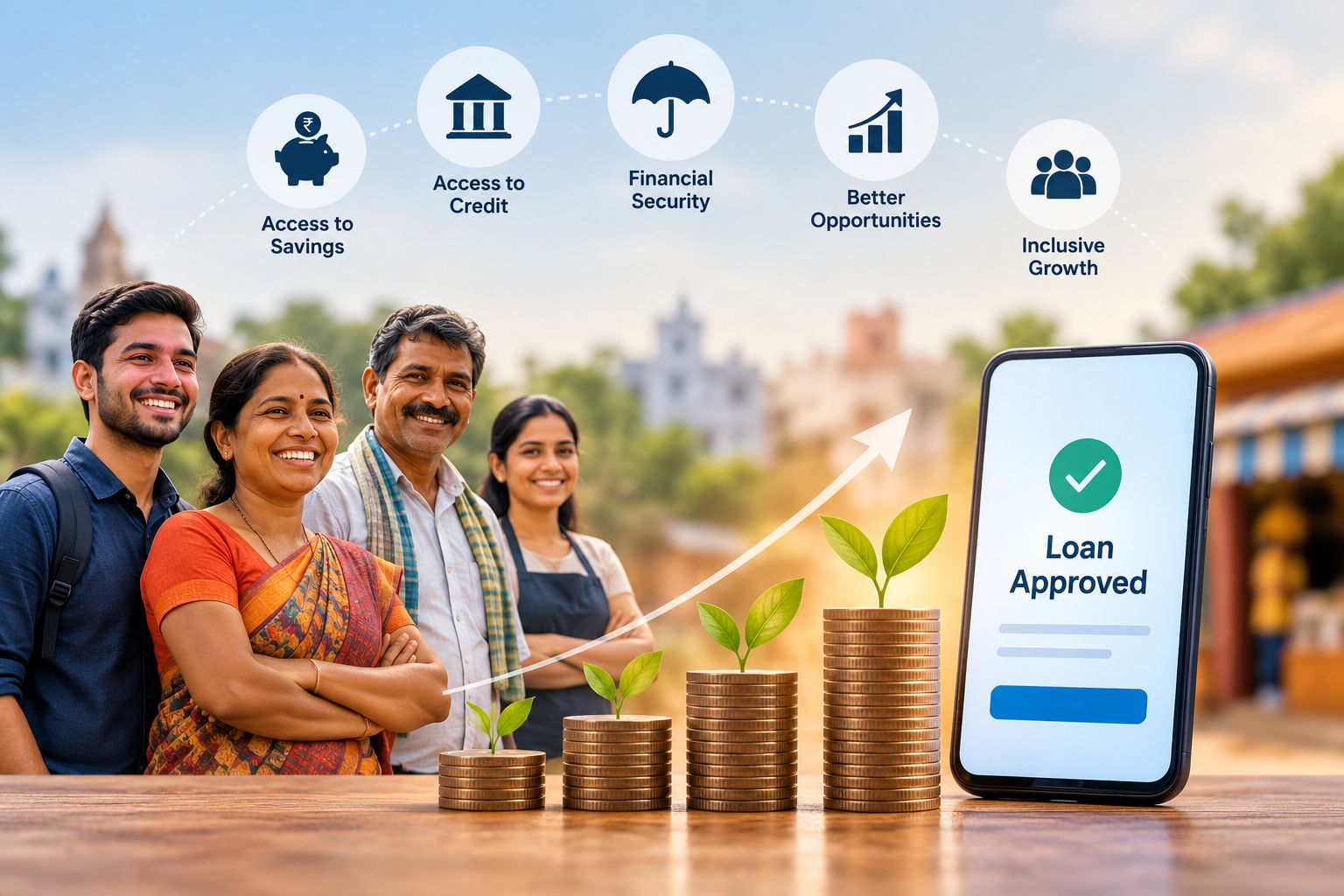


Did you know that 89% of adults in India had a bank account in 2024? According to the World Bank's Global Findex Database 2025, India has made significant progress in bringing more people into the formal banking system. But having a bank account is only one part of financial inclusion. Access to useful financial services, including affordable credit, also matters.
What Is Financial Inclusion?
Financial inclusion means making financial services accessible and affordable to people, regardless of their income, location, or occupation.
These services include bank accounts, savings, insurance, digital payments, and loans. The idea is simple: people should have access to suitable financial services that help them manage their money and meet their needs.
For example, a farmer may need a loan to buy seeds before the sowing season. A small shop owner may need money to purchase inventory, while a salaried employee may need financial support for an unexpected medical expense.
When people can access appropriate financial services through formal institutions, they have more options to manage these situations.
How Does Access to Credit Help?
Credit allows people to borrow money and repay it over an agreed period. When offered responsibly and on suitable terms, it can help individuals and businesses manage expenses, handle emergencies, and plan for the future. Here are some ways access to credit can make a difference.
1. Helps Small Businesses Grow
Small businesses often need money to purchase stock, buy equipment, or expand their operations. Access to a suitable loan can help a business meet these needs without waiting until it has saved the entire amount.
For example, a small grocery store owner may borrow money to purchase additional stock before a busy festive season and repay the loan from future sales.
2. Supports Families During Emergencies
Unexpected expenses, such as medical bills or urgent home repairs, can put pressure on a household budget. When savings are not enough, access to affordable formal credit may provide another option.
However, borrowing should be considered carefully, as repayments can add to financial pressure if income is uncertain.
3. Creates More Opportunities for Self-Employment
People who want to start a small business or work independently may need money for tools, equipment, or other initial expenses. Access to suitable credit can help them get started and work towards earning a regular income.
4. Reduces Dependence on Informal Borrowing
When formal credit is difficult to access, some people turn to informal lenders. Depending on the lender and the terms, this borrowing may be expensive or offer limited protection.
Access to regulated lenders can give borrowers more transparent information about interest rates, fees, repayment schedules, and their rights.
How Is India Promoting Financial Inclusion?
India has introduced several initiatives to expand access to financial services.
-
Pradhan Mantri Jan Dhan Yojana (PMJDY): Promotes access to basic banking services, including bank accounts.
-
Digital payments: Systems such as UPI make it easier for people to send and receive money electronically.
-
MUDRA loans: Support eligible micro and small business activities through lending by participating financial institutions.
-
Digital lending: Allows eligible borrowers to apply for loans through digital channels, subject to lender requirements and applicable regulations.
These initiatives address different aspects of financial inclusion. A bank account helps people access the banking system, digital payments make transactions easier, and suitable credit can help meet financial needs.
Is Access to Credit Enough?
Not necessarily. Financial inclusion is not just about making loans available. People also need to understand borrowing costs, compare loan offers, and choose repayments they can afford.
A loan with high charges or instalments that exceed a borrower's capacity can create financial difficulties rather than solve them. Financial awareness and responsible lending are therefore important parts of an inclusive financial system.
Access also needs to go beyond opening accounts. People must be able to use financial services confidently, understand their options, and receive appropriate protection when things go wrong.
Conclusion
Financial inclusion helps people participate more fully in the formal financial system. Access to credit can support small businesses, provide options during emergencies, and create opportunities for individuals who need money to pursue their goals.
For India, the next step is not simply expanding access to financial services, but ensuring that these services are affordable, useful, and responsibly provided. When people can make informed financial decisions and access credit on suitable terms, financial inclusion can contribute to stronger households and a more inclusive economy.
Frequently Asked Questions
1. How does financial inclusion improve access to personal loans?
It helps more people access formal credit services and apply for personal loans through regulated lenders.
2. Can people with low incomes get personal loans in India?
Yes, if they meet the lender's eligibility criteria and can afford the repayments.
3. How does formal credit help small business owners?
It helps them purchase inventory, manage expenses and invest in business growth.
4. Can someone get a personal loan without a credit history?
Yes, some lenders accept applicants with no credit history, depending on their eligibility requirements.
5. How does digital lending improve access to credit?
It allows borrowers to apply online and submit financial documents electronically, making the application process more convenient.
6. Why is responsible borrowing important for financial inclusion?
It helps borrowers manage repayments, avoid excessive debt and maintain financial stability.