

You spend ₹12,000 on shopping, ₹5,000 on groceries and another ₹3,000 on food delivery every month. Your friend tells you to get a credit card offering 5% cashback.
Sounds like easy savings.
But after three months, you discover that some purchases don't qualify for cashback, there's a monthly rewards limit, and the card comes with a ₹999 annual fee.
Now you're wondering whether you picked the wrong card.
This is exactly why credit card comparison deserves more attention than a flashy cashback advertisement.
At Pocketly, we write about borrowing, credit scores and everyday money decisions. One question worth asking before getting a credit card is simple: how much will this card save you on purchases you're already making?
In this credit card comparison India guide, we'll compare popular cards, calculate cashback, explain hidden charges and help you choose a card that suits your income.
Quick Answer: Which Credit Card Is Best in India in 2027?
SBI Cashback is worth comparing for eligible online shopping, HDFC Millennia for selected merchant purchases and Amazon Pay ICICI for Amazon spending. Beginners can also consider lifetime-free or fixed-deposit-backed cards. Compare annual fees, cashback caps, interest charges and eligibility before applying. The best card depends on your actual spending and repayment capacity.
Credit Card Comparison India: Top Cards and Annual Fees
When you compare credit cards India has several options, from entry-level shopping cards to premium travel products.
Here are some popular names of credit cards to shortlist.
|
Credit card |
Indicative annual fee* |
Main benefit |
Suitable for |
|
SBI Cashback |
₹999 |
5% eligible online cashback |
Online shoppers |
|
HDFC Millennia |
₹1,000 |
Cashback on selected merchants |
Young professionals |
|
Amazon Pay ICICI |
Nil |
Amazon-linked cashback |
Amazon customers |
|
Axis Bank ACE |
₹499 |
Cashback on eligible spending |
Everyday purchases |
|
HSBC Live+ |
₹999 |
Dining and grocery cashback |
Working professionals |
|
IDFC FIRST WOW! |
Check current terms |
FD-backed credit access |
New-to-credit applicants |
*Previously published indicative fees before GST, not verified 2027 pricing. Issuers can revise fees, cashback structures, caps and eligibility. Check official terms before applying.
Which credit card should you compare first?
-
Online shopping: SBI Cashback and HDFC Millennia.
-
Amazon purchases: Amazon Pay ICICI.
-
Dining and groceries: HSBC Live+.
-
General spending: Axis Bank ACE.
-
Limited credit history: FD-backed cards such as IDFC FIRST WOW!.
If you're applying for your first card, our best credit cards for beginners in India guide covers more entry-level options and eligibility considerations.
Credit Card Benefits Comparison: Cashback vs Reward Points
The biggest mistake in a credit card benefits comparison is assuming the highest advertised reward rate always gives the best return.
Take two hypothetical cards.
|
Benefit |
Card A |
Card B |
|
Monthly spending |
₹15,000 |
₹15,000 |
|
Eligible spending |
₹8,000 |
₹15,000 |
|
Cashback rate |
5% |
1% |
|
Monthly cashback |
₹400 |
₹150 |
|
Annual cashback |
₹4,800 |
₹1,800 |
|
Annual fee including GST |
₹1,180 |
Nil |
|
Net annual cashback |
₹3,620 |
₹1,800 |
Card A gives ₹1,820 more annual value in this example, assuming no further reward restrictions and full repayment every month.
But change the spending pattern, and the result changes too.
What benefits should you compare?
|
Credit card benefit |
What to check |
|
Cashback |
Eligible merchants and monthly caps |
|
Reward points |
Rupee value per point |
|
Welcome rewards |
Minimum spending requirements |
|
Lounge access |
Eligible airports and spending conditions |
|
Fuel waiver |
Transaction limits |
|
Annual fee waiver |
Required yearly spending |
A lifetime-free card can be useful when you don't spend enough to justify a paid card. Our article explaining the meaning of lifetime-free credit cards covers what the term includes and which charges may still apply.
How to Compare Cards Before Applying
You don't need to compare 25 cards. Start with three that match your spending.
-
Check your last three months of expenses. Separate shopping, groceries, bills, fuel and travel.
-
Calculate eligible cashback. Ignore spending that doesn't qualify for rewards.
-
Subtract annual fees. Include GST and consider fee-waiver conditions.
-
Review interest charges. Check what happens when you cannot pay the full bill.
-
Check your eligibility. Income, age and credit history requirements vary by bank.
-
Compare repayment convenience. A card should fit your budget and payment cycle.
If you prefer applying digitally, read our guide on getting an online credit card without visiting a bank.
A simple card comparison formula
Net annual benefit = Eligible cashback + usable rewards − annual fees − applicable charges
Example:
₹4,500 cashback + ₹500 usable rewards − ₹1,180 annual fee = ₹3,820.
That's the amount worth comparing, provided you haven't paid interest or incurred other charges.
Which Credit Card Is Best for Students, First-Jobbers and Freelancers?
Your income and repayment habits should influence which credit card you choose.
|
Applicant |
Card category to compare |
Main concern |
|
College student |
FD-backed secured card |
Limited income |
|
First-jobber |
Lifetime-free cashback card |
Annual fees |
|
Salaried employee |
Cashback or rewards card |
Regular spending |
|
Freelancer |
Low-fee credit card |
Irregular income |
|
Self-employed applicant |
Everyday rewards card |
Income documentation |
|
Frequent traveller |
Travel rewards card |
Redemption value |
Students: What if you don't have a CIBIL score?
Getting an unsecured credit card without regular income or an established credit history can be difficult.
A secured card backed by a fixed deposit may be worth exploring.
You can read how secured credit cards help build a credit score or explore options for credit cards without credit history.
First-jobbers: Don't confuse your credit limit with salary
Suppose you earn ₹28,000 monthly and receive a ₹50,000 credit limit.
That limit doesn't mean you can comfortably spend ₹50,000.
Your monthly repayment capacity still depends on rent, groceries, travel and savings.
Our guide to the 50/30/20 budgeting rule explains one way to divide salary between essential expenses, discretionary spending and savings.
Freelancers: Billing dates deserve attention
Freelancers may receive payments on different dates each month.
A credit card bill arriving before a client payment can create a cash shortage.
Using a cash flow budget for young professionals can help you plan expenses around expected income.
Credit Card Charges Comparison: The Costs That Cancel Your Cashback
A card offering ₹3,000 annual rewards may still cost you money if you regularly carry an unpaid balance.
|
Charge |
When it applies |
Possible impact |
|
Annual fee |
Joining or renewal |
Reduces rewards |
|
Finance charges |
Unpaid eligible balance |
Increases debt |
|
Late fee |
Missed payment deadline |
Additional expense |
|
Cash advance fee |
ATM withdrawal |
Upfront fee and interest |
|
Forex markup |
Foreign currency spending |
Higher transaction cost |
|
EMI processing fee |
Eligible instalment conversions |
Additional borrowing cost |
Example: What happens when you don't pay your full bill?
You have a ₹20,000 outstanding balance.
At an illustrative monthly finance charge of 3%, one month's interest could be around ₹600 before taxes and other applicable charges. Actual card interest depends on transaction dates and issuer calculations.
If you want to understand instalments, our guide explains how EMI works on credit cards in India.
Missing a payment can also affect your credit history. Read about the impact of a one-day late payment on CIBIL.
Two habits help avoid unnecessary charges: schedule your bills and keep enough money available for repayment. Our bill management tips explain how to organise recurring payments.
Does Using a Credit Card Improve Your CIBIL Score?
A credit card can help establish a repayment history when you use it responsibly and the issuer reports account activity to credit bureaus.
But owning a card alone doesn't guarantee a higher score.
|
Credit factor |
What to do |
|
Payment history |
Pay on time |
|
Credit utilisation |
Avoid repeatedly using most of your limit |
|
Credit applications |
Avoid unnecessary applications |
|
Credit history |
Maintain suitable accounts responsibly |
|
Outstanding debt |
Keep repayments affordable |
For example, if your credit limit is ₹40,000 and your outstanding balance is ₹32,000, your utilisation is 80%.
Reducing outstanding balances can help you manage utilisation.
Our article on how to calculate credit utilisation explains the calculation.
If you're new to borrowing, you may also find our guides on the best way to use a credit card to build credit and how long building credit with a card can take useful.
Credit Card vs BNPL vs Personal Loan: Which Should You Choose?
Credit cards, buy now pay later (BNPL) products and personal loans offer different repayment structures.
|
Feature |
Credit card |
BNPL |
Personal loan |
|
Main use |
Eligible purchases |
Instalment purchases |
Defined borrowing need |
|
Credit structure |
Revolving |
Product-specific |
Generally fixed-term |
|
Repayment |
Monthly statement |
Scheduled payments |
Scheduled repayments |
|
Interest and fees |
Based on card usage |
Depends on provider |
Depends on loan offer |
|
Main risk |
Revolving interest |
Missed instalments |
EMI and fee burden |
For a closer comparison, see our BNPL vs credit card guide.
Another option is a line of credit, which works differently from a conventional card. We've explained the differences in line of credit vs credit card.
Need Funds Instead of Shopping Rewards? Explore Pocketly
Imagine your laptop stops working just before a freelance deadline. Repairs cost ₹12,000, but your next client payment is due in ten days.
If the repair shop accepts credit cards and you can repay the statement in full, using a card may be convenient.
If you need funds transferred to your bank account, a personal loan is another option to compare.
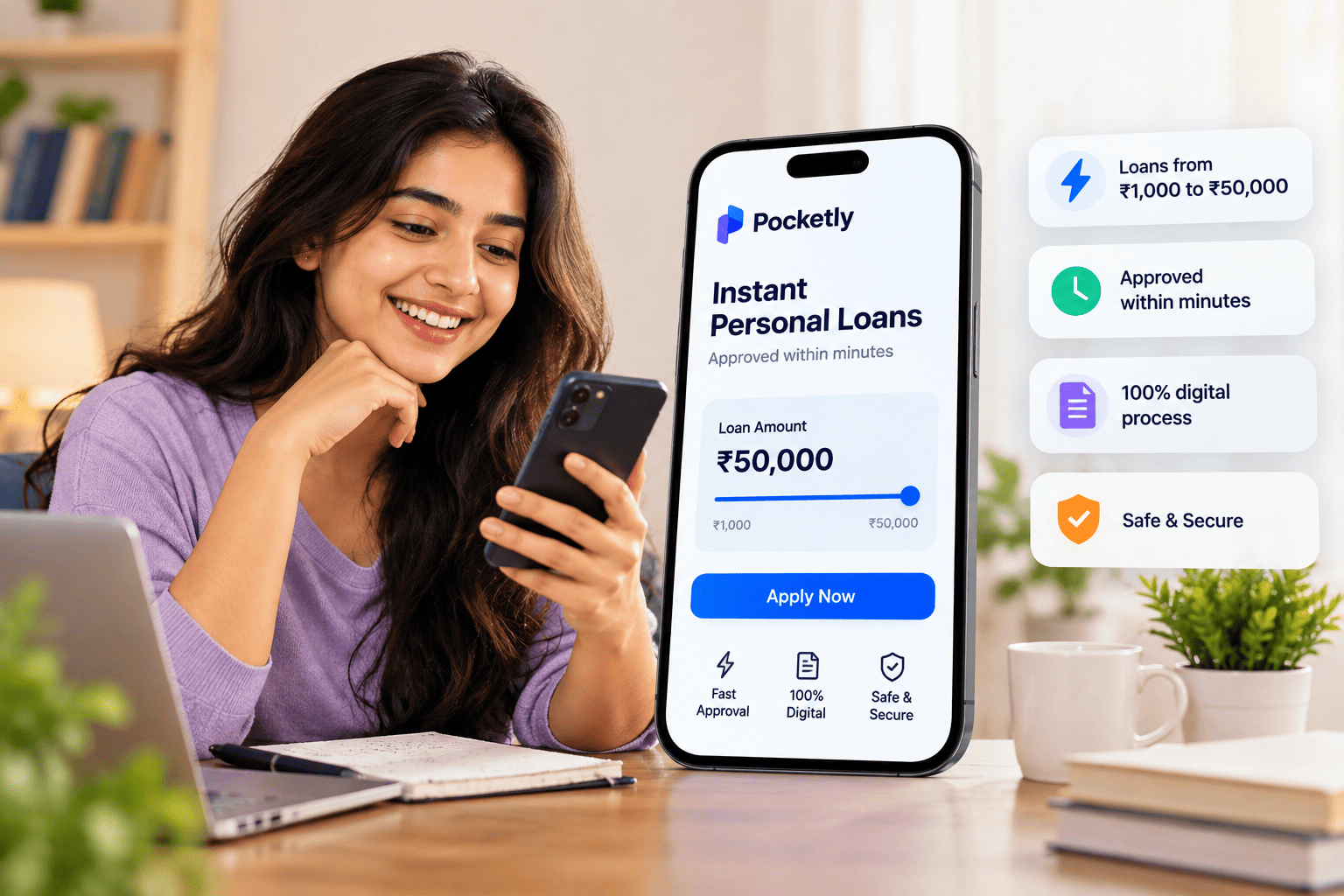
At Pocketly, we offer a digital application process for eligible personal loans ranging from ₹1,000 to ₹50,000.
Pocketly operates as the technology platform for Speel Finance Company Private Ltd., an RBI-registered NBFC. You can read more about our responsible lending practices.
Before accepting a loan, understand the difference between interest rates and the total amount repayable. Our EMI, interest and fee guide explains these costs.
For a side-by-side look at emergency borrowing, see personal loan vs cash advance costs.
You can also use our guide on how to calculate personal loan EMI to plan repayments.
9. Credit Card Comparison: Common Mistakes to Avoid
|
Common mistake |
Better approach |
|
Choosing a card based on cashback alone |
Calculate net annual savings |
|
Ignoring reward exclusions |
Read the issuer's terms |
|
Applying for multiple cards unnecessarily |
Shortlist cards before applying |
|
Paying only the minimum due |
Aim to clear the full statement |
|
Withdrawing cash from a credit card |
Check advance fees and interest |
|
Spending extra to unlock rewards |
Earn rewards on planned purchases |
|
Ignoring monthly cash flow |
Plan card bills alongside other expenses |
If your credit card expenses keep increasing, start by tracking monthly expenses.
Another useful habit is building an emergency reserve. Our emergency fund guide for young Indians explains how to get started.
Conclusion: Compare Credit Cards Before You Apply
The next time you see a credit card advertising 5% cashback, check how much of your spending qualifies.
A card that saves your friend ₹5,000 a year might save you only ₹800. Your monthly expenses, repayment habits and eligible purchases make the difference.
For your 2027 credit card comparison, start with three suitable cards, calculate annual rewards after fees and read the repayment terms before applying.
And if you need money for an unexpected expense rather than a shopping facility, explore Pocketly instant personal loans up to ₹50,000. Compare the borrowing cost, check eligibility and choose a repayment plan you can afford.
Frequently Asked Questions
1. Which credit card is best in India in 2027?
SBI Cashback, HDFC Millennia and Amazon Pay ICICI are useful options to compare. The best choice depends on your eligible spending, annual fees and repayment capacity.
2. Which credit card gives the highest cashback?
Some cards advertise 5% or higher cashback on selected transactions. Check monthly limits, exclusions and annual fees before deciding.
3. Which credit card has no annual fee?
Amazon Pay ICICI is commonly offered without joining or annual membership fees. Confirm the current issuer terms.
4. How can I compare credit cards India offers?
Compare annual fees, eligible cashback, reward redemption value, interest charges, credit limits and eligibility. Calculate net annual benefits using your own spending.
5. Which credit card is best for students?
Eligible students may consider fixed-deposit-backed credit cards, especially when they don't have regular income or an established credit history.
6. Is a lifetime-free credit card better than a paid card?
A lifetime-free card can save annual membership costs. A paid card may offer better net value when you regularly use its rewards.
7. Does credit card comparison affect my CIBIL score?
Researching cards does not affect your score. Formal applications may trigger hard enquiries.
8. Can I get a credit card without a CIBIL score?
Some banks offer secured credit cards backed by fixed deposits to eligible applicants without established credit histories.
9. What happens if I pay only the minimum amount due?
Interest may accumulate on unpaid balances. Paying the full statement balance by the due date is generally preferable.
10. Which is better: credit card EMI or personal loan EMI?
Compare interest rates, processing charges, repayment periods and total repayment costs. The cheaper option depends on the specific offers.
11. Can I get an instant personal loan without a CIBIL score?
Pocketly allows eligible applicants to apply without an established CIBIL score. Approval remains subject to verification and lending criteria.
12. How much can I borrow from Pocketly?
Pocketly currently offers eligible personal loan amounts from ₹1,000 to ₹50,000, subject to the applicable loan terms.
Free Invoice Generator
Create professional invoices and download them as PDF.
Billed By
Billed To
Invoice Details
Invoice Items
Taxes and Charges
Payment Details
Invoice Summary
Invoice Preview